 Self-cycleTM IVF


-
-
-
 Infertility Counselling
-
 Female Infertility Treatment
-
 Andrology Treatment
-
 Fertility Enhancing Surgeries - Female
-
 Fertility Enhancing Surgeries - Male
-
 Endoscopy Treatment
-
 IUI Treatment
-
 IVF Treatment
-
 ICSI Treatment
-
 Advance IVF Solutions
-
 Embryology
-
 Vitrification Egg, Embryo, Sperm Freezing
-
 Preimplantation Genetic Testing (PGT)
-
 Donation Program Embryo / Egg / Sperm
-
 Self-cycleTM IVF
-
-
-
-
-
Female Infertility Symptoms: Early Signs Explained
Synopsis
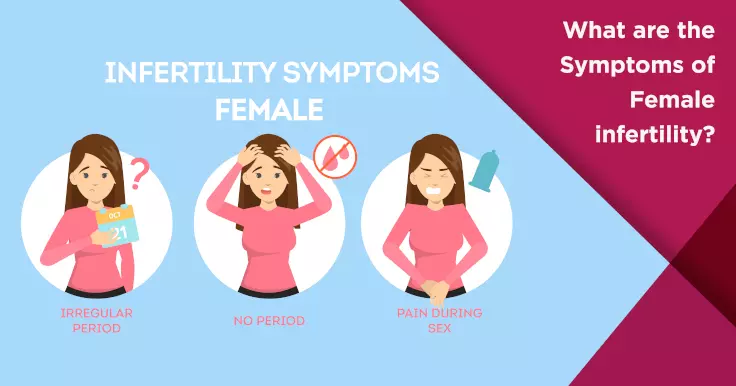
Many women notice female infertility symptoms through small changes in their cycle or hormones. Common infertility symptoms in females include irregular periods, missed periods, severe cramps, acne, facial hair growth, and pain during sex. These are often signs of infertility in women linked to ovulation disorders, PCOS, endometriosis, or thyroid imbalance. In this blog, we will explain the early signs of female infertility and what they usually mean.
Female Infertility Symptoms
Infertility is a common issue that affects couples all over the world. This is characterised by the inability to conceive naturally despite having well-timed, unprotected sexual intercourse for over a year. The main symptom of infertility is the inability to conceive for a long time. However, there are other infertility symptoms in women as well. These are related to underlying conditions that can influence infertility. It is important to note that often women who have infertility symptoms as listed below, might not face any trouble conceiving, whereas, women who suffer from none of the symptoms mentioned be infertile.
Irregular Periods
On an average, a menstrual cycle lasts for 28-30 days. Some women have their periods like clockwork after exactly 28 while others have one period after 30 days. There are women who even have their periods after 32 days or even after 27 days and so on.
Thus a variation of a few days here and there is normal. However, not being able to estimate the date of the period because of inconsistent cycles or skipping a cycle is not normal. A menstrual cycle of less than 21 days or longer than 35 days is considered abnormal. This may be caused by polycystic ovarian syndrome (PCOS) or hormone issues.
Painful Periods
Many women experience cramps for a day or two during their periods. This is usually bearable. However, some women may have very painful cramps that interfere with their daily life. They may also experience a heavier than normal blood flow. This should not be ignored as it could be a sign of endometriosis. Endometriosis is a condition where the tissue lining the uterus begins to grow outside the uterus and mainly in the ovaries. Endometriosis can cause anatomic distortions such as pelvic scarring that can lead to infertility.
Hormone Fluctuations
A number of hormones impact fertility. This includes:
- Thyroid hormone
- Follicle-stimulating hormone
- Progesterone and luteinizing hormone
- Prolactin - luteotropic hormone
Hormone imbalances are often the cause of infertility. Symptoms of hormone imbalances include:
- Acne and skin trouble
- The growth of facial hair
- Thinning hair on the scalp
- Unexplained weight gain or weight loss
- Reduced sex drive
Painful Sexual Intercourse
Ideally, sex should not be painful. Pain during sex may be caused by underlying conditions such as:
- Endometriosis
- Fibroids
- Sexually transmitted diseases
- Pelvic inflammatory disease
- Problems with the cervix and uterus
These conditions can increase the risk of infertility. Other factors that can act as indicators of infertility risk are age, thyroid issues, obesity, autoimmune disorders, diabetes, hypertension, cancer or cancer treatment and poor adrenal health.
FAQs
1. What are the most common female infertility symptoms?
The most common female infertility symptoms include irregular periods, painful periods, missed ovulation, and difficulty getting pregnant, even after regular unprotected intercourse.
2. Are irregular periods always a sign of infertility in women?
Not always. But irregular periods are one of the most common signs and symptoms of infertility in females, because ovulation may not be happening properly.
3. What are the signs and symptoms of infertility in females caused by hormonal imbalance?
Common hormonal imbalance symptoms include acne, sudden weight changes, unwanted facial hair, scalp hair thinning, and low libido. These are common infertility symptoms in females.
4. Can painful periods be symptoms of female infertility?
Yes. Severe, painful periods can be symptoms of female infertility, especially if caused by endometriosis or pelvic scarring.
5. What are the signs of female infertility related to ovulation disorders?
Common signs of female infertility include irregular cycles, absent periods, difficulty tracking ovulation, and repeated failure to conceive. These are typical signs and symptoms of female infertility.
6. When should I consult a fertility specialist?
If you have persistent female infertility symptoms, irregular cycles, or have been trying for a year (or 6 months if above 35), it is best to consult early.