 Self-cycleTM IVF


-
-
-
 Infertility Counselling
-
 Female Infertility Treatment
-
 Andrology Treatment
-
 Fertility Enhancing Surgeries - Female
-
 Fertility Enhancing Surgeries - Male
-
 Endoscopy Treatment
-
 IUI Treatment
-
 IVF Treatment
-
 ICSI Treatment
-
 Advance IVF Solutions
-
 Embryology
-
 Vitrification Egg, Embryo, Sperm Freezing
-
 Preimplantation Genetic Testing (PGT)
-
 Donation Program Embryo / Egg / Sperm
-
 Self-cycleTM IVF
-
-
-
-
-
Azoospermia Treatment in India: Options & Path to Fatherhood
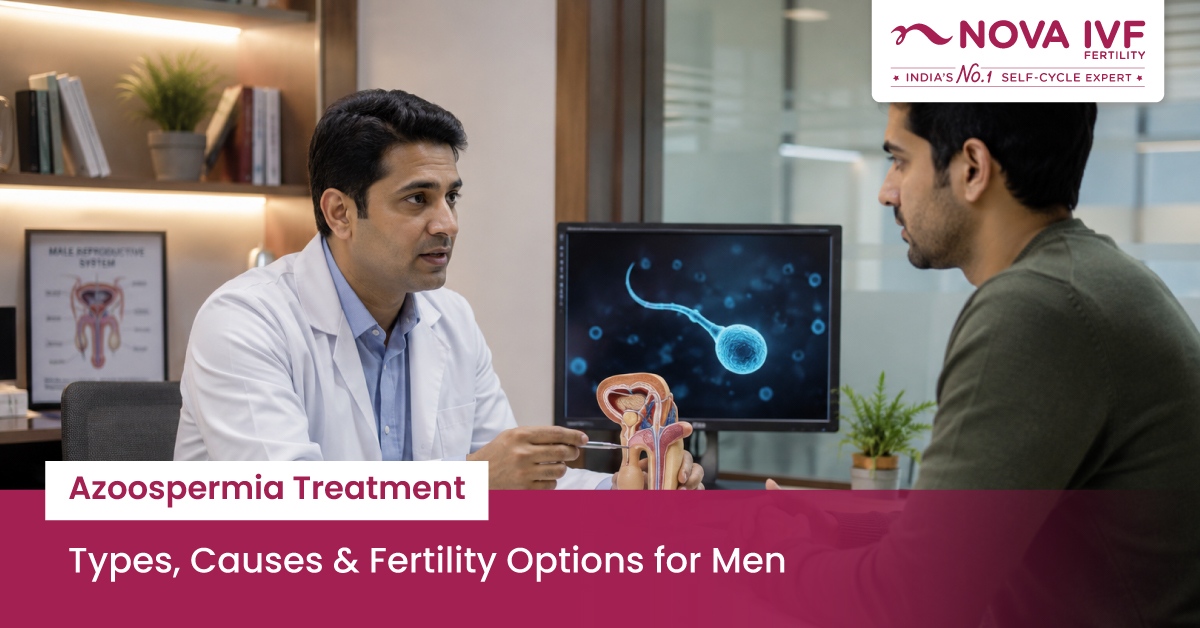
Azoospermia affects approximately 1% of all men and stands as one of the leading causes of male infertility in India. Despite the weight of this diagnosis, the condition is frequently treatable, and biological fatherhood remains a realistic goal for many men with appropriate medical support.
This blog covers what azoospermia means, how its two types are clinically distinguished, what signs may prompt investigation, how Indian clinicians approach diagnosis, and what treatment options exist today.
Azoospermia Meaning: What Does It Actually Mean
Azoospermia is the complete absence of sperm in a man's ejaculate. Importantly, this does not confirm a total absence of sperm production in every case.
The underlying reason for absent sperm determines both the type of azoospermia and the entire treatment pathway that follows.
Two Types of Azoospermia: Obstructive vs Non-Obstructive
The two types of azoospermia differ at a fundamental biological level, and this difference shapes every clinical decision that follows. A clear identification of type is therefore the most important step before any treatment begins.
| Feature | Obstructive Azoospermia (OA) | Non-Obstructive Azoospermia (NOA) |
|---|---|---|
| Sperm Production | Normal | Impaired or absent |
| Core Problem | Physical blockage in reproductive tract | Testicular failure or hormonal deficit |
| Common Causes | Vasectomy, epididymal blockage, ejaculatory duct obstruction | Genetic conditions, hormone deficiency, testicular damage |
| Primary Treatment | Surgical reconstruction or sperm retrieval | Hormone therapy or micro TESE |
| IVF/ICSI Required | Sometimes | Almost always |
Related Blog: What is Obstructive and Non Obstructive Azoospermia?
Symptoms of Azoospermia: How Would You Know
Azoospermia is largely asymptomatic, and most men remain unaware of the condition until conception becomes a concern. For the majority of couples, the inability to conceive after 12 months of regular, unprotected intercourse is the first indication that a sperm problem may be present.
In cases where an underlying cause produces secondary signs, patients may notice:
- No pregnancy after 12 months of consistent trying
- Reduced semen volume at ejaculation
- Testicular swelling, discomfort, or a palpable lump
- A prior history of reproductive tract infections or genital surgeries
- Low libido or hormonal changes affecting secondary sexual characteristics
Read About male fertility-enhancing surgery
How Is Azoospermia Diagnosed in India
Diagnosis in India follows a structured, stepwise process rather than a single conclusive test. Each stage builds clinical clarity and directly expands the range of available treatment options.
- Semen Analysis: The first step, confirming the absence of sperm across two separate centrifuged samples
- Hormone Blood Tests: FSH, LH, and testosterone levels assess testicular function and identify hormonal deficits
- Scrotal Ultrasound: Evaluates structural abnormalities such as varicoceles or epididymal blockages
- Genetic Testing: Where a chromosomal cause is suspected, genetic testing before fertility treatment screens for Y-chromosome deletions and conditions such as Klinefelter syndrome
- Testicular Biopsy: Reserved for cases requiring direct histological confirmation of sperm production
Azoospermia Treatment Options Available in India
Treatment for azoospermia is entirely determined by type, and an incorrect clinical protocol can significantly compromise outcomes.
Treatment for Obstructive Azoospermia
- Surgical Reconstruction: The preferred first approach for suitable candidates to restore sperm flow through the obstructed duct
- TESA or PESA: Sperm retrieval performed where surgical reconstruction is not clinically feasible
- IVF with ICSI: Retrieved sperm is used in IVF with ICSI to achieve fertilisation
Treatment for Non-Obstructive Azoospermia
- Hormone Therapy: FSH, LH, or clomiphene citrate is the initial treatment line for candidates with a confirmed hormonal deficit
- MicroTESE: A specialised microsurgical sperm extraction procedure indicated when hormonal treatment alone is insufficient
- Assisted Reproductive Technology: All retrieved sperm is used alongside ART to attempt conception
The right treatment pathway depends entirely on an accurate diagnosis. A specialist review at Nova IVF helps determine which IVF treatment at Nova IVF option is most appropriate for each case.
Learn More About expert male fertility diagnosis
FAQs
1. Can a man with azoospermia have biological children?
Yes. Surgical sperm retrieval combined with IVF or ICSI offers a viable pathway to biological fatherhood, depending on type and cause.
2. Is azoospermia permanent?
Not necessarily. Obstructive causes are often reversible through surgery, and microTESE can recover usable sperm even in severe NOA cases.
3. What is the main cause of azoospermia in Indian men?
Common causes include varicocele, reproductive tract infections, genetic conditions, hormonal imbalances, and prior chemotherapy. Constrictive causes from previous surgeries are also frequently identified.
4. What is the success rate of azoospermia treatment with IVF-ICSI in India?
The results of azoospermia treatment may differ with respect to variable factors like sperm quality, and the female partner's age. A specialist evaluation provides the most accurate individual prognosis.