 Self-cycleTM IVF


-
-
-
 Infertility Counselling
-
 Female Infertility Treatment
-
 Andrology Treatment
-
 Fertility Enhancing Surgeries - Female
-
 Fertility Enhancing Surgeries - Male
-
 Endoscopy Treatment
-
 IUI Treatment
-
 IVF Treatment
-
 ICSI Treatment
-
 Advance IVF Solutions
-
 Embryology
-
 Vitrification Egg, Embryo, Sperm Freezing
-
 Preimplantation Genetic Testing (PGT)
-
 Donation Program Embryo / Egg / Sperm
-
 Self-cycleTM IVF
-
-
-
-
-
Chocolate Cysts Symptoms Explained
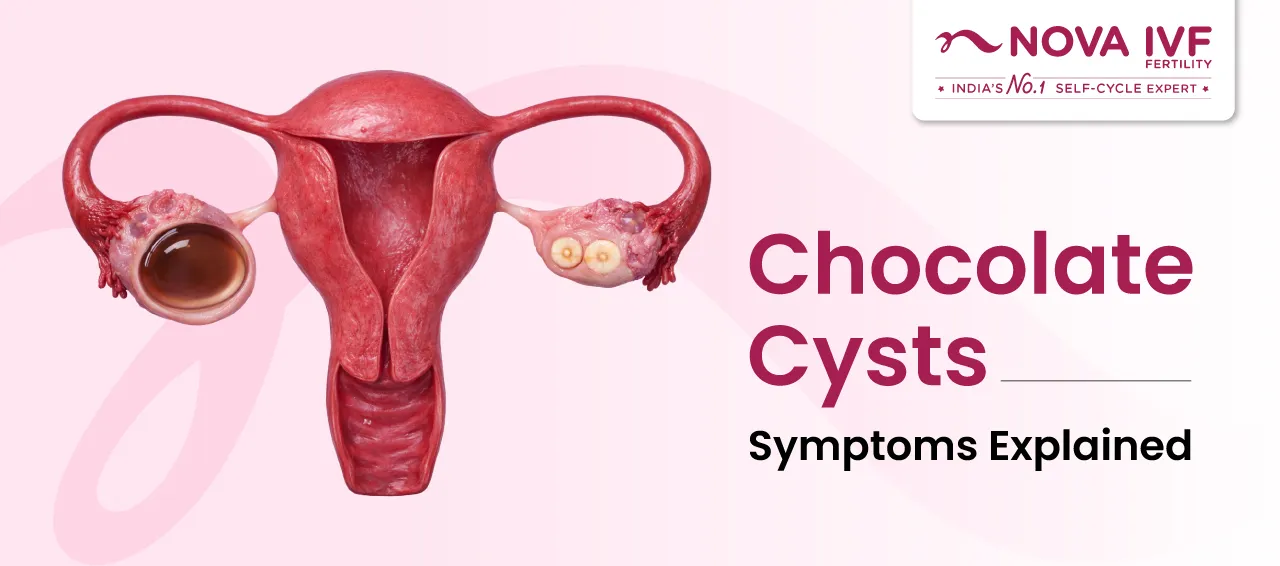
Chocolate Cysts Symptoms Explained
A chocolate cyst is a benign and blood-filled cyst found in women of reproductive age. This cyst can be formed in the ovary or encapsulating the ovary. The size of the cyst ranges from 2 to 20 centimeters. The chocolate cyst got its name due to the dark, brown colored, tar-like substance present inside it. These substances include old and thickened menstrual blood, bits of endometrial tissues and inflammatory enzymes. The chances of chocolate cysts are higher in women with endometriosis.
Symptoms of Chocolate Cysts
The signs and symptoms of this condition, vary from women to women. Some women may experience severe symptoms, whereas for others this condition may cause no symptoms at all. Also, the severity of the chocolate cyst symptoms depends neither on the size of the cyst nor on the duration of this condition. The symptoms of chocolate cyst are almost similar to those of endometriosis.
Let's discuss the most common chocolate cyst symptoms below:
- Painful menstrual periods
- Abnormal vaginal bleeding or spotting
- Extreme pain or swelling in the abdominopelvic area
- Dark-colored vaginal discharge
- Pain during sex
- Pain during strenuous activities or even bending and stretching
- Pain while urinating
- Pain while passing stool
- Infertility
A ruptured chocolate cyst needs immediate medical attention. The content inside the ruptured cyst spills on the ovaries and other reproductive organs which then leads to scarring and inflammation causing the following symptoms such as:
- Severe or sharp pain on the side where the cyst is present
- Fever
- Vomiting
- Bleeding
Effect of Chocolate Cysts on Fertility
The chocolate cyst can interfere with a woman's fertility in many ways. In some cases, these cyst imbalances the reproductive hormones leading to infertility. Also, sometimes, the sperm may not be able to penetrate the barrier formed by the cyst on the ovary that released the egg or the cyst is preventing the ovary from forming eggs. Fallopian tube scarring is also one of the reasons that can cause fertility issues in women due to a chocolate cyst.
How Are Chocolate Cysts Diagnosed?
During consultation, the doctor usually checks for chocolate cyst symptoms like severe period pain, pelvic discomfort, pain during intercourse, and infertility. A chocolate cyst is also called an ovarian endometrioma and is commonly linked with endometriosis. During a pelvic examination, the doctor may notice tenderness or a mass near the ovary, especially when the cyst is large. The most common test used is a transvaginal ultrasound, which can detect endometriotic cysts and show features suggestive of a benign ovarian cyst filled with thick blood. Many scans describe the cyst content as dense fluid, which matches the typical dark brown cyst fluid seen in ovarian endometriomas. In selected cases, an MRI may be advised to confirm the diagnosis and assess the extent of disease. Blood tests, such as CA-125, may be performed, but they cannot confirm the condition. A final diagnosis may be confirmed during laparoscopy, especially in women being evaluated for infertility or persistent ovarian cyst symptoms.
What Causes Chocolate Cysts In The Ovaries?
Chocolate cysts are often associated with endometriosis. They form when endometrial-like tissue attaches to the ovary and begins to bleed with each menstrual cycle. Over time, the bleeding gets trapped inside the ovary and forms an ovarian endometrioma. The collected blood becomes old and thick, giving the cyst its characteristic dark-brown fluid. One commonly accepted cause is retrograde menstruation, where menstrual blood flows backwards via the fallopian tubes and reaches the pelvic area. This can allow endometrial-like tissue to stick to the ovary and form endometriotic cysts. A chocolate cyst is usually a benign ovarian cyst, but it can still trigger inflammation, scarring, pelvic pain, and fertility problems. The exact reason why endometriosis develops is still unclear, but hormonal and genetic factors may contribute. Many women develop ovarian chocolate cyst symptoms as the cyst grows or causes inflammation.
FAQs
Q1. What is a chocolate cyst?
A chocolate cyst is an ovarian cyst filled with old blood and is also known as an ovarian endometrioma.
Q2. What are chocolate cyst symptoms?
Common chocolate cyst symptoms include pelvic pain, painful periods, pain during intercourse, and bloating.
Q3. What are ovarian chocolate cyst symptoms that need medical attention?
Severe pelvic pain, fever, vomiting, or sudden worsening pain may suggest rupture and need urgent evaluation.
Q4. Are chocolate cysts the same as ovarian cysts?
No. An ovarian endometrioma is a type of cyst associated with endometriosis, whereas other ovarian cysts may form for other reasons.
Q5. Can chocolate cyst symptoms affect fertility?
Yes. Chocolate cyst symptoms may be associated with infertility due to inflammation, scarring, or reduced ovarian reserve.
Q6. How are chocolate cyst symptoms confirmed?
Diagnosis is usually done using pelvic examination and ultrasound. MRI may be used when findings are unclear.
Q7. What does the fluid inside a chocolate cyst look like?
It typically contains old blood and appears as dark brown cyst fluid.
Q8. Are chocolate cysts a benign ovarian cyst?
Yes, most chocolate cysts are a benign ovarian cyst, but monitoring is important in selected cases.
Q9. Can endometriotic cysts rupture?
Yes, endometriotic cysts can rupture rarely, causing severe pain and inflammation.
Q10. Do ovarian cyst symptoms always mean a chocolate cyst?
No. Many conditions cause ovarian cyst symptoms, so proper evaluation is needed to confirm the exact type.
Related Fertility Blogs