 Self-cycleTM IVF


-
-
-
 Infertility Counselling
-
 Female Infertility Treatment
-
 Andrology Treatment
-
 Fertility Enhancing Surgeries - Female
-
 Fertility Enhancing Surgeries - Male
-
 Endoscopy Treatment
-
 IUI Treatment
-
 IVF Treatment
-
 ICSI Treatment
-
 Advance IVF Solutions
-
 Embryology
-
 Vitrification Egg, Embryo, Sperm Freezing
-
 Preimplantation Genetic Testing (PGT)
-
 Donation Program Embryo / Egg / Sperm
-
 Self-cycleTM IVF
-
-
-
-
-
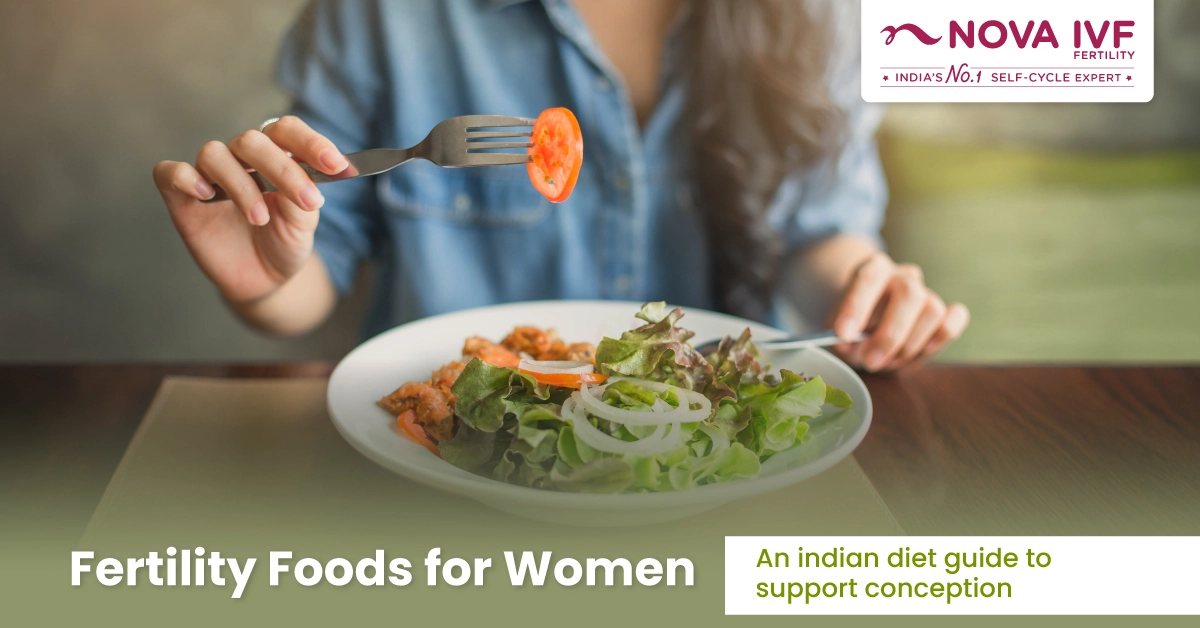
Fertility Foods for Women: An Indian Diet Guide to Boost Your Chances of Conception
A 2026 systematic review and meta-analysis found a pooled overall infertility prevalence of 8% among Indian women aged 15–49.[1.1]
Yet research consistently shows that dietary patterns play a measurable role in female reproductive outcomes. What makes this relevant for Indian women specifically is that the foods already present in a traditional Indian kitchen.
Foods like dal, ghee, methi, sesame, and dark greens align closely with what fertility science recommends.
How Does Diet Affect Female Fertility
Nutrition influences fertility via these:
- Micronutrients support ovulation and hormone production
- Antioxidants protect egg cells from oxidative damage
- A low glycaemic diet helps stabilise insulin levels. This is especially important in PCOS.
Top Fertility-Boosting Foods for Indian Women
.webp)
The Indian kitchen already holds most of what a fertility diet calls for. Make an honest attempt to embed the following:
Methi (Fenugreek)
Methi seeds and leaves contain phytoestrogens that support hormonal regulation. They also improve insulin sensitivity, which is relevant for women managing PCOS.
Using it in parathas, sabzis, or soaked overnight, methi is a practical daily addition.
Dal and Legumes
Lentils and pulses are rich in plant-based protein, iron, and folate, all of which support ovulation. They also play a role in early foetal development.
Ghee
Ghee contains fat-soluble vitamins A, D, E, and K. These support reproductive tissue health and hormone synthesis.
When you use ghee in moderation, it can be said to be a valuable part of a fertility-conscious diet.
Sesame Seeds (Til)
Sesame seeds are high in zinc and healthy fats, both of which support egg quality and hormone balance.
Seasonal Greens (Palak, Sarson, Amaranth)
Dark leafy greens provide iron, magnesium, and folate.
These nutrients are directly tied to healthy ovulation and uterine lining development.
Amla (Indian Gooseberry)
Amla is one of the most antioxidant-dense foods available in India.
Fresh amla, amla juice, or dried amla in small daily doses is a good idea.
Nuts and Seeds (Almonds, Walnuts, Flaxseeds)
These provide omega-3 fatty acids, selenium, and vitamin E. Omega-3s support progesterone production and reduce inflammation in the reproductive system.
A small handful daily will be the perfect quantity.
Fertility Diet and IVF: What to Eat Before and During Treatment
Nutrition becomes more targeted during an active IVF cycle. During ovarian stimulation, antioxidant-rich foods, think amla, berries, and mixed nuts, help protect maturing eggs from the oxidative stress that comes with hormonal intervention.
This is also where learning how to increase IVF success rate naturally through lifestyle adjustments becomes especially useful.
During the two-week wait, the focus shifts to easily digestible foods.
Women with irregular hormone markers should also consider getting fertility hormone tests done early, as test results can directly inform dietary and supplement recommendations.
Similarly, yoga practices that support fertility can complement a nutrition plan by reducing cortisol and improving pelvic circulation.
Diet is one piece of a larger preparation. For women considering IVF treatment, Nova IVF's fertility specialists provide personalised dietary guidance as part of pre-treatment planning. Before making significant changes to your diet during an active cycle, consult your Nova IVF doctor first.
Frequently Asked Questions
Which Indian foods increase fertility in women?
Methi, dal, amla, sesame seeds, ghee, and dark leafy greens are among the most helpful fertility-boosting foods available in Indian households.
Can diet alone help you get pregnant?
Diet is just a supportive factor. It improves the hormonal and cellular environment for conception but does not replace medical evaluation or treatment when an underlying fertility issue exists.
What should I eat to improve egg quality before IVF?
You should add antioxidant-rich foods such as amla and berries, omega-3 sources like walnuts and flaxseeds, zinc from sesame seeds, and iron from lentils and leafy greens to your plate.
How early should I start a fertility diet before trying to conceive?
Beginning at least three months before trying to conceive is considered best practise. Egg development cycles take approximately 90 days, so nutritional changes made today can influence egg quality several months from now.