 Self-cycleTM IVF


-
-
-
 Infertility Counselling
-
 Female Infertility Treatment
-
 Andrology Treatment
-
 Fertility Enhancing Surgeries - Female
-
 Fertility Enhancing Surgeries - Male
-
 Endoscopy Treatment
-
 IUI Treatment
-
 IVF Treatment
-
 ICSI Treatment
-
 Advance IVF Solutions
-
 Embryology
-
 Vitrification Egg, Embryo, Sperm Freezing
-
 Preimplantation Genetic Testing (PGT)
-
 Donation Program Embryo / Egg / Sperm
-
 Self-cycleTM IVF
-
-
-
-
-
How to Regulate Menstrual Periods?
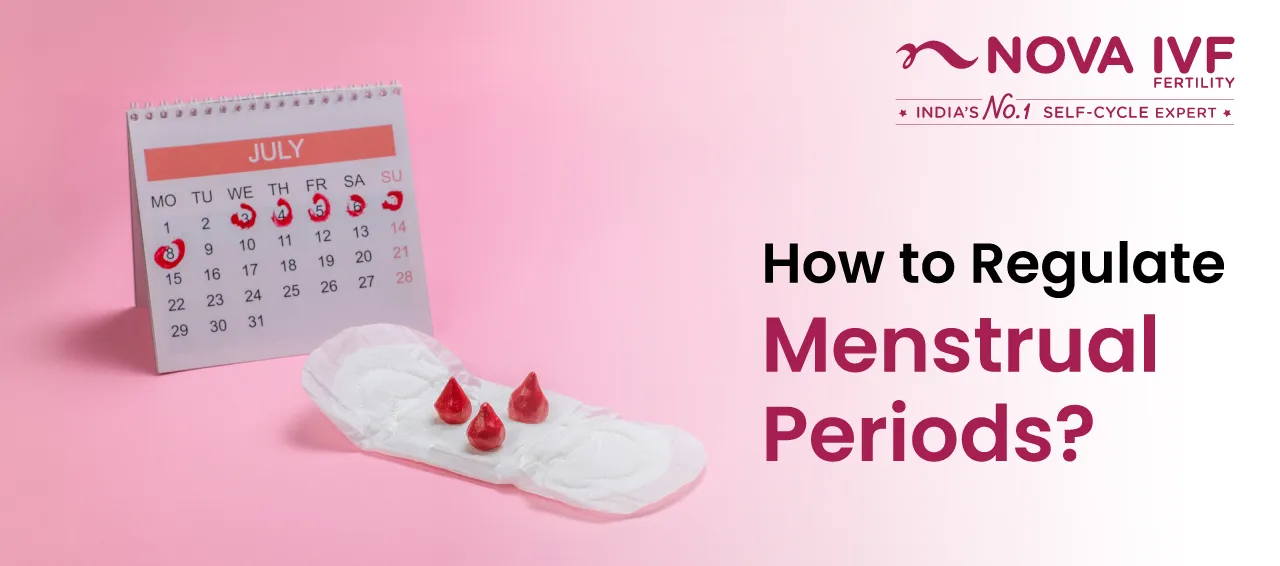
How to Regulate Menstrual Periods?
The female reproductive system releases an egg every month. It also prepares the uterus for a pregnancy by thickening the uterine lining. If this egg is not fertilised i.e. the woman does not conceive, the uterine lining is expelled from the body in the form of a menstrual period. This is a normal process that begins at puberty and continues until a woman reaches menopause.
What Is A Normal Menstrual Cycle?
A menstrual cycle that lasts for 28-35 days is considered normal. This count begins from day one of a period to the first day of the next one. A woman should be able to approximate the date of her next period. A few days here and there are normal. Periods may be accompanied by slight abdominal discomfort but this should not interfere with a womans everyday life. A normal period lasts for 4-5 days. The blood flow is usually high on the first and second days and wanes off after that.
When Should You Seek Help?
Every woman has irregular periods at some point of time or the other. Having one period thats slightly delayed is not something to worry about. However, any prolonged deviation from this is considered abnormal. You should consult a doctor if:
- Your periods suddenly become irregular and you cannot approximate the week when you will have your next period
- You do not have a period for more than 3 months at a stretch
- You have more than 1 period in less than 21 days
- You have less than 1 period in more than 35 days
- Your periods suddenly become very painful
- The blood flow of your periods suddenly increases
- You have periods that last longer than 5-7 days
How to Regulate Menstrual Periods?
Irregular menstrual periods may be caused by many factors. Thus, it is treated in many different ways including the ones listed below:
Oral Contraceptives
Irregular periods account for 30-40% of all infertility cases. Hormonal irregularities are a common cause of irregular periods. Oral contraceptives can help regulate the production of these hormones. In this way, they help regulate the length of a menstrual cycle and the length of a period. They also control the thickness of the uterine lining. Thus, they reduce the menstrual blood flow. It can also help reduce cramps and abdominal pain associated with periods.
Pain Relievers
Over-the-counter pain relievers can be very helpful in treating abdominal pain and cramps caused by periods. These are particularly beneficial in the case of pain and menstrual irregularities caused by endometriosis. Using a heating pad may also help relieve abdominal pain.
Treatment for Uterine Fibroids
Uterine fibroids that cause menstrual irregularities may be treated medically or surgically.
Medication to control bleeding and cramps is usually the first step of treatment. Gonadotropin-releasing hormone antagonists may also be prescribed to reduce the size of the fibroids. This, in turn, helps control heavy bleeding. In addition, iron supplements may be prescribed to prevent anaemia.
If the fibroids do not respond to medication, surgical options may be explored to remove the fibroids. This is referred to as a myomectomy. If the fibroids are too large, a hysterectomy may be required. This involves the removal of the fibroids along with the uterus.
A woman cannot become pregnant after this and hence, it is usually considered as a last resort. Uterine artery embolization is another radiological form of treatment of uterine fibroids. This involves cutting off the blood supply to the fibroid so that it shrinks and dies on its own.
Lifestyle Changes to Regulate Menstruation
Your lifestyle also contributes to hormone production and menstrual cycle regulation. Here are a few lifestyle changes that can help regulate your menstrual cycle.
Eat Balanced Diet
For overweight and obese women, losing weight can help regulate menstruation. This is because fat cells can influence the production of hormones and utilization of insulin. However, extreme weight loss and being underweight can also cause irregular menstruation. Hence, it is important to maintain a healthy BMI. To do this, one must follow a well-balanced diet. Eat plenty of fresh fruits and vegetables and lay off the junk food.
Exercise Regularly
A balanced diet needs to be complemented by regular exercise for a woman to stay healthy and fit. Try to work out for at least 1 hour every day. You could start with something as simple as going for a walk or cycling. Exercise also helps manage pain and cramps caused by periods.
Meditation to reduce stress
Stress is one of the common factors that contribute to irregular periods. Thus, being able to manage stress is essential for your fertility. Yoga and meditation have proved to be very beneficial in dealing with stress. Hence, you should consider setting some time aside every morning to meditate or practice yoga.
What are the four phases of the menstrual cycle?
The normal range of the menstrual cycle for any female is 21-35 days, and it undergoes a specific hormonal pattern. Knowledge of these phases is important as a way of identifying indicators of the normal cycle:
- Menstrual Phase: This marks the beginning of the normal menstrual cycle, in which the uterine lining is shed in the absence of pregnancy. It normally lasts 3 to 7 days.
- Follicular Phase: This phase overlaps with the time when the brain releases Follicle-Stimulating Hormone (FSH), which stimulates the ovaries to form follicles containing eggs. It is a crucial phase in determining the frequency and complete regularity of the menstrual cycle.
- Ovulatory Phase: It happens at the midpoint of a normal menstrual cycle, and a sharp increase in Luteinizing Hormone (LH) causes the release of the most developed ovule. This 12 to 24 hours is the most fertile period of the menstrual cycle.
- Luteal Phase: Once the ovulation has occurred, the ruptured follicle matures into the corpus luteum, which secretes progesterone to sustain a possible pregnancy. In the case of fertilisation failure, the corpus luteum withers, hormone levels decline, and the body prepares for the next normal menstrual cycle.
At what age does menstruation typically begin?
Menarche, which marks the onset of the first period, usually occurs between 12 and 13, although a normal menstrual cycle may begin between 10 and 15. The time depends on the combination of genetics, body mass index (BMI), and total nutrition. A healthy menstrual cycle at a young age is typically associated with good hormones and physical health. Issues such as excessive stress or physical activity may slow the process or alter the early frequency of the menstrual cycle.
The average menstrual cycle, though it might be irregular during the first year or two, tends to stabilise when the two systems, the brain and the ovaries, open up. Learning the mechanisms regulating the menstrual cycle at a young age can help young women determine whether their cycle is within the healthy range.
FAQs
1. What is the average menstrual cycle length?
The typical menstrual cycle is 28 days, but a range of 21-35 days is considered normal in the majority of adults.
2. How can I get regular periods naturally?
Giving attention to ways to achieve regular periods naturally implies maintaining a consistent weight and low cortisol levels, which can be achieved through yoga, exercise, and proper nutrition.
3. Are there lifestyle changes to regulate menstruation?
Yes, there are lifestyle habits that can help regulate the menstrual cycle, such as regular low-intensity exercise and a consistent sleep routine, to maintain hormonal balance.
4. What are the signs of a normal cycle?
There are additional significant markers of a normal cycle, including the menstrual cycle's regular length, manageable cramps, and predictable variations in cervical mucus throughout the month.
5. Is a 40-day cycle healthy?
Though longer cycles are expected, a menstrual period that is regularly longer than 35 days can be a reason to visit a doctor to exclude such diseases as PCOS.
6. How does yoga help regulate periods?
Yoga poses enhance blood flow to the pelvis and help control hormonal disturbances caused by stress, thereby making them irregular.
7. When should I see a doctor about my menstrual cycle frequency?
If your periods abruptly cease, or they become extremely heavy, or your menstrual cycle is always less than 21 days or more than 35 days, you should see a specialist.
8. Does age affect menstrual cycle days?
Yes, in women, the menstrual cycle becomes shorter or irregular as they approach menopause due to naturally declining hormone levels.
Related Fertility Blogs