 Self-cycleTM IVF


-
-
-
 Infertility Counselling
-
 Female Infertility Treatment
-
 Andrology Treatment
-
 Fertility Enhancing Surgeries - Female
-
 Fertility Enhancing Surgeries - Male
-
 Endoscopy Treatment
-
 IUI Treatment
-
 IVF Treatment
-
 ICSI Treatment
-
 Advance IVF Solutions
-
 Embryology
-
 Vitrification Egg, Embryo, Sperm Freezing
-
 Preimplantation Genetic Testing (PGT)
-
 Donation Program Embryo / Egg / Sperm
-
 Self-cycleTM IVF
-
-
-
-
-
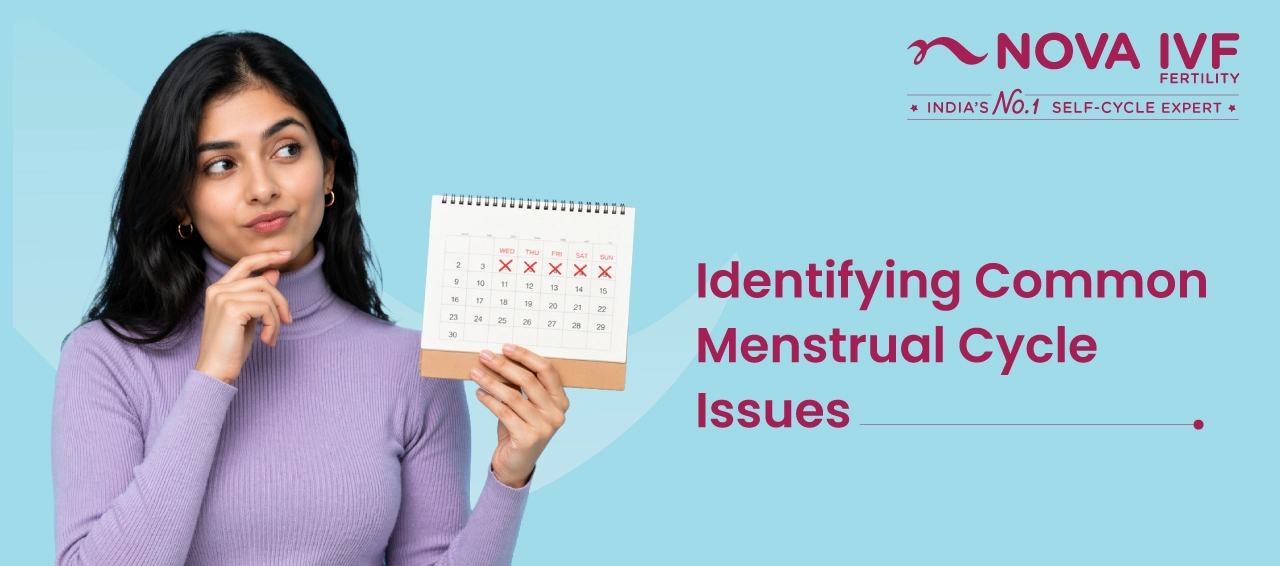
Identifying Common Menstrual Cycle Issues
Common Menstrual Cycle Problems
Understanding the stages of menstrual cycle helps in recognising when something is not normal in the female reproductive cycle stages. Several common problems may affect the menstrual cycle and are often linked to hormonal changes, especially around the ovulation and luteal phases. Some major issues are-
- Irregular periods: Cycles shorter than 21 days or longer than 35 days may indicate potential indicators of thyroid or hormonal pathology.
- Missed cycles (amenorrhea): The unexplained absence of a period is a significant clinical sign that may involve chronic stress or serious underlying medical conditions.
- Heavy menstrual bleeding: High blood loss during menstrual phases is a common but fixable cause of anaemia that needs a doctor’s eye.
- Painful periods (dysmenorrhea): If you can’t work because of cramps, that’s not normal. It’s often a sign of something like endometriosis.
- Premenstrual syndrome (PMS): The emotional and physical toll of PMS is linked to the hormone fluctuations found in the luteal phase.
- Anovulatory cycles: When ovulation is absent, the subsequent lack of progesterone production affects hormonal balance and fertility.
Early identification of these concerns allows timely treatment and supports reproductive health.
Importance of Tracking Your Menstrual Cycle
Everything becomes clearer when you understand your menstrual cycle phases. Tracking your cycle and ovulation helps you feel more in control of your training and nutrition. For those focused on fertility, this data provides the scientific accuracy needed to find your peak fertile windows with peace of mind.
It is also smart to track symptoms such as cramps or mood swings across different phases of the menstrual cycle. These details can help a doctor figure out if you have a health issue like a thyroid problem or PCOS. Using an app or a simple calendar makes it easy to stay organised. Being aware of your phases of menstrual cycle means you can get help when you need it and stay healthy.
FAQs
What are the four stages of the menstrual cycle?
The cycle consists of four important stages: menstruation, the follicular phase, ovulation, & the luteal phase. These repeat monthly until menopause or pregnancy occurs.
How long do normal menstrual cycle phases last?
The standard range is 21 to 35 days. While slight variations are normal, most healthy cycles consistently stay within this three-to-five-week timeframe.
When is the ovulation phase most fertile?
Fertility is very time-sensitive. It peaks in the few days before and during ovulation, so don't rely on guesswork if you're trying to conceive.
What happens in the luteal phase of the menstrual cycle?
Progesterone levels spike to thicken the uterine lining. If fertilisation fails, the lining sheds, and the cycle resets with the onset of menstruation.
What is considered an irregular period?
Don't ignore cycles that are consistently shorter than 21 days or longer than 35 days. These are officially classified as irregular for a reason.
How can I track menstrual cycle phases?
Don't just guess. Use apps, paper calendars, temperature readings, or actual ovulation kits to get the most accurate data possible.
When should I see a doctor?
Seek medical advice for severe pain, very heavy bleeding, or missed periods for several months.
Do menstrual phases change with age?
Yes, cycle patterns may shift during adolescence and before menopause.
Related Fertility Blogs