 Self-cycleTM IVF


-
-
-
 Infertility Counselling
-
 Female Infertility Treatment
-
 Andrology Treatment
-
 Fertility Enhancing Surgeries - Female
-
 Fertility Enhancing Surgeries - Male
-
 Endoscopy Treatment
-
 IUI Treatment
-
 IVF Treatment
-
 ICSI Treatment
-
 Advance IVF Solutions
-
 Embryology
-
 Vitrification Egg, Embryo, Sperm Freezing
-
 Preimplantation Genetic Testing (PGT)
-
 Donation Program Embryo / Egg / Sperm
-
 Self-cycleTM IVF
-
-
-
-
-
Insulin Resistance and PCOS: What It Means for Your Fertility
Many women with PCOS are told their periods are irregular or that their hormones are “out of balance”. In most cases, insulin resistance sits at the centre of these changes and often goes unaddressed.
For women trying to conceive, this becomes especially important. When insulin levels remain high, it can interfere with ovulation, affect how eggs develop, and influence how the body responds to fertility treatment. Addressing insulin resistance early helps create a more stable hormonal environment before starting any treatment.
What Is Insulin Resistance
Insulin is a hormone that moves glucose from the blood into cells for energy. When the body does not respond to insulin properly, it starts making more of it. This leads to high insulin levels in the blood (hyperinsulinemia).
High insulin does not only affect sugar levels, it also affects reproductive hormones. Around 35 to 80% of women with PCOS have insulin resistance, making it a very common cause.
How Does Insulin Resistance Cause PCOS and Affect Fertility
When insulin levels stay high, the ovaries produce more androgens (male hormones), especially testosterone. This disturbs the balance between LH and FSH, which are needed for follicle growth and ovulation.
The eggs may fail to mature, menstruation periods could be irregular or even stop, and conceiving could be difficult. High levels of androgens affect the proper development of the follicles, causing the formation of numerous immature follicles (cysts).
How Is PCOS Diagnosed in India
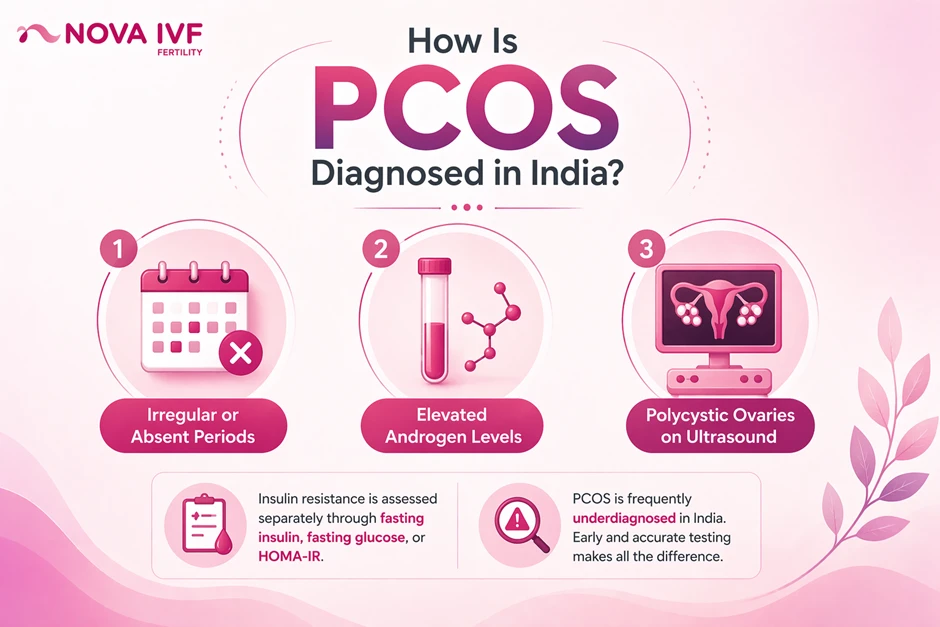
PCOS diagnosis follows the Rotterdam Criteria, which requires at least 2 of these 3 findings:
- Irregular or Absent Periods: Cycles fewer than 8 per year or consistently shorter than 21 days
- Elevated Androgen Levels: Confirmed through blood tests or clinical signs such as acne or excess facial hair
- Polycystic Ovaries on Ultrasound: Multiple small follicles visible around the ovarian periphery
Insulin resistance is assessed separately through a fasting insulin test, fasting glucose test, or HOMA-IR calculations.
PCOS is frequently underdiagnosed in India because its symptoms are often attributed to lifestyle rather than hormonal dysfunction, making early and accurate testing critical.
Learn More About female fertility assessment at Nova IVF
Insulin Resistance, PCOS and IVF: What to Do Before You Start
If insulin resistance is not managed before IVF, it can affect how the ovaries respond to stimulation, increase the risk of OHSS, and impact both egg and embryo quality. Getting insulin levels under control beforehand can make treatment more predictable and improve outcomes.
Before starting IVF, these steps are usually recommended:
- Metformin: A commonly used medicine that helps the body respond better to insulin, which can support more stable hormone levels
- Dietary changes: Eating a low glycaemic diet (fewer refined carbs and sugars) helps keep insulin levels steady
- Weight management: Even a small weight loss (5–10%) can improve ovulation and hormone balance in many women
- Egg quality support: Preparing the body in advance can help improve how eggs develop during the IVF cycle
At Nova IVF, insulin resistance is routinely evaluated in women with PCOS before starting treatment. This allows doctors to build IVF treatment plans around each patient’s hormonal and metabolic profile, leading to more consistent and improved outcomes.
Explore exploring your fertility treatment options
Frequently Asked Questions
Can you get pregnant with PCOS and insulin resistance?
Yes, as long as the correct control of the insulin levels is done using the right medicines, diets, and lifestyle adjustments, then ovulation will be restored, making natural and artificial conception possible.
Does Metformin help with PCOS fertility?
Metformin improves insulin sensitivity, which helps regulate ovulation and menstrual cycles. In PCOS patients, it is commonly prescribed before and during fertility treatment to improve stimulation response and outcomes.
How do I know if my PCOS is caused by insulin resistance?
A fasting insulin test or HOMA-IR calculation can confirm insulin resistance. Many women with irregular cycles, central weight gain, or persistent acne are found to have elevated insulin levels on testing.
Does managing insulin resistance improve IVF success in PCOS patients?
Yes, as a result of good management of insulin levels, the results of the procedure will be better because of good stimulation, quality eggs, and reduced OHSS.