 Self-cycleTM IVF


-
-
-
 Infertility Counselling
-
 Female Infertility Treatment
-
 Andrology Treatment
-
 Fertility Enhancing Surgeries - Female
-
 Fertility Enhancing Surgeries - Male
-
 Endoscopy Treatment
-
 IUI Treatment
-
 IVF Treatment
-
 ICSI Treatment
-
 Advance IVF Solutions
-
 Embryology
-
 Vitrification Egg, Embryo, Sperm Freezing
-
 Preimplantation Genetic Testing (PGT)
-
 Donation Program Embryo / Egg / Sperm
-
 Self-cycleTM IVF
-
-
-
-
-
IVF Success Rate in India: What the Numbers Actually Mean for You
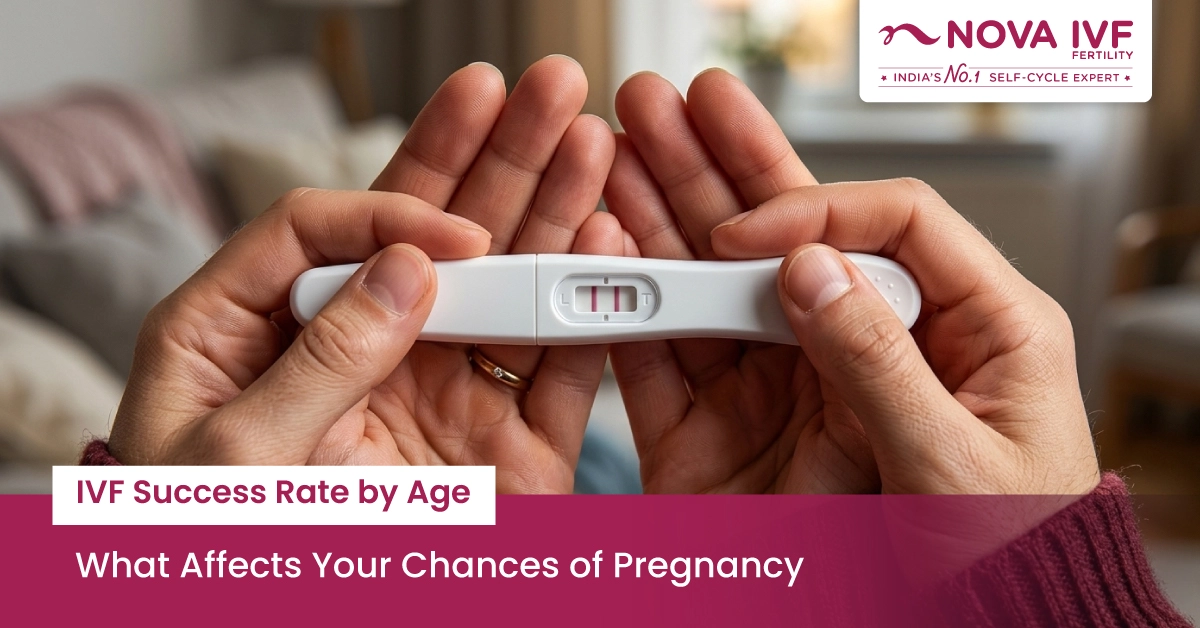
One of the first questions most couples ask when considering IVF is about success rates, and it is also one of the most misunderstood figures in fertility medicine. Numbers vary widely across clinics, age groups, and reporting methods, making direct comparisons difficult without the right context.
Several factors determine how likely IVF is to work for any individual couple, and many of them are within reach of meaningful improvement before a cycle even begins.
How Is IVF Success Rate Measured in India
Two metrics are commonly used: the clinical pregnancy rate, which measures a positive heartbeat confirmed on scan, and the live birth rate, which measures a baby actually born. These are significantly different figures, and the gap between them matters.
India follows ICMR guidelines for ART reporting, and Nova IVF reports success rates per egg retrieval cycle rather than per embryo transfer. This is a more transparent and clinically honest measure, as it accounts for cycles where transfer may not be possible due to embryo quality or uterine readiness.
IVF Success Rate by Age in India: What the Data Shows
Age is the single most influential variable in IVF outcomes. The table below reflects current Indian clinical averages using own eggs.
| Age Group | Approximate Success Rate (per cycle) |
|---|---|
| Under 35 | 40 to 50% |
| 35 to 37 | 35 to 42% |
| 38 to 40 | 25 to 35% |
| 41 to 42 | 15 to 25% |
| Above 42 | 5 to 15% |
The decline above 35 is primarily driven by a reduction in egg quantity and quality, an increase in chromosomal abnormalities, and a higher rate of early miscarriage.
What Is the IVF Age Limit in India
Under ICMR guidelines, IVF using a woman's own eggs is generally available up to age 50, though most clinics recommend completing treatment by 45. Beyond 40, donor egg IVF is frequently recommended as success rates with own eggs decline considerably.
Age is one factor, not the only one. Ovarian reserve, uterine health, sperm quality, and overall metabolic health all contribute to outcomes.
Key Factors That Affect IVF Success Rate in India
Each of the following factors influences outcomes directly and independently:
- Egg Quality and Ovarian Reserve: The primary determinant of fertilisation success and embryo viability
- Sperm Quality: Morphology, motility, and DNA fragmentation all affect fertilisation and early embryo development
- Uterine Health: Structural issues such as fibroids, polyps, or thin endometrium reduce implantation rates
- Embryo Quality: Determined by laboratory conditions, stimulation response, and genetic integrity
- Clinic Technology and Protocol: Time-lapse imaging, AI-assisted embryo selection, and experienced embryologists improve consistency
- Number of Cycles: Cumulative success rates across multiple cycles are considerably higher than single-cycle figures
Reading your hormone panel before starting IVF provides a foundational view of ovarian reserve and helps set realistic expectations before stimulation begins.
Key Factors That Affect IVF Success Rate in India
IVF success is influenced by certain key variables:
- Oocyte quality and ovarian reserve: The most significant factor influencing fertilization and embryo quality
- Semen quality: Motility, morphology, and DNA integrity are all important in embryo formation
- Uterine quality: Problems such as fibroids, polyps, and endometrial thickness may influence embryo implantation
- Embryo quality: Influenced by stimulation, laboratory procedures, and genetics
- Technology used by the clinic and protocols followed
- Number of IVF cycles: Success rates improve when analyzed collectively
Analyzing your hormone profile prior to undergoing IVF helps evaluate your ovarian reserve and set appropriate expectations.
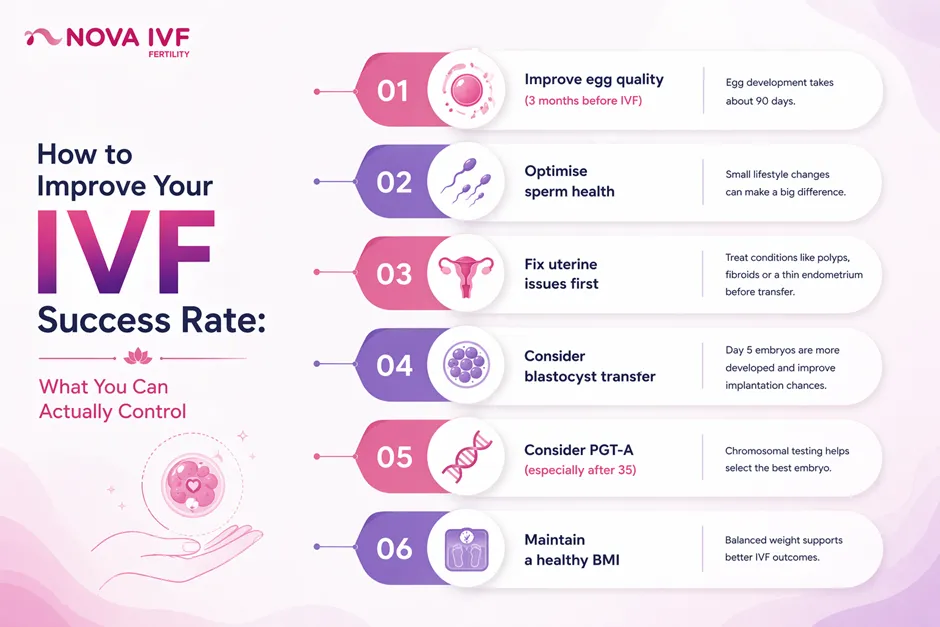
How to Improve Your IVF Success Rate: What You Can Actually Control
There are a few key things you can work on before starting IVF that can directly improve your chances.
- Improve egg quality (3 months before IVF): Egg development takes about 90 days, so this phase matters. The 90-day window that changes your egg health explains what to focus on during this time.
- Optimise sperm health: Better sperm quality comes from simple changes like the right supplements, avoiding heat exposure, and cutting down alcohol and smoking
- Fix uterine issues first: Conditions like polyps, fibroids, or a thin endometrium should be treated before embryo transfer
- Consider blastocyst transfer: Day 5 embryos are more developed, which helps in selecting stronger embryos and improves implantation chances
- Consider PGT-A (especially after 35): Why chromosomal testing before transfer matters becomes more relevant with age or repeated IVF failures
- Maintain a healthy BMI: Both low and high body weight can affect how the body responds to IVF and how well the embryo implants
At Nova IVF, all these factors are reviewed together before starting treatment, so the plan is tailored to the individual rather than following a fixed protocol.
Frequently Asked Questions
What is the success rate of IVF on the first attempt in India?
For women under 35, IVF success rates in the first cycle are around 40–50%, depending on ovarian reserve, embryo quality, and uterine receptivity.
Does IVF work after 40 in India?
Yes, IVF can work after 40, but success declines with age. Techniques like PGT-A, blastocyst transfer, and donor eggs improve outcomes significantly in older women.
How many IVF cycles are usually needed to get pregnant?
Most IVF pregnancies occur within three cycles, with cumulative success rates reaching 65–80% in women under 38 at experienced fertility centres.
Can improving egg quality before IVF increase success rates?
Yes, egg quality improves with proper care during the 90-day pre-IVF window, including nutrition, stress control, and supplements, leading to better embryo development outcomes.