 Self-cycleTM IVF


-
-
-
 Infertility Counselling
-
 Female Infertility Treatment
-
 Andrology Treatment
-
 Fertility Enhancing Surgeries - Female
-
 Fertility Enhancing Surgeries - Male
-
 Endoscopy Treatment
-
 IUI Treatment
-
 IVF Treatment
-
 ICSI Treatment
-
 Advance IVF Solutions
-
 Embryology
-
 Vitrification Egg, Embryo, Sperm Freezing
-
 Preimplantation Genetic Testing (PGT)
-
 Donation Program Embryo / Egg / Sperm
-
 Self-cycleTM IVF
-
-
-
-
-
What to Do After Embryo Transfer: Dos, Don'ts and Expert Tips for IVF Success

The time after an embryo transfer can feel emotionally intense in ways that are hard to explain unless you have been through it yourself. Every day feels longer, every small symptom feels important, and the waiting can quickly turn into overthinking. That is completely normal during the two-week wait.
While you are waiting for answers, your body is already doing important work in the background. The embryo begins adjusting to the uterine environment, moving toward implantation step by step over the next several days. A clearer picture of this phase makes this waiting period feel less stressful.
What Happens Inside Your Body After Embryo Transfer?
During the first few days after the procedure, the embryo hatches out of the zona pellucida, passes through the uterus, and starts to attach to the uterine lining. On day 6 following the transfer, hCG secretion begins.
By days 9 to 14, hCG levels usually rise enough to be detected through a blood test. Although you may not notice any physical changes or symptoms during this time, important changes are taking place inside the body as the embryo continues to develop and the body prepares to support a pregnancy.
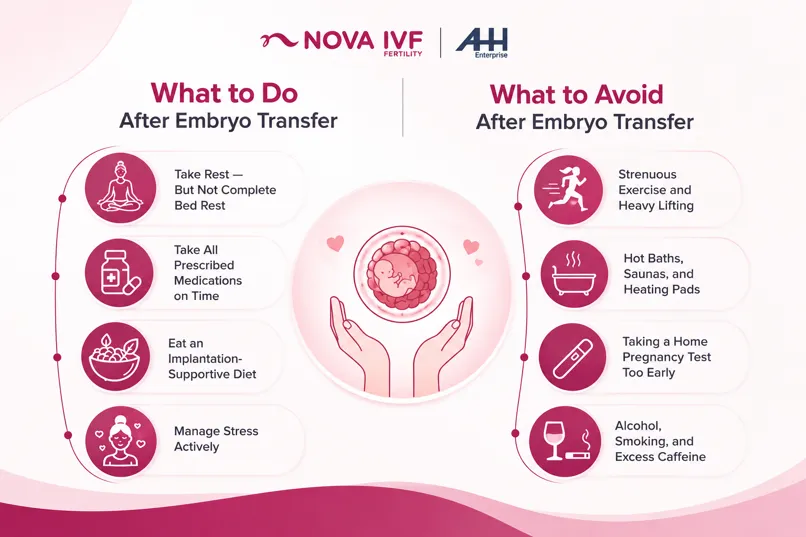
What to Do After Embryo Transfer: The Dos
Post-transfer care is not about restriction alone. Several evidence-backed actions actively support the implantation environment during the critical two-week window.
Take Rest — But Not Complete Bed Rest
Complete bed rest is not required after a blastocyst transfer. Light movement around the house and short walks are fine. For patients wondering what to do after blastocyst transfer, the answer is simple: rest, but stay gently mobile.
Avoid heavy lifting, intense workouts, and anything physically demanding. Your body needs rest, not stillness.
Take All Prescribed Medications on Time
Your doctor will recommend various medications, such as progesterone, after embryo transfer. This enables the body to support the uterus during implantation.
It is important to take these medications on time during this phase. Do not stop or change any medicine on your own unless your fertility specialist asks you to.
Eat an Implantation-Supportive Diet
An implantation-boosting diet should have balanced meals. Eating with restrictions is never good for health.
Must Include:
- Iron-rich vegetables and lentils
- Sources of protein like eggs, paneer, and legumes
- Fats and Vitamin D-rich food
Should Avoid:
- Raw/undercooked meat
- High mercury fishes
- Unpasteurized products are advised against by your clinic
Manage Stress Actively
It is common for women to feel emotionally stressed in the two-week wait period. Exercises, adequate sleep, relaxation techniques, and emotional support from loved ones may help you cope better during the implantation process. Socialising may help relieve unnecessary stress during the waiting time.
What to Avoid After Embryo Transfer: The Don'ts
The period after the embryo transfer can be stressful, but it is important to avoid a few practices that can help create a stable and easy environment for the implantation.
Strenuous Exercise and Heavy Lifting
Although it is advised to do light movements, you should avoid strenuous workouts, weight lifting, and activities that involve jumping, as these can increase pressure on the body and raise body temperature during implantation. Light physical activities, such as walking, are allowed.
Hot Baths, Saunas, and Heating Pads
Hot tubs, saunas, steam rooms, and heating pads applied to the abdomen can raise body temperature during the implantation phase.
Because early implantation requires a stable internal environment, fertility specialists generally advise avoiding excess heat exposure throughout the two-week wait, including after blastocyst culture in IVF transfers.
Taking a Home Pregnancy Test Too Early
It takes 10 to 14 days for the hCG hormone to become detectable after embryo transfer.
Taking tests at an earlier stage may lead to negative test results due to insufficient levels of the hormone hCG in the woman’s body.
Alcohol, Smoking, and Excess Caffeine
Drinking alcohol, smoking, and excess consumption of caffeine could have an impact on the process of embryo implantation.
It is generally advised by most fertility doctors to avoid alcohol and smoking, while maintaining caffeine intake within reasonable limits.
Sexual Intercourse
Sexual intercourse can trigger pelvic and uterine contractions, which may alter the calm environment the embryo needs to attach successfully. Dr. Ruchi Jain, our IVF specialist in Howrah, advises abstaining from sex during the initial post-transfer phase until you receive official clinical clearance following your pregnancy test. If you are unsure which activities are appropriate during the two-week wait, visit our IVF centre in Howrah or any other Nova IVF Fertility centre to discuss them with your fertility specialist.
Warning Signs to Watch After Embryo Transfer
Mild spotting and light cramping are some of the common concerns associated with embryo transfer. If you are wondering after embryo transfer what to do?, these symptoms are usually linked to progesterone supplementation or the implantation process itself. However, some signs may require immediate medical attention.
Contact Your Fertility Team Immediately If You Experience:
- Heavy or bright-red bleeding
- Severe pelvic cramping that does not improve with rest
- High fever
- Significant bloating or breathlessness
- Rapid or unexplained weight gain
These symptoms can sometimes be associated with complications such as ovarian hyperstimulation syndrome (OHSS).
The timeline of embryo implantation can also provide useful context when evaluating post-transfer symptoms during this phase.
FAQs
Is bed rest necessary after embryo transfer?
No, it is not recommended to take complete bed rest after an embryo transfer. Your physician will recommend light movements and safe daily activities, which are said to be safe and can help you feel more comfortable during the wait time.
How many days after embryo transfer does implantation occur?
Implantation usually occurs 1-5 days after embryo transfer. During this, the embryo firmly attaches to the uterine lining and begins to produce hCG, the hormone that is detected by pregnancy tests.
Can I take a home pregnancy test after embryo transfer?
Waiting for the beta-hCG blood test can feel difficult, especially during the two-week wait, but testing too early at home often creates more confusion than clarity. In many cases, hCG levels are still too low to show an accurate result, even if implantation has started.
What are normal symptoms after embryo transfer?
You can experience normal symptoms like mild cramping, light spotting and breast tenderness, which are common and are related to progesterone medications. These symptoms do not confirm pregnancy. However, if these symptoms are severe, it is advised to consult your fertility specialist.
Related Fertility Blogs