 Self-cycleTM IVF


-
-
-
 Infertility Counselling
-
 Female Infertility Treatment
-
 Andrology Treatment
-
 Fertility Enhancing Surgeries - Female
-
 Fertility Enhancing Surgeries - Male
-
 Endoscopy Treatment
-
 IUI Treatment
-
 IVF Treatment
-
 ICSI Treatment
-
 Advance IVF Solutions
-
 Embryology
-
 Vitrification Egg, Embryo, Sperm Freezing
-
 Preimplantation Genetic Testing (PGT)
-
 Donation Program Embryo / Egg / Sperm
-
 Self-cycleTM IVF
-
-
-
-
-
Yoga for Fertility: 8 Poses That Support Hormonal Balance & Boost IVF Outcomes
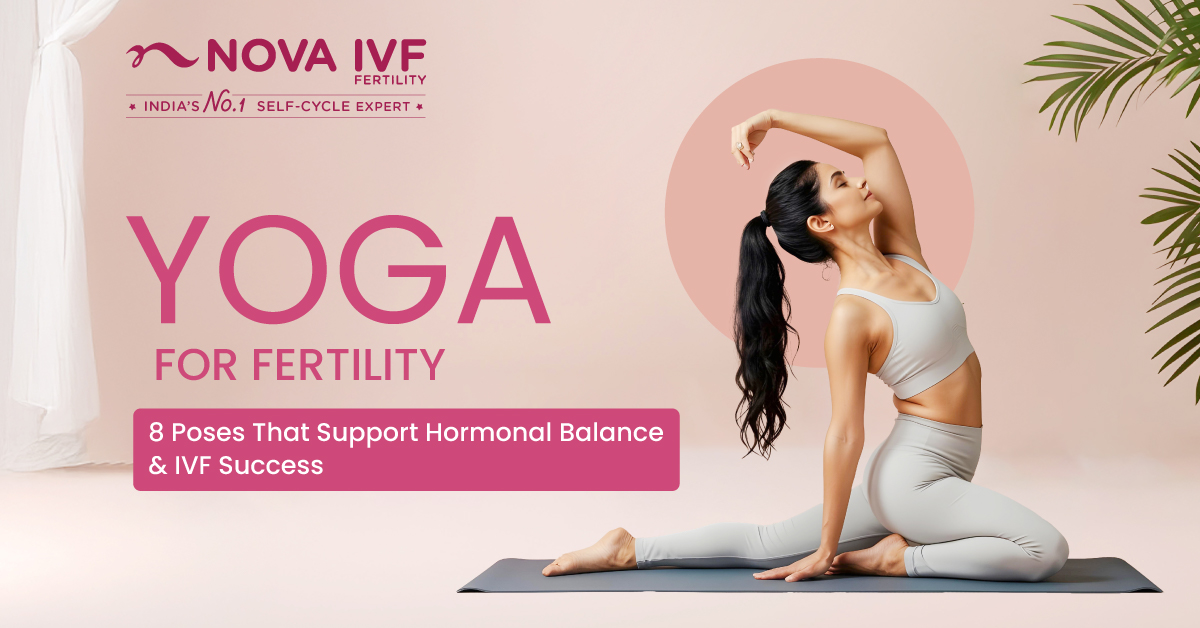
Stress and fertility share a direct biological link. When cortisol stays elevated, it disrupts the hormonal signals that control ovulation and support progesterone.
A study in the International Journal of Research in Medical Science found that daily yoga reduced serum cortisol levels among participants.[1.1] It shows that doing yoga regularly can help keep stress levels lower over time, which makes it easier to manage day to day.
Yoga is one of the few lifestyle interventions that has clinical backing. The eight poses in this guide are chosen for how they support hormonal balance, improve circulation, and aid reproductive function.
How Does Yoga Help Increase Fertility
| Factor | What Happens Without It | What Yoga Does |
|---|---|---|
| Cortisol & Stress | When cortisol is high, it disrupts ovulation and lowers progesterone | Calms the nervous system and brings cortisol back to healthy levels |
| Pelvic Blood Flow | Poor circulation will cause weakness to the uterine lining and follicle development | Improves blood flow to the uterus and ovaries. This supports the IVF outcomes |
| Weight & Inflammation | Excess weight and inflammation impair ovulation and embryo implantation | Helps maintain a healthy weight and reduces inflammation in the body |
8 Best Yoga Poses to Conceive and Support IVF
Each pose below targets a specific fertility-related benefit. Practice them in sequence for the best results.
1. Baddha Konasana (Butterfly Pose)
This pose opens the hips and boosts blood flow to the ovaries and uterus.
2. Viparita Karani (Legs Up the Wall)
Relieves pelvic tension and supports uterine circulation. Best used during the luteal phase when rest matters most.
3. Supta Baddha Konasana (Reclining Butterfly)
First of all, it deepens the hip opening. Secondly, this pose calms the nervous system and helps lower cortisol.
4. Setu Bandhasana (Bridge Pose)
This pose activates the pelvic floor and stimulates the thyroid.
5. Paschimottanasana (Seated Forward Bend)
This pose stimulates the ovaries and uterus. Because of this, slower, deeper breathing is encouraged that settles the nervous system.
6. Balasana (Child's Pose)
Balasana eases lower back tension and calms the adrenal system. This is valuable during IVF stimulation.
7. Janu Sirsasana (Head-to-Knee Pose)
Works the kidneys and adrenal glands. It also balances estrogen and progesterone levels.
8. Shavasana (Corpse Pose)
The deepest rest pose. Even 5 to 10 minutes reduces cortisol and prepares the body for implantation.
Yoga to Conceive Fast: When and How Often Should You Practice
- How long: 15 to 30 minutes a day, or 4 to 5 sessions per week.
- Best time: Morning on an empty stomach. Evening sessions before bed.
- During IVF: Avoid intense inversions, hot yoga, or vigorous sequences during the stimulation phase or the two-week wait.
Understanding how to support egg quality before IVF naturally can give useful context alongside your yoga practice.
Pranayama: Breathing Techniques That Support Fertility
Breathwork is one of the most underused tools in fertility support. Two techniques in particular offer clinically relevant benefits for women on the IVF journey.
Nadi Shodhana (Alternate Nostril Breathing)
This technique activates both hemispheres of the brain and balances the autonomic nervous system. Women concerned about their fertility hormone levels and what they indicate may find this technique a useful complement to their monitoring.
Bhramari (Humming Bee Breath)
For patients navigating emotional health during fertility treatment, Bhramari reduces anticipatory anxiety.
FAQs
1. Can yoga really help you get pregnant?
By lowering cortisol, improving pelvic circulation, and supporting a healthy weight, yoga can create a more favorable hormonal environment.
2. Which yoga poses are best for PCOS and fertility?
Baddha Konasana, Supta Baddha Konasana, and Setu Bandhasana are well-suited.
3. Is it safe to do yoga during IVF treatment?
Restorative and gentle yoga is considered safe during most phases of IVF. On the other hand, practices involving intense inversions, vigorous sequences, or hot environments should be avoided. Yoga to increase fertility gives better hormonal stability.
4. How long does it take for fertility yoga to show results?
When the practice is consistent, changes can be expected after 4 to 8 weeks.