 Self-cycleTM IVF


-
-
-
 Infertility Counselling
-
 Female Infertility Treatment
-
 Andrology Treatment
-
 Fertility Enhancing Surgeries - Female
-
 Fertility Enhancing Surgeries - Male
-
 Endoscopy Treatment
-
 IUI Treatment
-
 IVF Treatment
-
 ICSI Treatment
-
 Advance IVF Solutions
-
 Embryology
-
 Vitrification Egg, Embryo, Sperm Freezing
-
 Preimplantation Genetic Testing (PGT)
-
 Donation Program Embryo / Egg / Sperm
-
 Self-cycleTM IVF
-
-
-
-
-
Adenomyosis: Meaning, Definition, Symptoms, Causes and Treatment
endometrial thickness
Periods that feel much heavier than normal, cramps that don’t ease with usual remedies, and a constant feeling that something isn’t right, but still no clear answers. Many women are told it’s “just part of periods” and learn to manage it quietly. Even though nearly 1 in 10 may have adenomyosis, the condition often goes unnoticed. For many, answers come only after dealing with these symptoms for years.
What Is Adenomyosis?
Adenomyosis occurs when glandular cells from the uterine lining invade the myometrium (muscular middle layer, composed of smooth muscles) and respond to monthly hormonal cycles as they naturally would. The trapped tissue bleeds and thickens with each cycle, causing the uterus to enlarge and become tender over time.
.webp)
Symptoms of Adenomyosis
Adenomyosis side effects range widely in severity. Around one in three women report no symptoms at all. Those who do commonly experience:
- Heavy or prolonged menstrual bleeding, often with clots
- Severe pelvic cramping during and between periods
- Painful intercourse (dyspareunia)
- A bloated or enlarged lower abdomen
- Spotting between menstrual cycles
What Causes Adenomyosis?
The causes of adenomyosis remain incompletely understood, though three main theories hold clinical acceptance.
- Uterine inflammation following childbirth is one proposed cause, as it may disrupt the boundary between the endometrium and the myometrium.
- Another theory suggests that small bits of tissue from early development stay in the uterus and only become active later during the reproductive years.
- The third involves bone marrow stem cells within the uterine muscle transforming into cells resembling endometrial tissue.
Oestrogen is central to the progression of this condition, which is why symptoms typically resolve after menopause.
How Adenomyosis Affects Your Fertility
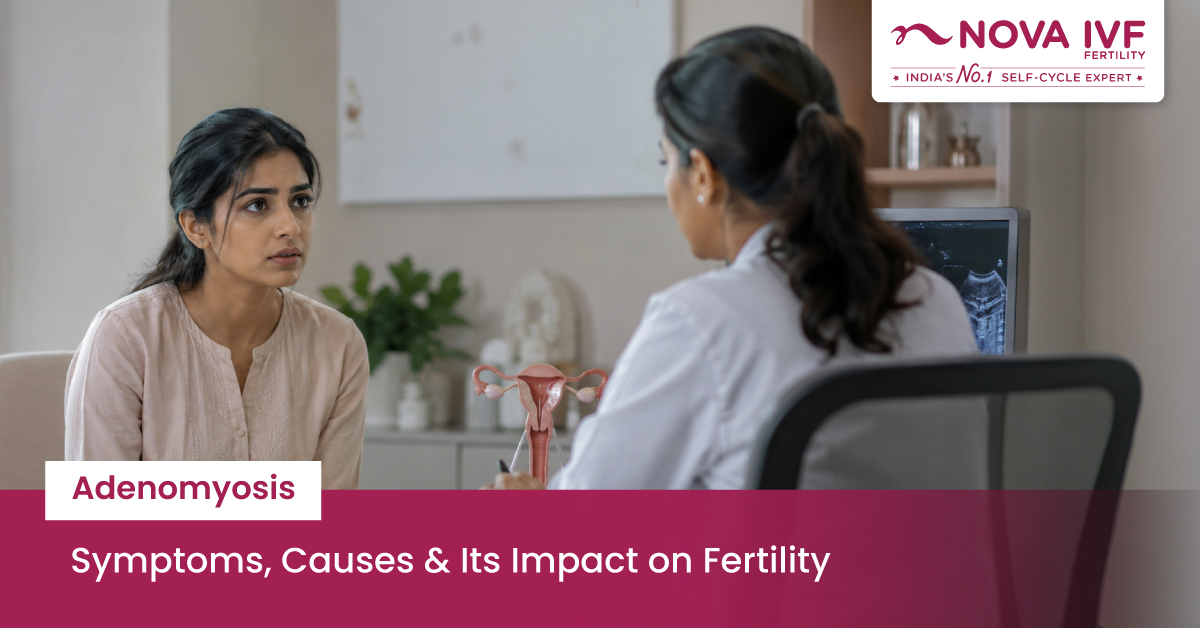
Adenomyosis can change how the uterus functions and may affect how well an embryo attaches. This also connects to endometrial thickness in IVF cycle outcomes, since the condition can impact how supportive the uterine lining is for implantation.
That said, many women with adenomyosis do go on to conceive, both naturally and through IVF and other assisted reproductive treatments, especially when the condition is properly managed before starting treatment
.webp)
Treatment Options and How to Manage Adenomyosis
There isn’t a permanent cure for adenomyosis unless surgery is done. A hysterectomy is the only long-term option and is usually considered once someone has completed their family.
If pregnancy is still a plan or surgery isn’t something you want right now, treatment is usually about making symptoms easier to manage:
- Hormonal treatments like GnRH agonists, the Mirena IUD, or birth control pills can help reduce heavy bleeding and regulate hormones.
- Pain relief medicines such as NSAIDs are commonly used to manage cramps.
- Endometrial ablation may be suggested for very heavy bleeding, especially if future pregnancy isn’t planned.
When to See a Fertility Specialist About Adenomyosis
Persistent pelvic pain, abnormally heavy periods, or difficulty conceiving all warrant a prompt specialist review. Transvaginal ultrasound and MRI are the primary diagnostic tools available and can identify adenomyosis without requiring surgery.
This patient case involving adenomyosis and successful IVF demonstrates that with the right fertility support, pregnancy remains achievable. Early diagnosis preserves the full range of treatment options and supports long-term reproductive health.
FAQs
Q1. What is the meaning of adenomyosis?
Adenomyosis refers to a condition where tissue resembling the uterine lining grows into the muscular wall of the uterus, causing it to enlarge and resulting in painful, heavy periods.
Q2. What are the main symptoms of adenomyosis?
Signs can look different for everyone, but often include heavy periods, cramps that feel harder to deal with, pain during intercourse, bloating, or spotting between cycles. At the same time, about one in three women may not notice any symptoms at all.
Q3. Is adenomyosis dangerous?
Adenomyosis is not cancerous and isn’t considered life-threatening. However, ongoing heavy bleeding can lead to anaemia, and if it’s not managed, it can start to affect fertility and day-to-day life.
Q4. Can adenomyosis be cured?
A permanent cure for adenomyosis is only possible through a hysterectomy. For women who want to preserve fertility, hormonal treatments and medical care can still help manage symptoms effectively.