 Self-cycleTM IVF



-
-
-
 Infertility Counselling
-
 Female Infertility Treatment
-
 Andrology Treatment
-
 Fertility Enhancing Surgeries - Female
-
 Fertility Enhancing Surgeries - Male
-
 Endoscopy Treatment
-
 IUI Treatment
-
 IVF Treatment
-
 ICSI Treatment
-
 Advance IVF Solutions
-
 Embryology
-
 Vitrification Egg, Embryo, Sperm Freezing
-
 Preimplantation Genetic Testing (PGT)
-
 Donation Program Embryo / Egg / Sperm
-
 Self-cycleTM IVF
-
-
-
-
-
Endometrial Thickness for IVF: Key Factors & How to Improve It
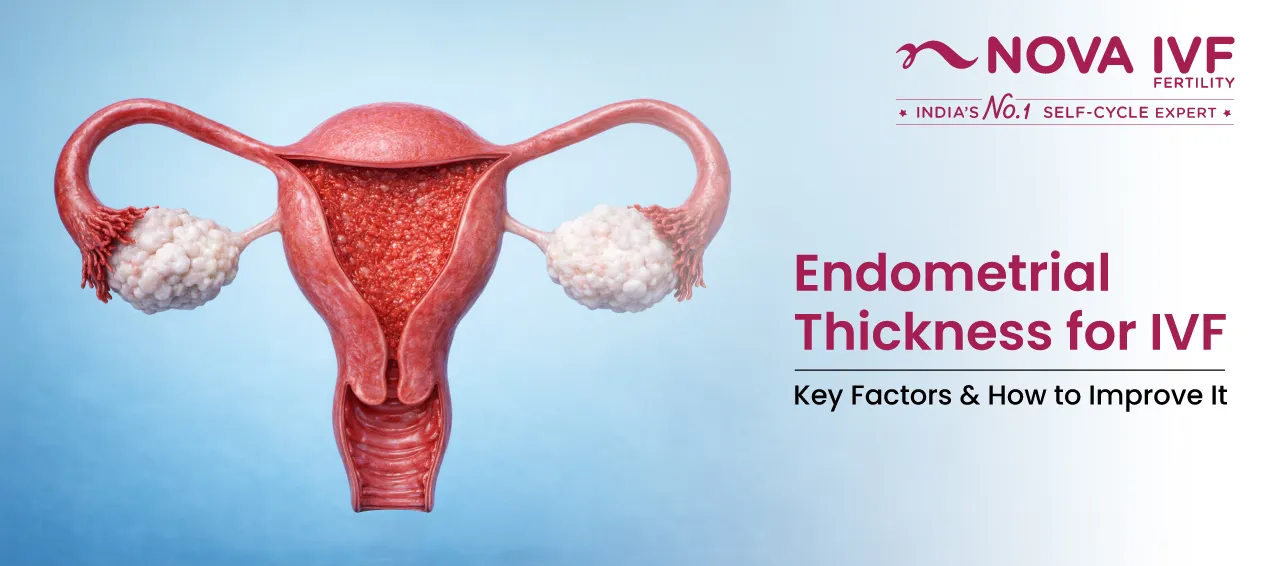
Endometrial Thickness for IVF
Endometrial thickness, a key influencer in the success of your IVF cycle, may be a new term for many people. Understanding different factors that influence your journey to become a parent can be helpful in the process. Here is everything your need to know about endometrial thickness.
What Is Endometrial Thickness for IVF?
Endometrial thickness is the thickness of the lining of the uterus, and it is an essential predictor of the success of an IVF cycle. The chances of embryo implantation and pregnancy success depend on the thickness of endometrium. It is one of the factors that influence your chances of success in an IVF cycle. If your endometrial thickness is less than 7- 8 mm, it is associated with failure in implantation of the transferred embryo and low pregnancy rates.
Measured with the help of an ultrasound during an IVF cycle. In case of an abnormal positioning of the uterus or any other medical condition, your healthcare provider will likely recommend an MRI.
Increasing endometrial thickness is associated with substantial increase in number of oocytes or eggs retrieved in an IVF cycle, number of top-quality eggs that are usable, live birth rates, and clinical pregnancy rates; it also results in a decline in the rate of pregnancy loss.
Factors Influencing Endometrial Thickness
Here are some of the factors that affect the thickness of the uterine lining:
Age:
Average endometrial thickness decreases with increasing age. Research has found that the thickest endometrium is usually present in females who are aged less than 25 years and the thinnest in females ages more than 40 years.
Estradiol or E2 Levels:
This is the main estrogen hormone present in females of childbearing age. Estradiol greatly impacts a woman’s ability to get pregnant. Low levels of this hormone during an IVF cycle can be the culprit behind lower than optimal endometrial thickness.
Aetiology of Infertility:
Aetiology or the cause of the infertility in a female can also impact her endometrial thickness during the treatment. For example, if the female’s infertility was caused by estrogen deficiency, it has a direct influence on her endometrial thickness and her chances of getting pregnant.
Apart from these, research also suggests that ovulation induction and the type of gonadotropin used in IVF treatment has an influence on endometrial thickness.
Causes of Endometrial Thickness
Endometrial thickening is a natural process that occurs every month in accordance with your menstrual cycle. The body prepares the endometrium or the uterine lining every month for the implantation of a foetus and provide it with ample nutrition. In case you become pregnant, your endometrium becomes wider with time to allow the foetus to grow. If you don’t become pregnant in a particular cycle, your body sheds the uterine lining in the form of a period.
The thickness of the endometrium in a normal scenario change with different phases of your menstrual cycles as the hormone levels change in the body. During your period, your endometrial thickness is usually about 2-4 mm, and it increases gradually to about 5-7 mm before ovulation and gets to 7-11 mm during ovulation. Your endometrial thickness can be about 16 mm after ovulation, which is the highest.
During an IVF cycle, your fertility specialist may monitor your endometrial lining proactively to ensure optimum conditions for embryo implantation.
Symptoms of Endometrial Thickness
Symptoms of low endometrial thickness can include irregular or light periods in women during their natural menstrual cycle; however, there may be no symptoms of thin uterine lining as well. During IVF treatment, your body goes through a lot of hormonal changes, which may lead to an optimal endometrial thickness even if you have low endometrial thickness otherwise. However, your fertility expert will check this aspect with the help of an ultrasound before transferring an embryo if they suspect you might have less-than-optimal endometrial thickness. This is done to maximise the chances of embryo implantation in the womb and minimise your chances of a miscarriage later on in the pregnancy.
How to Increase Endometrial Thickness for IVF
Your care provider may recommend an endometrium thickening treatment to increase the thickness of your uterine lining if it is not optimum. According to research, platelet-rich plasma (PRP) can be used to treat thin endometrium and prepare the body for embryo transfer.
You can also consider doing the following to increase your endometrial thickness for IVF naturally without any treatment:
Move your body
Gentle forms of exercises like yoga, swimming, or walking can help in increasing your endometrial thickness. These exercises are moderate in nature and great way to improve your overall health as well.
Stay hydrated
If you don’t drink enough water, chances are that the cells in your body become dehydrated. Water is a key element in ensuring the health of your cells, including the cells in your uterine lining, as healthy cells tend to function well. Staying properly hydrated may help increase your endometrial lining.
Eat healthy meals
Incorporate lean protein, vegetables, legumes, fruits, whole grains, nuts and seeds, and other healthy fats in your diet to improve your chances of a successful pregnancy as they may help in increasing your endometrial thickness.
Reduce stress levels
Stress impacts all of your bodily functions in a negative way, which includes your reproductive function. You may consider well-known, tried-and-tested techniques such as deep breathing exercises and meditation or pick up a relaxing hobby to bring your stress levels down.
What Is a Good Endometrial Thickness for IVF?
Ideally, a good endometrial thickness is 10 to 20 mm, but an endometrial thickness of 8 to 10 mm is optimum for increasing your chances of a healthy pregnancy. A key factor in IVF success, the thickness of the endometrium influences the chances of still birth and miscarriages as well.
If your doctor discovers that your endometrial thickness is less than 8 mm after an IVF failure, they will likely recommend a treatment plan to address this issue.
Read About support for repeated IVF failure
Why Does the Thickness of the Endometrium Matter?
In IVF, the embryo is placed inside the uterus, so the lining needs to be ready at that time. That is why endometrial thickness for IVF is considered an important checkpoint before embryo transfer. If the lining is thin, implantation may become more difficult, and pregnancy rates may drop.
Sometimes the problem is not just the number on the scan. The lining may not grow well because estrogen levels are low or because the uterus is not getting enough blood supply. A better-developed lining generally gives the embryo a better chance of settling and implanting. That is why doctors continue to check endometrial thickness throughout the IVF cycle and may increase or adjust hormone support if the lining is still not improving.
Thickness is not the only thing that affects IVF success, but it is one of the practical signs doctors rely on when deciding whether it is the right time to go ahead with embryo transfer.
How Is Endometrial Thickness Measured?
A common question during fertility treatment is “What is endometrial thickness?” and how it is checked. In most cases, it is measured using a transvaginal ultrasound. This scan allows the doctor to clearly see the uterus and measure the lining in millimetres.
The procedure is usually simple, takes only a few minutes, and is performed multiple times during an IVF cycle to track how the lining responds to hormones. Along with the number, doctors also check the endometrial pattern, because a healthy lining is often more important than a single measurement.
In rare situations, if ultrasound results are unclear or uterine anatomy needs a closer look, further evaluation may be recommended.
Are There Cases Where Endometrial Thickness is Not a Concern for IVF Success?
Yes. Endometrial thickness matters in IVF, but it does not determine the outcome on its own. Doctors see many cycles where the lining is not “perfect” on paper, but pregnancy still happens because other things are working in the patient’s favour.
- If the embryo quality is good, pregnancy can still happen even when the endometrial thickness is slightly on the lower side.
- If the ultrasound shows a healthy lining pattern, doctors may not treat a borderline measurement as a major issue.
- If a woman has conceived earlier with a similar lining thickness, the same range may still be acceptable in the current cycle.
- In frozen embryo transfer cycles, the lining is often prepared more deliberately with hormone support.
- If uterine blood flow appears normal on the scan and hormones are functioning as they should, doctors may not give too much weight to thickness alone.
- If the uterus appears normal and there are no fibroids, polyps, or adhesions, a slight lining difference is not always a cause for concern.
Thickened endometrial treatment is important, but doctors also consider embryo quality and overall ultrasound findings before finalising the embryo transfer.
Explore female fertility assessment at Nova IVF
Conclusion
Since endometrial thickness is an important factor that influences the success rates of your IVF cycle, women going through IVF treatment can benefit from paying attention to this determining factor. Things like eating a balanced, healthy diet, drinking plenty of water, managing stress, and working out regularly can help your body achieve an optimal endometrial thickness. If you have any concerns about your IVF or endometrial thickness, consult your fertility specialist.
FAQs
1. What is endometrial thickness?
In IVF scans, doctors check your uterus lining. Doctors call this measurement endometrial thickness for IVF. If the lining is better developed, implantation is usually easier.
2. What is a good endometrial thickness for IVF?
A good endometrial thickness in IVF is usually 8-12 mm.
3. Is a 7 mm lining enough for IVF transfer?
Often yes, but doctors also check the lining pattern and blood flow.
4. What are the symptoms of endometrial thickness being low?
Common symptoms of endometrial thickness issues include light periods or irregular cycles.
5. What are the causes of endometrial thickness not increasing?
Common causes of endometrial thickness problems include low estrogen, poor blood flow, or uterine scarring.
6. How to increase endometrial thickness for IVF?
The options for increasing endometrial thickness may include estrogen support, improved blood flow, and cycle adjustments.
7. Can IVF work with a thin endometrium?
Yes. It can still work, but the chances may be lower if the lining is consistently thin.
8. Does endometrial thickness for IVF matter in frozen cycles?
Yes. Endometrial thickness is important in IVF frozen transfer cycles as well.
9. Can endometrial thickness change every cycle?
Yes. It can be different from one cycle to another.
10. When is thickened endometrium treatment needed?
Thickened endometrium treatment is needed if doctors suspect abnormal thickening, polyps, or hormonal imbalance.
Related Fertility Blogs