 Self-cycleTM IVF


-
-
-
 Infertility Counselling
-
 Female Infertility Treatment
-
 Andrology Treatment
-
 Fertility Enhancing Surgeries - Female
-
 Fertility Enhancing Surgeries - Male
-
 Endoscopy Treatment
-
 IUI Treatment
-
 IVF Treatment
-
 ICSI Treatment
-
 Advance IVF Solutions
-
 Embryology
-
 Vitrification Egg, Embryo, Sperm Freezing
-
 Preimplantation Genetic Testing (PGT)
-
 Donation Program Embryo / Egg / Sperm
-
 Self-cycleTM IVF
-
-
-
-
-
After Embryo Transfer Precautions: What Every IVF Patient in India Must Know
The days after an embryo transfer can raise many doubts about everyday activities. Questions about rest, walking, travelling, eating, or returning to work are common, especially when advice starts coming from everywhere. The after-IVF embryo transfer precautions can help cut through that noise and give you a clearer sense of what actually matters.
While implantation happens naturally inside the body, following a few precautions after embryo transfer can reduce unnecessary stress and make the waiting period feel calmer and easier to manage.
Why Precautions After Embryo Transfer Actually Matter
Implantation is not passive. The embryo must complete a precise biological sequence: hatching, migration, adhesion, and invasion into the endometrial lining.
Physical stress, elevated body temperature, hormonal disruption from substances like alcohol, and uterine contractions from intercourse can all interfere with one or more of these steps.
Post-embryo transfer precautions are not superstition. Each one has a biological rationale rooted in reproductive physiology.
Physical Precautions to Take After Embryo Transfer
The body needs a calm, stable internal environment during the implantation window. Physical embryo transfer precautions are designed to maintain exactly that.
Rest, But Not Complete Bed Rest
It is not always advised to remain completely still after the embryo transfer procedure. On the contrary, most fertility doctors recommend engaging in some physical activity and going on short walks rather than lying in bed all day. Physical activity can help with blood circulation and also reduce stress levels.
Avoid Strenuous Exercise and Heavy Lifting
Heavy workouts, running, jumping, gym training, and lifting heavy objects can place unnecessary physical strain on the body during implantation.
Low-impact movement like light walking or gentle stretching is generally considered safe, but anything that causes exhaustion, abdominal pressure, or overheating should be avoided.
Avoid Hot Baths, Saunas, and Extreme Heat Exposure
Exposure to excess amounts of heat in the two-week waiting period is normally advised against since extremely high body temperatures can affect implantation at an early stage. Saunas, steam baths, hot tubs, as well as heating pads placed around the abdomen, should be avoided. However, showers involving warm water are considered safe in this period.
Refrain from Sexual Intercourse for Two Weeks
Many fertility doctors advise avoiding sexual intercourse for around two weeks after embryo transfer. The main concern is that uterine contractions triggered during intercourse may disturb implantation in some patients. This recommendation may also include avoiding tampons or vaginal products unless specifically advised by your fertility specialist.
Dietary Precautions After Embryo Transfer
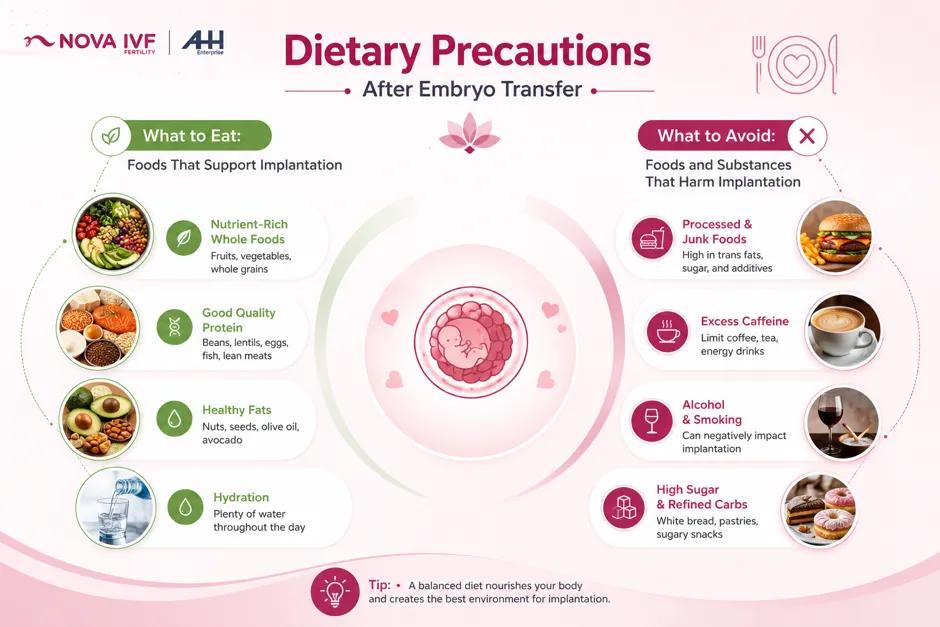
What you eat during the two-week wait directly influences the hormonal and nutritional environment in which implantation must occur. Following the after embryo transfer precautions around diet can support your body through this critical window:
What to Eat: Foods That Support Implantation
There are certain food items that can be eaten by the patient during their two-week wait to facilitate implantation.
- Foods rich in iron, such as palak, methi, and lentils, contribute to early pregnancy nutrition
- Eggs, paneer, nuts, and dairy contain protein required for embryo development
- Flax seeds and walnuts contain omega-3 fatty acids beneficial for uterine health
- Hydration can be maintained by drinking plenty of water and coconut water
- A well-balanced diet during IVF treatment helps stabilise hormonal levels during the two-week wait
What to Avoid: Foods and Substances That Harm Implantation
There are certain food items that are to be avoided by the patient during the implantation process to avoid harming the pregnancy.
- Consumption of alcohol, smoking, and even passive smoke is harmful during implantation
- Overconsumption of caffeine can cause a hormonal imbalance during the implantation period
- Undercooked or raw meat, eggs, and high mercury content fish pose a danger to food safety
- Ingestion of large amounts of processed foods and excess sugar causes inflammation in the body
- Eating papayas and pineapples in large amounts must be avoided during the implantation period
Emotional Precautions During the Two-Week Wait
Emotional stress during the two-week wait can feel just as exhausting as the physical side of IVF, making emotional care an important part of recovery. Taking the right precautions after embryo transfer, both physical and emotional, can help you get through this period more easily.
- Light yoga, meditation, and calming routines can help reduce stress levels during the waiting period
- Emotional support from partners, family, or counsellors often helps patients feel more emotionally stable
- Common implantation signs and symptoms after IVF can sometimes look very similar to normal hormonal changes
- Constant symptom-checking and repeated pregnancy testing usually increase anxiety without providing useful clarity
- Balanced IVF care and recovery tips can help patients maintain a calmer and healthier routine after embryo transfer
FAQs
How many days of rest are needed after embryo transfer?
Complete bed rest is not needed. Light rest for 1 to 2 days is enough, and gentle movement is usually safe after that.
Can I travel after embryo transfer?
Travelling is fine if it's short and comfortable. It is recommended not to go on long journeys with hectic schedules and physical exertion for at least two weeks after the transfer.
What symptoms after embryo transfer need immediate medical attention?
If you are facing symptoms like heavy bleeding, severe cramping, fever and breathlessness, it is recommended that you consult with your doctor. However, some mild cramping and spotting are usually normal after transfer.
When should I take a pregnancy test after embryo transfer?
The most reliable pregnancy test is the beta-hCG blood test, performed 10 to 14 days after transfer. Testing too early often gives misleading results.
Related Fertility Blogs