 Self-cycleTM IVF


-
-
-
 Infertility Counselling
-
 Female Infertility Treatment
-
 Andrology Treatment
-
 Fertility Enhancing Surgeries - Female
-
 Fertility Enhancing Surgeries - Male
-
 Endoscopy Treatment
-
 IUI Treatment
-
 IVF Treatment
-
 ICSI Treatment
-
 Advance IVF Solutions
-
 Embryology
-
 Vitrification Egg, Embryo, Sperm Freezing
-
 Preimplantation Genetic Testing (PGT)
-
 Donation Program Embryo / Egg / Sperm
-
 Self-cycleTM IVF
-
-
-
-
-
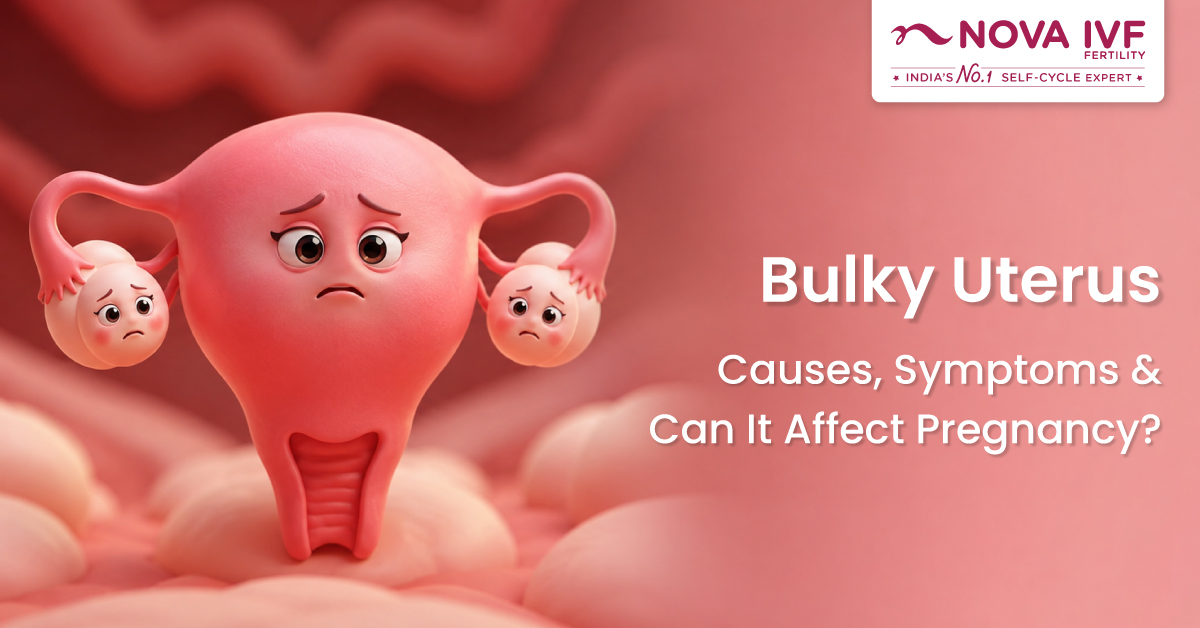
Bulky Uterus Meaning, Causes, Symptoms and Treatment
When any part of the body exceeds the size considered normal by clinically accepted anatomical standards, it becomes a cause for concern.
For areas that are visible, identifying the problem and designing a treatment plan with the right specialist is relatively straightforward. But what about areas that are out of sight? Symptoms associated with internal conditions often overlap with one another, making it difficult to understand what the body is going through.
A bulky uterus is one such condition, where multiple underlying causes share nearly identical symptoms. This blog covers what a bulky uterus is, what causes it, and whether it can be treated.
What Does Bulky Uterus Mean
A normal, non-pregnant uterus measures approximately 7.5 × 5 × 2.5 cm, roughly the size of a clenched fist. When it appears larger than this on imaging, outside of pregnancy, it’s described as bulky.
This is a descriptive finding on a scan, not a standalone diagnosis. It signals that something is causing uterine tissue to expand, and identifying that cause is essential before any treatment is considered.
Common Bulky Uterus Causes You Should Know
Several gynaecological conditions lead to uterine enlargement. Symptoms often overlap between causes, making clinical evaluation and imaging both necessary for an accurate diagnosis.
Uterine Fibroids
These are non-cancerous muscle growths that form in or around the uterus. Many women have them and don’t even notice, but when they become larger or more in number, they can make the uterus feel a bit heavier or enlarged.
Adenomyosis
In this condition, the endometrial lining begins to grow into the muscular wall of the uterus. This can make the uterus thicker, more sensitive, and slightly enlarged over time, often influenced by underlying hormonal changes.
Signs and Symptoms of a Bulky Uterus
Many women with a bulky uterus are completely asymptomatic, discovering it only during a routine scan. When symptoms do appear, they typically include:
- Heavy or prolonged periods, sometimes with clots
- Persistent pelvic pain or lower abdominal pressure
- Pain during intercourse
- Bloating or visible abdominal fullness
- Difficulty conceiving
The absence of symptoms does not mean the condition requires no attention. The underlying cause still needs proper evaluation.
Bulky Uterus and Pregnancy: Can You Still Conceive
Pregnancy is possible for many women with a bulky uterus. A mildly enlarged uterus due to hormonal shifts may have no impact on fertility whatsoever.
However, Fibroids and adenomyosis may interfere with implantation of the egg, reduce the endometrial receptivity and raise the risk of miscarriage. The size and location of fibroids highly determine if natural conception is achievable.
IVF success rates in India for patients with uterine conditions is worthwhile, as assisted reproduction is a well-established path when natural conception proves difficult.
Bulky Uterus Treatment Options
Treatment depends on the underlying cause, symptom severity, patient age, and future pregnancy plans. Common approaches include:
- Hormone therapy: Regulates oestrogen, manages adenomyosis, or slows fibroid growth
- Myomectomy: Surgical fibroid removal while preserving the uterus, suitable for those planning pregnancy
- Hysterectomy: Reserved for severe cases where other treatments have failed and pregnancy is not planned
No treatment should begin without a confirmed diagnosis. Consult a Fertility Specialist at Nova IVF India for a personalised assessment tailored to your specific condition.
Learn More About our female infertility evaluation
FAQs
1. Is a bulky uterus the same as having fibroids?
No. Fibroids are just one possible cause. Adenomyosis and hormonal imbalances can also enlarge the uterus even when fibroids aren’t present.
2. Can a bulky uterus cause miscarriage?
In some cases, it can cause miscarriage. Adenomyosis and submucosal fibroids can affect implantation and raise the risk of early pregnancy loss.
3. What is the normal size of a uterus and when is it considered bulky?
A normal non-pregnant uterus is approximately 7.5 x 5 x 2.5 cm. When it appears noticeably larger on imaging, it is described as bulky.
4. Can IVF help if I have a bulky uterus?
Yes, depending on the cause and severity. Treating the underlying condition first can significantly improve IVF outcomes.