 Self-cycleTM IVF


-
-
-
 Infertility Counselling
-
 Female Infertility Treatment
-
 Andrology Treatment
-
 Fertility Enhancing Surgeries - Female
-
 Fertility Enhancing Surgeries - Male
-
 Endoscopy Treatment
-
 IUI Treatment
-
 IVF Treatment
-
 ICSI Treatment
-
 Advance IVF Solutions
-
 Embryology
-
 Vitrification Egg, Embryo, Sperm Freezing
-
 Preimplantation Genetic Testing (PGT)
-
 Donation Program Embryo / Egg / Sperm
-
 Self-cycleTM IVF
-
-
-
-
-
4 Types of Episiotomy: What Every Expecting Mother Should Know
4 Types of Episiotomy: What Every Expecting Mother Should Know
Hearing that a surgical cut may be needed during childbirth can feel worrying. You may have questions about when a doctor might recommend a cut, or whether a cut is necessary for every vaginal birth, and what recovery may feel like afterwards.
This is why understanding an episiotomy, a small surgical cut made during vaginal birth, can be helpful.
In this guide, you will learn about the different types of episiotomy, when an episiotomy may be recommended, how the procedure is performed, and what the recovery process involves. This information can help you feel more prepared for decisions that may arise during delivery.
What Is an Episiotomy and Why Is It Done?
An episiotomy is an incision in the perineum, made during the second stage of labour. The perineum is the area between the vaginal opening and the anus. The cut widens the opening so the baby can be born more safely.
Choices around vaginal delivery vs C-section sit separately, since an episiotomy applies only to a vaginal birth.
An episiotomy may be considered in situations such as:
- Fetal Distress: Abnormal heart rate patterns require immediate delivery to protect the oxygen supply of the baby.
- Assisted Vaginal Delivery: Forceps or vacuum extractors require extra space for safe placement.
- Shoulder Dystocia: The baby's shoulder becomes trapped behind the maternal pelvic bone following delivery of the head.
- Breech Delivery: The baby presents feet or buttocks first, requiring additional room for safe head delivery.
- Prolonged Second Stage of Labor: Maternal exhaustion or slow progression threatens the well-being of the mother or baby.
The core benefit of an episiotomy is greater control over the delivery. A clean, deliberate incision can prevent an uncontrolled, severe natural tear. It can also speed up delivery when a baby needs to be born fast, and this benefit applies only when there is a genuine medical reason.
The 4 Types of Episiotomy Explained
The type of episiotomy is the direction the incision takes from the vaginal opening. Four are described in obstetric practice, though only two are used regularly today. The choice depends on anatomy, urgency, and the risk to nearby structures.
| Type | Direction | Key point |
|---|---|---|
| Median (midline) | Straight down toward the anus | Easier to repair, but the incision has a higher risk of extending to the anal sphincter |
| Mediolateral | Angled to one side | Lower risk of anal sphincter injury, but recovery may be more painful |
| Lateral | To one side of the opening | Rarely used today |
| J-shaped | Curved to avoid the anus | Used only in selected cases |
Which Type of Episiotomy Is Most Commonly Used?
Midline (median) and Mediolateral episiotomies are the most commonly used Episiotomy types.
According to StatPearls, published through the NCBI Bookshelf, a mediolateral episiotomy may reduce the risk of obstetric anal sphincter injury in selected cases. A midline episiotomy is easier to repair and may be associated with less discomfort during recovery, but it carries a higher risk of extending towards the anal sphincter.
The type of episiotomy is usually decided during labour rather than routinely planned before delivery. The healthcare provider considers the baby's position, the urgency of delivery, the mother's anatomy, and whether additional space is needed. This is why no single type is right for every birth.
Procedure of Episiotomy: Step-by-Step
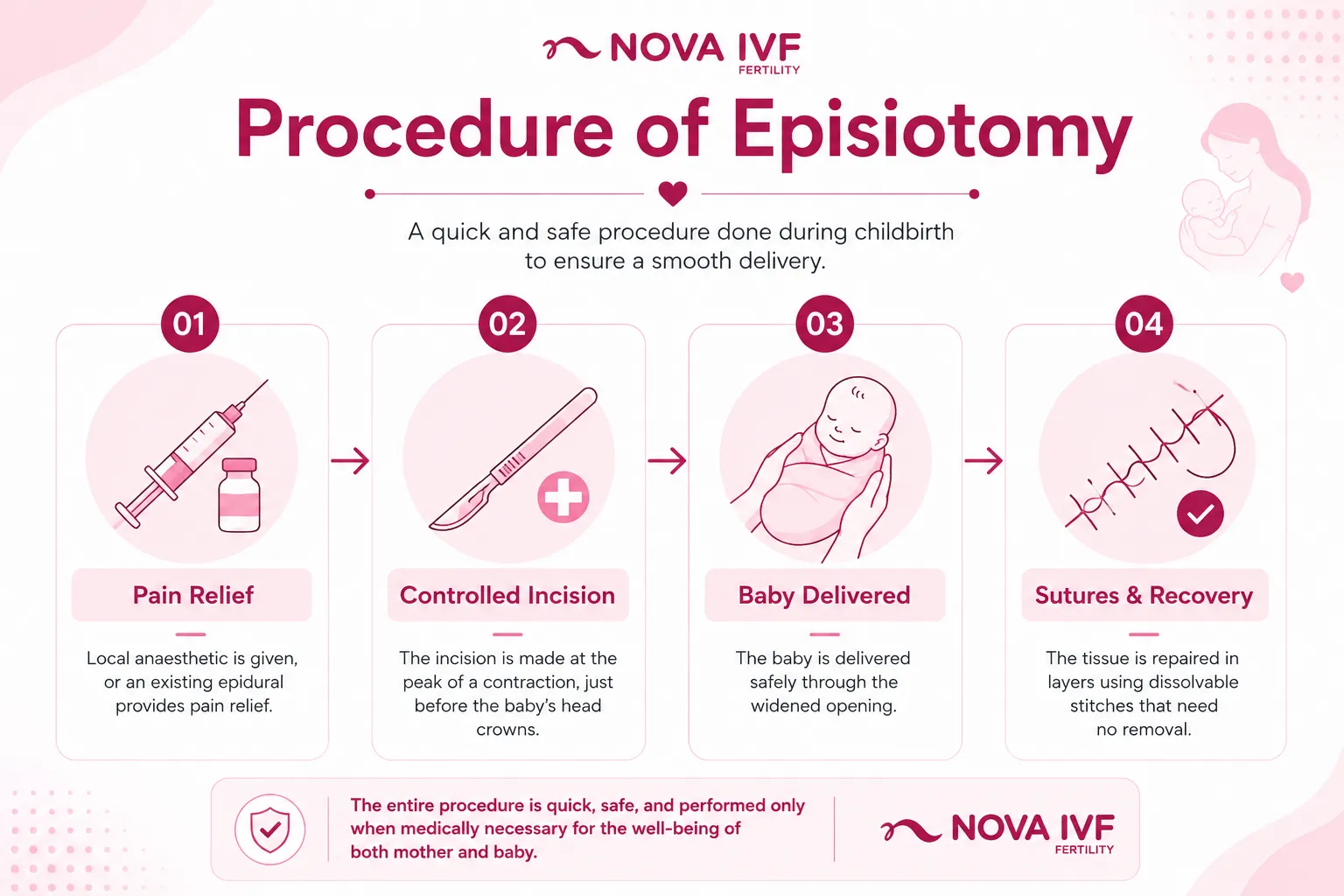
An episiotomy is performed during the pushing stage of labour when the baby's head is close to being delivered. The procedure usually follows these steps:
- Pain relief is provided: Local anaesthetic is given if needed, or an existing epidural provides pain relief.
- The incision is made: The doctor makes the incision during a contraction, shortly before the baby's head crowns.
- The baby is delivered: The widened vaginal opening provides additional space for the baby's delivery.
- The incision is repaired: After delivery, the tissue is repaired with dissolvable stitches that usually do not require removal.
An episiotomy does not automatically mean that a woman will have a difficult recovery. Recovery depends on the size and location of the incision, whether the incision extends into surrounding tissue, and the individual's healing process.
Advantages of Episiotomy
The advantages of episiotomy fall into two halves, what helps the mother and what helps the baby. Neither half counts unless the procedure is genuinely indicated. That condition is not a footnote.
- For the mother, a clean incision is far easier to repair than a ragged, unpredictable tear.
- A mediolateral cut may lower the risk of severe anal sphincter tears in some deliveries.
- For the baby, it opens up space during an assisted birth or fetal distress.
- It can shorten the second stage when safety calls for a quicker delivery.
There is a real trade-off here, and it is worth saying out loud. Routine use shows no clear benefit, ACOG notes, and a mediolateral cut can leave recovery more uncomfortable. Real pregnancy journeys differ enormously in how healing actually plays out.
The balance is fine, so the decision sits with the birth team as labour unfolds. Skipping the cut where it is not needed spares many women avoidable soreness, a point the WHO stresses. That, in the end, is why the profession moved toward selective use.
Episiotomy Aftercare: Recovery Tips and When to See a Doctor
Most episiotomy wounds heal within a few weeks, though soreness can linger a little longer. The stitches dissolve on their own, usually within about four to six weeks. Most common aftercare tips given by specialists include:
- Apply Ice Packs Early
Place cold gel packs wrapped in a soft towel against your perineum for 10-20 minutes at a time during the first 24 hours to reduce swelling and numb localized pain.
- Use Warm Sitz Baths
Starting 24 hours after delivery, sit in a shallow basin of warm water for 15 minutes two to three times daily. Warm water increases local blood flow, eases soreness, and keeps the area clean.
- Maintain Hygiene
Wash the area gently with warm water using a squeeze bottle (peri-bottle) after every bathroom visit. Pat the skin dry with clean tissue or let it air dry. Always wipe gently from front to back to keep rectal bacteria away from your healing wound.
- Manage Bowel Movements
Drink plenty of water and eat high-fiber foods to prevent constipation. Your doctor may prescribe a stool softener so you do not strain against your stitches during bowel movements.
- Rest and Avoid Pressure
Avoid prolonged standing or sitting directly on hard surfaces. Use a donut-shaped pillow if sitting causes discomfort, and avoid heavy lifting or vigorous exercise for six weeks.
- Delay Sexual Activity
Refrain from vaginal intercourse or placing anything in the vagina until your healthcare provider examines your wound and clears you at your six-week postpartum checkup.
Warning Signs: When to Contact a Doctor
Monitor your healing daily and seek medical attention if you experience any of the following symptoms:
- Severe, worsening pain in your perineal area that does not respond to prescribed pain medication.
- Foul-smelling or unusual vaginal discharge from the stitch site.
- High fever, chills, or sudden flu-like symptoms.
- Redness, noticeable swelling, or warmth expanding around the incision.
- Visible separation or opening of the stitched skin edges.
- Difficulty controlling your bowel movements or passing gas.
Trouble controlling gas or stool can indicate a deeper perineal injury and warrants prompt medical review. If you are unsure whether your episiotomy is healing normally, Nova IVF Fertility’s postpartum care team can assess your concerns and guide you on the next steps. Early evaluation can help identify complications and support appropriate recovery.
Frequently Asked Questions
What are the 4 types of episiotomy?
The 4 types of episiotomy are median (midline), mediolateral, lateral, and J-shaped. Out of these, mediolateral and midline are the two performed most often in practice.
Why is episiotomy no longer recommended routinely?
Routine episiotomy is no longer recommended because clinical studies show that routine cuts do not prevent pelvic floor damage, urinary incontinence, or severe tearing. Routine incisions can cause higher blood loss, increased postpartum pain, and longer healing times than natural tears.
Is an episiotomy necessary for every delivery?
No, an episiotomy is not necessary for every delivery. Most women deliver vaginally without requiring a surgical incision. Doctors reserve the procedure for specific emergency situations, such as fetal distress or assisted instrument deliveries.
What is the difference between episiotomy types and degrees of perineal tears?
Episiotomy types refer to the directional path and shape of a deliberate surgical cut (such as median or mediolateral). Perineal tear degrees describe the depth and severity of natural or extended tissue damage, ranging from first-degree (skin only) to fourth-degree (extending through the anal sphincter and rectal mucosa).