 Self-cycleTM IVF


-
-
-
 Infertility Counselling
-
 Female Infertility Treatment
-
 Andrology Treatment
-
 Fertility Enhancing Surgeries - Female
-
 Fertility Enhancing Surgeries - Male
-
 Endoscopy Treatment
-
 IUI Treatment
-
 IVF Treatment
-
 ICSI Treatment
-
 Advance IVF Solutions
-
 Embryology
-
 Vitrification Egg, Embryo, Sperm Freezing
-
 Preimplantation Genetic Testing (PGT)
-
 Donation Program Embryo / Egg / Sperm
-
 Self-cycleTM IVF
-
-
-
-
-
Postpartum Depression Defined: What Every New Mother Needs to Know
Many new mothers across India carry symptoms of postpartum depression for weeks before they recognise the condition. The pattern is usually mistaken for the normal exhaustion of motherhood or dismissed as a temporary mood. Recognising it for what it is becomes the first step toward the right care.
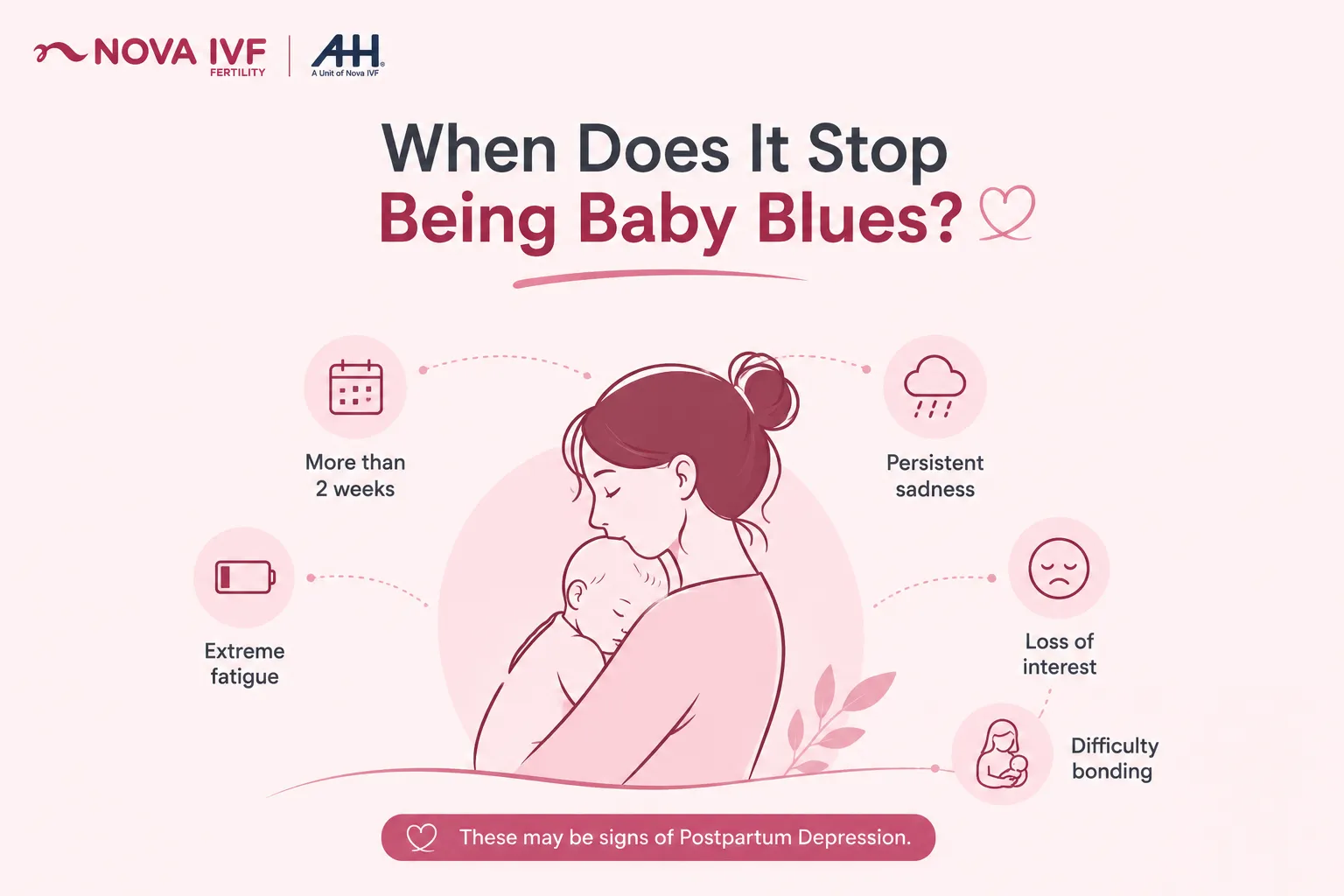
Postpartum depression, also called postnatal depression, is a clinical mood disorder. It can begin during pregnancy or within the first year after childbirth. The condition is distinct from the brief tearfulness most mothers feel in the first two weeks, which is medically classified as the postpartum blues.
What Is the Medical Definition of Postpartum Depression?
Medical authorities define postpartum depression as a major depressive disorder. The DSM-5 applies a peripartum-onset specifier to an episode that begins during pregnancy or in the four weeks after delivery. In practice, clinicians recognise onset across the first year after childbirth.
The World Health Organization places postpartum depression within its maternal mental health priorities. WHO reports that about 13 percent of women who have recently given birth experience a mental disorder, primarily depression. About 10 percent of pregnant women are affected during pregnancy.
Rates run higher in low- and middle-income countries. WHO estimates that about 20 percent of mothers in these settings experience depression after childbirth. Its maternal mental health guidance summarises the global burden and prevention priorities.
The phrase maternal depression overlaps with postpartum depression in general writing. Clinically, maternal depression covers a broader window, spanning pregnancy and the early years of motherhood. Postpartum depression is the more specific term tied to the period after childbirth.
How Is Postpartum Depression Different from Baby Blues?
Postpartum blues, often called baby blues, are a brief emotional dip experienced by up to 80 percent of new mothers shortly after delivery, as summarised in the StatPearls review on postpartum depression. Postpartum depression is more severe, more persistent, and clinically distinct. The two look similar at the surface but differ across measurable features.
| Feature | Baby Blues (Postpartum Blues) | Postpartum Depression |
|---|---|---|
| Onset | First 2 to 3 days after delivery | Pregnancy onward, peak within 4 to 6 weeks postpartum |
| Duration | Up to 2 weeks | Beyond 2 weeks, often months without treatment |
| Symptoms | Mild tearfulness, irritability, anxiety, disrupted sleep | Persistent low mood, loss of interest, guilt, intrusive thoughts |
| Impact on daily life | Minimal; daily life continues | Disrupts the mother's daily care of self and baby |
| Treatment needed | None; resolves on its own | Psychotherapy, medication where indicated, peer support |
What Are the Symptoms of Postpartum Depression?
Postpartum depression shows itself across mood, energy, thinking, and the bond with the baby. Presentation differs from one woman to the next, so no single profile fits everyone. What signals the disorder is a cluster of these features holding beyond two weeks, rather than one symptom alone.
The symptoms reported most often include the following:
- A persistent low mood sitting through most of the day and lasting two weeks or longer.
- Interest or pleasure fades from activities that once felt rewarding, sometimes including care of the baby.
- Fatigue runs deeper than ordinary newborn sleep loss, and sleep often will not come even when the baby settles.
- Bonding with the baby becomes difficult, often alongside intrusive thoughts of not being a good enough mother.
- Appetite shifts markedly in either direction, with reduced or compulsive eating and an associated change in weight.
- Guilt and harsh self-criticism attach to ordinary new-parent challenges that would not normally provoke them.
- Anxiety intensifies into panic attacks or racing thoughts, sometimes a distressing fear of harming the baby.
- Thoughts of self-harm or suicide call for immediate medical attention, regardless of how mild they appear.
A single symptom on its own rarely signals postpartum depression. Low libido and reduced energy overlap with normal hormonal recovery in the first six months, so diagnosis depends on the cluster, the duration, and the impact on functioning.
When Do Symptoms of Postpartum Depression Usually Begin?
Onset spreads more widely than many new mothers expect. Symptoms can appear from late pregnancy through the first full year after delivery. Recognising the disorder depends on understanding how wide that window really is.
The onset window breaks down across four stages.
- Some women notice the first symptoms during the third trimester, which is why antenatal care now includes mental health screening.
- Most cases first surface in the first four to six weeks after delivery, the strictest DSM-5 onset window, often within days of returning home.
- Between six weeks and six months, many cases emerge or worsen, frequently after the six-week check has already passed.
- Late-onset cases appear between six months and a year, and they are missed most often once routine screening has ended.
What Causes Postpartum Depression? Key Risk Factors Explained
Postpartum depression rarely traces to a single cause. It arises where biological, psychological, and social factors interact in the weeks around birth. Biology sets a baseline, while social and psychological stressors influence whether symptoms take hold.
On the biological side, the sharp fall in oestrogen and progesterone after delivery can disturb mood regulation. Reproductive psychiatry literature describes this hormonal withdrawal as one contributing mechanism. Beyond hormones, the risk factors clinicians weigh most often include the following.
- A personal or family history of depression or anxiety is associated with substantially higher risk.
- Sleep deprivation in the early weeks affects mood circuits and lowers resilience to other stressors.
- Limited practical or emotional support increases vulnerability for first-time and experienced mothers alike.
- A difficult pregnancy or delivery, such as preterm birth, is also associated with higher risk.
- Breastfeeding difficulty can create physical exhaustion and a sense of falling short that deepens low mood.
- Financial stress or unstable housing adds to the psychological load that new parenthood already carries.
- Joint-family dynamics cut both ways, since genuine support lowers risk while ongoing conflict raises it.
Having several risk factors does not make postpartum depression inevitable. Many women with high-risk profiles stay well, and some with none become unwell. Clinical screening helps separate an expected adjustment from a treatable disorder.
For women who conceived through assisted reproduction, the postpartum period carries a specific preceding load. The emotional impact of fertility treatment can carry forward and shape baseline vulnerability. Clinicians should ask about the treatment journey when reviewing mood after birth.
How Is Postpartum Depression Diagnosed and Treated?
Diagnosis and treatment follow a standard clinical sequence. Structured screening leads to a plan matched to severity, with follow-up across the first postpartum year. In practice, many mothers are screened once and never again.
Postpartum Depression Diagnosis
Diagnosis usually starts with a clinical screening, often the Edinburgh Postnatal Depression Scale. The mother answers ten short questions about her past week, which produce a single score. Indian-language versions have been validated for local use.
On this scale, a score of 13 or above points to probable depression. This threshold comes from Cox, Holden and Sagovsky, writing in the British Journal of Psychiatry in 1987. A positive screen signals the need for clinical assessment, not a diagnosis on its own.
Treatment Options Available
Treatment is matched to symptom severity and the mother's preferences. Mild to moderate depression often responds to psychotherapy alone. Cognitive behavioural therapy and interpersonal therapy carry the strongest evidence in postpartum populations.
More severe symptoms may call for medication alongside therapy. Any prescribing decision weighs breastfeeding and the mother's history. A psychiatrist makes that assessment on an individual basis.
Necessary Early Intervention
Structured peer support groups can improve outcomes, particularly for first-time mothers and those without strong support at home. Early intervention is associated with shorter symptom duration and less disruption to mother-infant attachment. It is treatable, and many women recover with appropriate care, though timelines vary.
Areas Where Routine Screening Is Not Enough
A common system-level gap gives detailed attention to physical recovery while leaving mental health to a single question at the six-week check. Many cases surface later than that visit. Some never surface, because no one asks a second time.
How Nova IVF's Specialists Support Mothers Through Postpartum Depression
Mothers who conceived through assisted reproduction carry a specific preceding load into the postpartum period. Nova IVF Fertility includes postpartum check-ins as part of post-treatment care across the network. The check-in identifies symptoms early and connects the mother to the right next step, which often involves a mental health referral rather than a fertility-side intervention.
Support may include:
- Review of emotional and postpartum symptoms during routine follow-up visits.
- Continuity of fertility counselling where the emotional carryover from treatment is part of what the postpartum depression is responding to.
- Lifestyle factors that support reproductive health during recovery, including sleep, nutrition, and physical activity, which influence both postpartum mood and future fertility planning.
- Coordination with the treating obstetrician and other healthcare professionals when additional mental health support is needed.
Frequently Asked Questions
What is the clinical definition of postpartum depression?
Postpartum depression is a clinical mood disorder. Onset occurs during pregnancy or within the first year after childbirth. The DSM-5 classifies it as a major depressive episode with peripartum onset.
How is postnatal depression different from baby blues?
Baby blues are common and usually settle within two weeks without treatment. Postpartum depression is more severe and more persistent. It lasts beyond two weeks and often needs psychotherapy, with medication where indicated.
Can postpartum depression occur after IVF or fertility treatment?
Yes, postpartum depression can follow a pregnancy conceived through IVF. Reported rates run close to those in the general population, and some studies place them slightly higher. The emotional load of fertility treatment can raise baseline vulnerability.
How long does postpartum depression last if untreated?
Untreated postpartum depression can persist for six months to more than a year. Its effects may extend to the mother's recovery and to infant cognitive and emotional development. Early treatment shortens the course for many women.