 Self-cycleTM IVF


-
-
-
 Infertility Counselling
-
 Female Infertility Treatment
-
 Andrology Treatment
-
 Fertility Enhancing Surgeries - Female
-
 Fertility Enhancing Surgeries - Male
-
 Endoscopy Treatment
-
 IUI Treatment
-
 IVF Treatment
-
 ICSI Treatment
-
 Advance IVF Solutions
-
 Embryology
-
 Vitrification Egg, Embryo, Sperm Freezing
-
 Preimplantation Genetic Testing (PGT)
-
 Donation Program Embryo / Egg / Sperm
-
 Self-cycleTM IVF
-
-
-
-
-
What Are the Options for Fertility Preservation in Cancer Patients
Receiving a cancer diagnosis can bring many questions about your health, treatment, and future. For many people of reproductive age, one of the biggest concerns is whether cancer treatment could affect their ability to have children later in life.
While certain cancer treatments, such as chemotherapy, radiation therapy, and some surgeries, can impact fertility, there are several established fertility preservation options for cancer patients that may help protect their future reproductive potential. The key is to discuss these options before cancer treatment begins, as early planning allows your oncology and fertility teams to recommend the most suitable approach based on your diagnosis, treatment timeline, age, and family-building goals.
Understanding the options for fertility preservation in cancer patients can help you make informed decisions while staying focused on your cancer care.
Can Cancer Treatment Affect Fertility?
Cancer treatments frequently impact reproductive health by damaging reproductive organs or destroying egg and sperm cells.
- Chemotherapy drugs can lower sperm counts in men and reduce the total egg supply in women.
- Radiation therapy aimed at the pelvis, abdomen, or brain disrupts hormone production and damages reproductive tissues.
- Surgeries that require the removal of the uterus, ovaries, or testicles directly alter reproductive capacity.
The overall level of fertility due to cancer treatment depends on patient age, the specific drug dosages, radiation fields, and the exact type of cancer.
Why Fertility Preservation Should Be Discussed Before Cancer Treatment Begins
Preserving fertility requires action before oncology procedures damage reproductive cells. Once chemotherapy or radiation begins, toxic effects on eggs and sperm can occur immediately, making post-treatment collection less effective or impossible. Early discussions between oncologists and fertility specialists allow patients to evaluate options without causing unsafe delays in cancer therapy.
Fertility Preservation Options for Women With Cancer
Female cancer patients have established and experimental fertility preservation options depending on age, relationship status, cancer type, and time constraints before cancer therapy starts.
Egg Freezing
Egg freezing, or mature oocyte cryopreservation, requires hormonal stimulation to prompt the ovaries to mature multiple eggs. Physicians retrieve mature eggs of the female cancer patient through a minor outpatient procedure and freeze the unfertilized eggs via vitrification. This method suits adult women who do not have a male partner or do not wish to use donor sperm. The process typically takes two to three weeks to complete.
Embryo Freezing
Embryo cryopreservation remains the most established female fertility preservation method. In this procedure, a physician stimulates the ovaries, retrieves mature eggs, and fertilizes those eggs in a laboratory using partner or donor sperm. Lab technicians freeze the resulting embryos for long-term storage until the female patient completes her cancer therapy. This option requires approximately two to three weeks from the start of ovarian stimulation.
According to a review published in the Journal of Assisted Reproduction and Genetics (NIH NLM), embryo cryopreservation is associated with an overall live birth rate of approximately 41% among women who returned to use their cryopreserved embryos, although outcomes vary depending on factors such as age, embryo quality, and the underlying diagnosis.
Ovarian Tissue Cryopreservation
Ovarian tissue cryopreservation involves the surgical removal of the outer layer of an ovary, which contains a high density of immature eggs. Surgeons freeze this tissue in strips for future use. After cancer recovery, surgeons reimplant the tissue back into the female patient's pelvic cavity to restore hormone production and egg release. This option requires no hormonal stimulation delay, making the procedure ideal for patients who must start chemotherapy immediately or for prepubescent girls.
Ovarian Transposition
Ovarian transposition, or oophoropexy, is a surgical procedure that relocates the ovaries higher up in the abdomen, away from the direct line of radiation. Surgeons perform this procedure before pelvic radiation therapy. Moving the ovaries in women with cancer reduces radiation exposure, preserving ovarian function without requiring egg retrieval or hormonal stimulation.
Fertility Preservation Options for Men With Cancer
Fertility preservation options for men with cancer focus on securing viable sperm cells before cytotoxic therapies harm sperm production.
Sperm Banking
Sperm banking, or sperm cryopreservation, is a quick, non-invasive method where a man provides semen samples through masturbation. Laboratory staff analyze, freeze, and store the sperm at sub-zero temperatures. Male cancer patients can usually provide two to three samples separated by 48 hours to ensure adequate sperm counts for future intrauterine insemination (IUI) or in vitro fertilization (IVF).
Testicular Sperm Extraction (TESE)
Testicular Sperm Extraction (TESE) is a minor surgical procedure used when a patient cannot produce a semen sample or when ejaculated semen lacks viable sperm. A urologist removes small pieces of tissue directly from the testicles under local or general anesthesia. Laboratory technicians extract living sperm from the tissue sample and freeze the sperm cells of the male cancer patient for future IVF procedures using intracytoplasmic sperm injection (ICSI).
Pre-pubescent boys cannot produce semen samples, making testicular tissue cryopreservation an evolving option, as noted by Dr. Ruchi Jain, a fertility specialist in Howrah. This specialised procedure is carried out at our fertility clinic in Howrah and across all Nova IVF Fertility centres to safeguard the reproductive future of pediatric patients undergoing early-age cancer care
Fertility Preservation for Children and Adolescents With Cancer
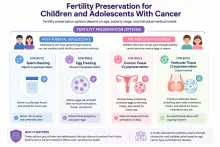
Pediatric and adolescent cancer patients require specialized fertility preservation approaches based on biological development. Here are some preferred options:
- Post-pubertal adolescents can utilize standard adult techniques, such as sperm banking or egg freezing.
- Pre-pubescent children who do not produce mature eggs or sperm rely on tissue preservation options.
- Pre-pubescent girls can undergo ovarian tissue cryopreservation.
- Pre-pubescent boys can undergo testicular tissue cryopreservation, an experimental technique that extracts and freezes immature testicular tissue containing stem cells for future maturation.
How Long Does Fertility Preservation Take?
The required time for fertility preservation in cancer patients depends directly on the chosen procedure. Sperm banking for men requires only one to three days. Surgical options like testicular sperm extraction, ovarian tissue cryopreservation, and ovarian transposition require a single outpatient surgery, allowing cancer treatments to start immediately afterward. Egg and embryo freezing require ovarian stimulation, which takes between 10 and 14 days. Modern random-start stimulation protocols allow reproductive specialists to begin this cycle immediately regardless of the female patient's menstrual phase, eliminating weeks of unnecessary waiting.
What Happens During a Fertility Preservation Consultation?
During a cancer patient’s fertility preservation consultation, the following steps are followed:
- A reproductive endocrinologist or oncofertility specialist reviews the patient's cancer diagnosis, treatment plan, and timeline.
- The specialist performs basic diagnostic assessments, such as blood tests to check hormone levels or ultrasound exams to assess the ovarian reserve of a person with cancer.
- The specialist explains the feasibility, success rates, costs, and risks associated with each fertility preservation option as per the patient.
- The medical team coordinates directly with the primary oncologist to ensure the selected fertility plan fits safely into the patient’s cancer treatment schedule.
Conclusion
Fertility preservation in cancer patients offers realistic options for those seeking to safeguard their future family plans. Established methods such as egg, embryo, and sperm freezing, combined with surgical tissue techniques, accommodate diverse patient ages and urgent medical timelines. Consulting an oncofertility specialist before starting chemotherapy or radiation ensures that patients receive tailored care without compromising primary cancer treatment outcomes.