 Self-cycleTM IVF


-
-
-
 Infertility Counselling
-
 Female Infertility Treatment
-
 Andrology Treatment
-
 Fertility Enhancing Surgeries - Female
-
 Fertility Enhancing Surgeries - Male
-
 Endoscopy Treatment
-
 IUI Treatment
-
 IVF Treatment
-
 ICSI Treatment
-
 Advance IVF Solutions
-
 Embryology
-
 Vitrification Egg, Embryo, Sperm Freezing
-
 Preimplantation Genetic Testing (PGT)
-
 Donation Program Embryo / Egg / Sperm
-
 Self-cycleTM IVF
-
-
-
-
-
Layers of the Uterus : Endometrium, Myometrium, and Perimetrium Explained
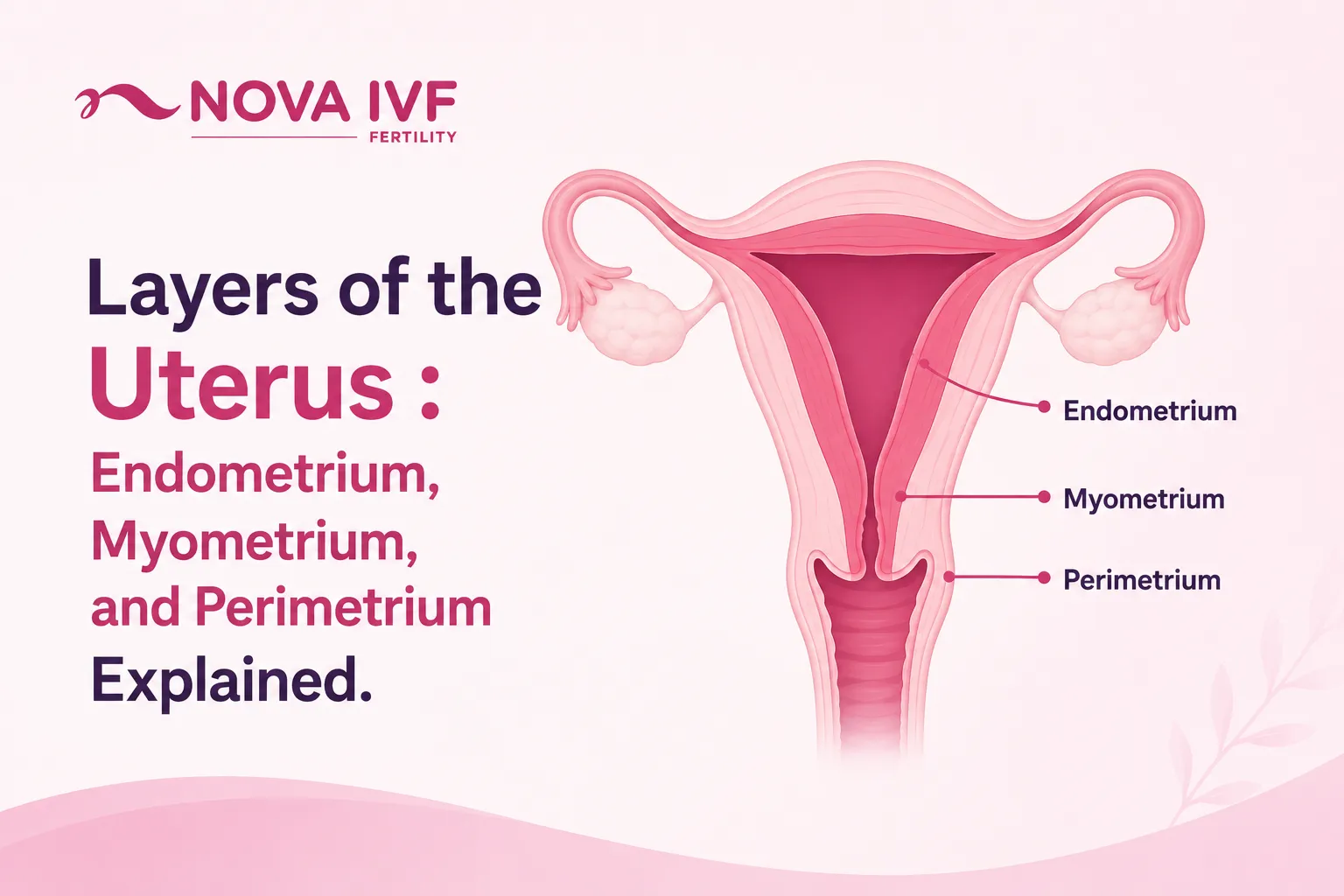
The layers of the uterus work together to support every stage of a woman's reproductive life, from the menstrual cycle to pregnancy and childbirth. While the uterus is often thought of as a single organ, its wall is made up of three distinct layers: the endometrium, myometrium, and perimetrium. Each layer has a different role and responds to hormonal changes throughout the menstrual cycle and pregnancy.
Understanding these parts of the uterus can make it easier to understand common medical terms, fertility discussions, and conditions that affect the uterus, including those involving the inner, middle, or outer layer of the uterus.
Parts of the Uterus: A Quick Overview
The parts of the uterus and the layers of the uterus are often confused, but they describe two different aspects of the organ. The parts refer to the different sections of the uterus, while the layers are the tissues that make up the uterine wall. Knowing the difference makes it easier to understand how the uterus functions during the menstrual cycle, pregnancy, and childbirth.
The uterus is made up of four main parts:
- Fundus: The rounded upper portion of the uterus, located above the openings of the fallopian tubes. During pregnancy, this area expands as the baby grows and is used to measure fetal growth in later stages.
- Body (Corpus): The central and largest part of the uterus where a fertilised egg implants and develops during pregnancy. The three layers of the uterus, including the endometrium, myometrium, and perimetrium, are found here.
- Isthmus: A short, narrow section that connects the body of the uterus to the cervix. It becomes more flexible during pregnancy and forms part of the lower uterine segment before childbirth.
- Cervix: The lower, cylindrical part of the uterus that opens into the vagina. It allows menstrual blood to pass out of the body, provides a pathway for sperm to enter the uterus, and gradually opens during labour to allow the baby to pass through.
Endometrium: The Innermost Layer
The endometrium is the inner layer of the uterus and the layer that changes the most during a woman's menstrual cycle. Every month, hormones signal the endometrium to become thicker and richer in blood vessels, creating a suitable environment for a fertilised egg to implant. If pregnancy does not occur, this lining breaks down and is shed during menstruation before the cycle begins again. These monthly changes are an essential part of healthy menstrual cycle regulation.
During pregnancy, the endometrium continues to support the developing embryo until the placenta is fully formed. Because of its role in implantation, the health and thickness of the endometrial lining are often assessed as part of a fertility test package and before starting IVF treatment.
In women undergoing IVF, evaluating endometrial thickness is an important step in determining whether the uterine lining is ready for embryo transfer. Conditions affecting this layer, including endometrial polyps and endometriosis, can sometimes influence fertility or menstrual health and may require further evaluation.
Key Functions of the Endometrium
- Prepares the uterus for embryo implantation each menstrual cycle.
- Forms the menstrual lining that is shed during a period if pregnancy does not occur.
- Supports the developing embryo during the earliest weeks of pregnancy.
- Responds to hormonal changes throughout the reproductive years.
Middle Layer of the Uterus: The Myometrium
The myometrium is the middle layer of the uterus and its thickest layer. It is made up of smooth muscle that gives the uterus its strength and flexibility. Throughout pregnancy, the myometrium stretches to accommodate the growing baby. During labour, it contracts rhythmically to help move the baby through the birth canal. These same muscles also contract during menstruation to help shed the uterine lining.
The myometrium is also where uterine fibroids develop. Understanding the uterine fibroid causes can help explain why some women experience heavy menstrual bleeding, pelvic pressure, or fertility concerns. Another condition affecting this layer is adenomyosis, where tissue similar to the uterine lining grows into the muscle wall. It is often discussed alongside endometriosis and adenomyosis because both conditions can cause painful periods, chronic pelvic pain, and may affect fertility in some women.
Key Functions of the Myometrium
- Provides the strength and support needed for the uterus to expand during pregnancy.
- Produces contractions during menstruation to help shed the uterine lining.
- Generates the powerful contractions needed during labour and childbirth.
- Helps the uterus return to its normal size after delivery.
Outer Layer of the Uterus: The Perimetrium
The perimetrium is the outer layer of the uterus. It is a thin layer of tissue that covers and protects the uterus while helping reduce friction as it moves slightly against nearby organs such as the bladder and intestines. Unlike the endometrium and myometrium, the perimetrium does not undergo major changes during the menstrual cycle or pregnancy. Instead, its primary role is to provide structural support and allow the uterus to move smoothly within the pelvis.
Although the perimetrium is less commonly affected by disease, it can become involved when conditions such as pelvic inflammatory disease (PID), severe endometriosis, or pelvic adhesions spread to the outer surface of the uterus. These conditions may lead to pelvic pain, inflammation, or scarring and often require medical evaluation.
Key Functions of the Perimetrium
- Covers and protects the outer surface of the uterus.
- Helps reduce friction between the uterus and surrounding pelvic organs.
- Supports the uterus as it naturally moves within the pelvis.
- Acts as a protective outer covering during pregnancy and everyday pelvic movement.
Why Understanding These Layers Matters for Women's Health
Many conditions that affect the uterus begin in a specific layer. Knowing which layer is involved helps doctors understand the cause of symptoms, choose the right investigations, and recommend appropriate treatment. For example, a condition affecting the endometrium may lead to irregular bleeding or difficulty with implantation, while disorders involving the myometrium are more commonly linked to heavy periods, pelvic pain, or changes in the size of the uterus.
The layers of the uterus are also routinely assessed during pelvic ultrasounds, fertility test packages, and pregnancy care. Understanding the role of each layer can make it easier to interpret medical reports
Common Conditions Linked to the Uterine Layers
Different uterine conditions affect different layers of the uterus, which is why symptoms and treatment options can vary from one condition to another.
| Condition | Layer Affected | Common Symptoms |
|---|---|---|
| Endometrial polyps | Endometrium | Irregular bleeding, spotting between periods, fertility concerns |
| Endometrial hyperplasia | Endometrium | Heavy or prolonged menstrual bleeding, bleeding after menopause |
| Uterine fibroids | Myometrium | Heavy periods, pelvic pressure, frequent urination, pain |
| Adenomyosis | Myometrium | Painful periods, heavy menstrual bleeding, pelvic pain |
| Endometriosis | Commonly affects tissue outside the uterus but may involve the outer surface of the uterus | Pelvic pain, painful periods, pain during intercourse, fertility issues |
| Pelvic inflammatory disease (PID) | May involve the perimetrium and surrounding pelvic tissues | Pelvic pain, fever, abnormal vaginal discharge, pain during intercourse |
If you experience persistent pelvic pain, unusually heavy periods, irregular bleeding, or difficulty conceiving, it's important to seek medical advice. While these symptoms can have many causes, identifying which layer of the uterus is affected often helps guide diagnosis and treatment. You don't have to figure it out alone. The specialist team at Nova IVF Fertility offers detailed evaluations to give you clear answers about your reproductive health.
FAQs
What are the three layers of the uterus?
The uterus has three layers: the endometrium, myometrium, and perimetrium. The endometrium supports implantation, the myometrium provides muscular strength for pregnancy and labour, and the perimetrium forms the protective outer covering of the uterus.
What are the four parts of the uterus?
The uterus consists of four main parts: the fundus, body (corpus), isthmus, and cervix. Together, these structures support menstruation, conception, pregnancy, and childbirth while connecting the uterus to the vagina.
What is the difference between the endometrium and myometrium?
The endometrium is the inner lining of the uterus that thickens during the menstrual cycle and supports implantation. The myometrium is the thick muscular layer that allows the uterus to stretch during pregnancy and contract during labour.
Can we touch the uterus by finger?
The uterus cannot usually be touched with a finger because it lies deep within the pelvis. However, the cervix, which is the lower part of the uterus, may be reached during a vaginal examination depending on individual anatomy.