 Infertility Counselling
 Female Infertility Treatment
 Andrology Treatment
 Fertility Enhancing Surgeries - Female
 Fertility Enhancing Surgeries - Male
 Endoscopy Treatment
 IUI Treatment
 IVF Treatment
 ICSI Treatment
 Advanced IVF Solutions
 Embryology
 Vitrification Egg, Embryo, Sperm Freezing
 Preimplantation Genetic Testing (PGT)
 Donation Program Embryo / Egg / Sperm
 Self-cycleTM IVF

 Self-cycleTM IVF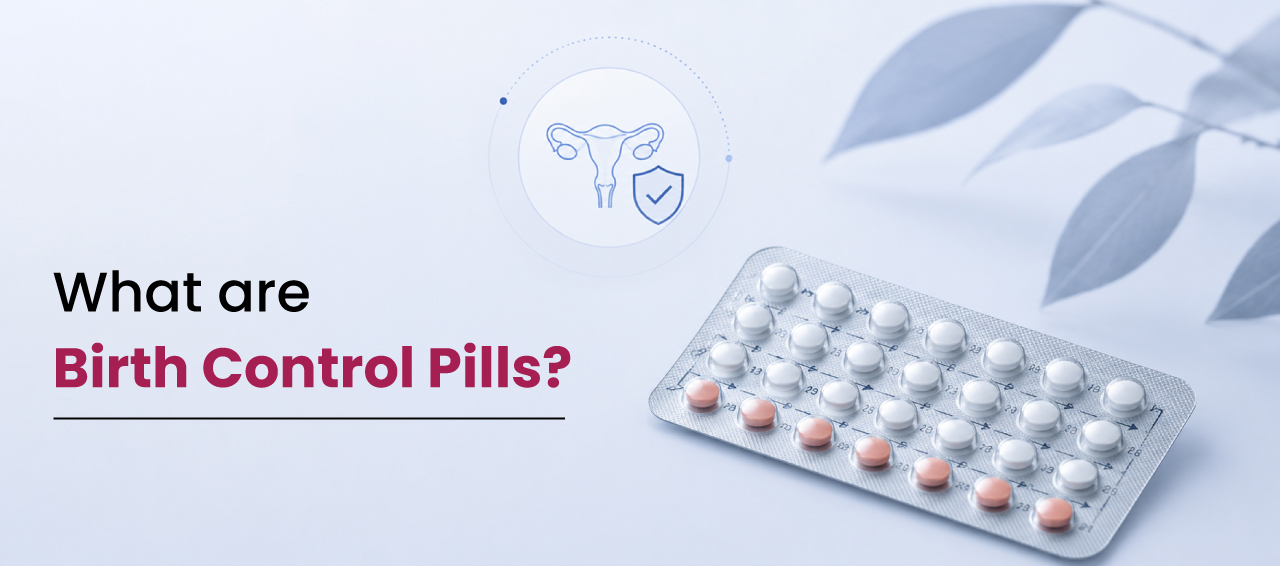
Infertility is a serious problem that is faced by a large number of couples all over the world. In fact, about 40 %- 50 % of these cases are due to female infertility. But the good news is that a woman's ability to get pregnant in the future does not depend on whether she takes birth control pills at present or not.
Infertility Due to Birth Control Pills - Myth or Reality
To put it in straight and simple words, infertility due to birth control pills is a myth. There is no scientific basis to believe that if you are on birth control pills for a long time, you won't be able to get pregnant once you stop taking the pills. In fact, several studies have indicated that you are likely to get pregnant if you have been on birth control pills in the past as much as a woman who has never taken a contraceptive pill in her life.
Birth control pills basically comprise of hormones that ensure your eggs do not ovulate. These hormones also play a role in thickening your cervical mucus, which helps to prevent the sperm from reaching your eggs.
Once you discontinue taking your contraceptive pills, the hormone supplements should leave your body in a couple of days or at most a couple of weeks. When these hormones are out of the body, your menstrual cycle starts functioning in a normal manner and your fertility returns to its usual state. In some cases, ovulation can kick in even before the hormones are fully out of a woman's system.
If you are unable to get pregnant after discontinuing the birth control pills, it does not mean that the pills are responsible for this development. You need to consult your medical practitioner to determine the exact cause of your inability to conceive.
What are Birth Control Pills?
Birth control pills refer to a common type of oral contraception used to prevent pregnancy. Most women simply call it “the pill.” It contains hormones that basically tell the body not to follow its usual monthly fertility routine. The biggest job of these hormones is to stop ovulation. In simple words, the ovary does not release an egg. And if there is no egg, pregnancy cannot happen.
Birth control pills also affect the cervix by making cervical mucus thicker. This matters because sperm usually need to travel through this mucus to reach the uterus. When mucus thickens, it becomes harder for sperm to move forward. Some pills may also thin the lining of the uterus, which makes it less supportive for implantation.
A lot of women get anxious and start thinking about contraceptive pills and infertility, especially if they have taken the pill for years. But medically speaking, there is no strong evidence that the pill permanently damages fertility. In most cases, hormonal pills restore fertility once the pills are stopped. For many women, the cycle becomes normal within weeks or a few months. That is why doctors commonly say fertility after birth control is usually the same as that of someone who never used it.
So when people talk about long-term pill effects on fertility, they’re usually talking about the body taking some time to settle back into its normal cycle, not permanent infertility.
What are the Types of Birth Control Pills?
There are two clinically recognised types of birth control pills. The classification is based on the tablet's hormonal composition.
Combination Pills (Estrogen + Progestin):
These contain two hormones, estrogen and progestin. They stop the release of an egg during the cycle, which is why pregnancy becomes unlikely.
Progestin-Only Pills (Minipill):
These contain only progestin. They are often used when estrogen is not advised, such as during breastfeeding.
Some women may notice birth control pills side effects when starting, including nausea, headaches, breast tenderness, mood changes, or spotting. These effects often settle as the body adjusts.
Frequently Asked Questions (FAQs)
Q1. How effective are birth control pills?
Birth control pills are about 99% effective when taken correctly every day.
Q2. How to use birth control pills properly?
If you are wondering how to use birth control pills, the basic rule is to take one pill daily at the same time. Missing doses increases the chance of pregnancy.
Q3. How soon do birth control pills start working?
Birth control pills may take up to 7 days to fully prevent pregnancy, so backup protection is advised during the first week.
Q4. Can birth control pills delay fertility after stopping?
Usually no. Most women regain fertility soon after stopping birth control pills, sometimes within weeks.
Q5. When does ovulation return after stopping the pill?
For many women, ovulation returns within a few weeks after stopping birth control pills, although cycles may take some time to settle.
Q6. Do birth control pills cause permanent infertility?
No. The idea of permanent infertility is a myth, and research does not support it.
Q7. Are birth control pills safe in the long term?
Yes, for most women, “Is birth control pills safe?” is not a concern, but a doctor should always review medical history before long-term use.
Q8. Do birth control pills protect against STIs?
No, birth control pills do not prevent sexually transmitted infections. Condoms are still required for protection.
Q9. What should I do if I miss a pill?
If you miss a pill, take it as soon as you remember. Then take the next pill at the usual time. In some situations, using backup contraception for a few days may be recommended.
Q10. What are the side effects of birth control pills?
Birth control pills side effects can vary from woman to woman. Some may experience nausea, headaches, breast tenderness, mood changes, or light spotting, especially when starting the pills or changing brands.