 Self-cycleTM IVF


-
-
-
 Infertility Counselling
-
 Female Infertility Treatment
-
 Andrology Treatment
-
 Fertility Enhancing Surgeries - Female
-
 Fertility Enhancing Surgeries - Male
-
 Endoscopy Treatment
-
 IUI Treatment
-
 IVF Treatment
-
 ICSI Treatment
-
 Advance IVF Solutions
-
 Embryology
-
 Vitrification Egg, Embryo, Sperm Freezing
-
 Preimplantation Genetic Testing (PGT)
-
 Donation Program Embryo / Egg / Sperm
-
 Self-cycleTM IVF
-
-
-
-
-
Causes of Delayed Period: Signs, Prevention and Remedies Explained
A period that is a few days late can make you wonder what has changed in your body. While pregnancy is often the first thought, a delayed period can also follow stress, changes in weight or exercise, hormonal fluctuations, or certain medications. An occasional delay is usually not a cause for concern, but repeated changes in your cycle may need closer attention.
Knowing what counts as a delayed period, the causes of delayed periods, and when to seek medical advice can help you understand your menstrual cycle and know when a delay needs attention.
What Counts as a Delayed Period?
A typical menstrual cycle is of 21 to 35 days, with an average of about 28 days, according to Cleveland Clinic. The cycle is counted from the first day of one period to the first day of the next. A single variation in your cycle is not unusual. The table below shows what is considered regular, late, or missed.
| Status | Timing |
|---|---|
| Regular cycle | 21 to 35 days between periods |
| Late period | 5 to 7 days past the expected date |
| Missed period | No period beyond that window or past 35 days |
Causes and Common Reasons for a Late Period
The common causes of a delayed period are:
- Pregnancy- most common cause of missed period in sexually active women of reproductive age group
- Breast feeding
- Stress- increases cortisol (stress hormone) levels in body which interferes with ovulation
- Weight fluctuations- sudden and excessive weight loss, crash diets and over weight/ obesity alter hormone levels which interfere with ovulation
- Excessive exercise- lowers body fat which is required for synthesis of reproductive hormones
- Hormonal imbalances- especially in conditions like PCOS/ PMOS and thyroid disorders
- Medications (such as antidepressants and chemotherapy drugs) and contraceptives (hormonal pills or IUD’s)
- Perimenopause
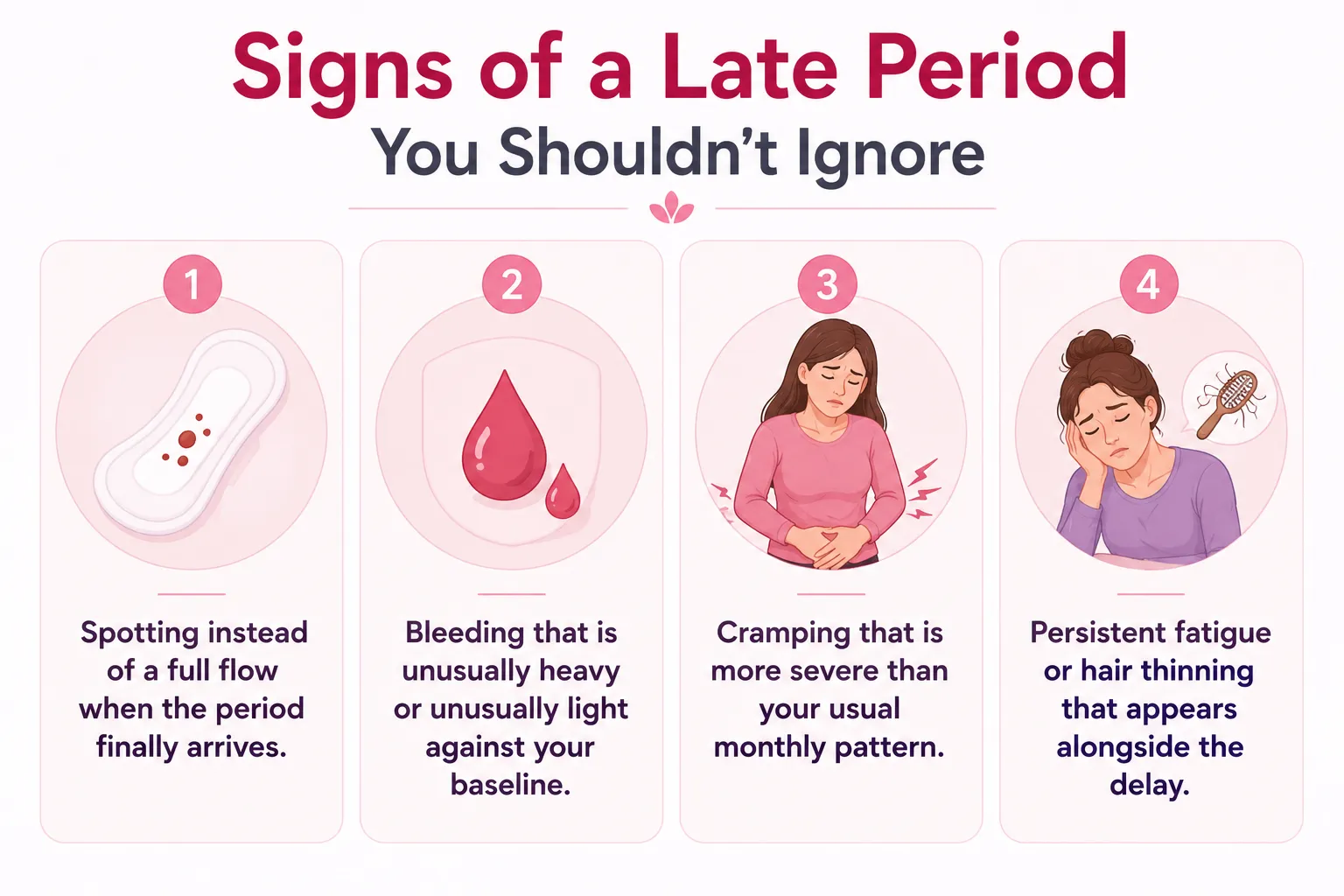
Signs of Late Period You Shouldn't Ignore
A delayed period can happen without other symptoms, but changes that occur alongside it can help your doctor understand what may be causing it. Paying attention to these four changes can help your doctor identify a possible underlying cause.
How to Prevent Irregular Menstruation
While not all causes of irregular menstruation can be prevented, certain precautions and healthy lifestyle habits can help support menstrual regularity and overall reproductive health.
- Maintain a Stable Weight: Avoid crash diets and rapid weight loss, as adequate nutrition and energy are important for regular ovulation.
- Manage Daily Stress: Maintain a consistent sleep and wind-down routine, as prolonged stress can cause hormonal imbalances.
- Exercise in Moderation: Stay physically active, but avoid sudden increases in intense exercise that can disrupt ovulation and stop periods.
- Eat Nutrient-Dense Meals: Consume balanced meals rich in lean proteins and iron to support overall health and prevent iron deficiency.
- Track Cycles Consistently: Track your cycle start dates, flow duration, and symptoms monthly using an app or calendar to detect irregular patterns early.
Late Period Remedies: Safe Ways to Support Your Cycle
A late period does not always require a remedy, and there is no reliable home method that can make menstruation start on demand. If pregnancy has been ruled out, simple measures can support overall wellbeing while you wait for your cycle to begin.
- Stress Reduction Techniques: Practicing daily deep-breathing exercises, meditation, or gentle yoga helps lower circulating adrenal stress hormones that can delay ovulation.
- Sleep Hygiene: Maintaining consistent wake and sleep times helps the body’s circadian rhythms, which regulate luteinizing hormone and follicle-stimulating hormone secretion.
- Hydration and Nutrition: Staying well-hydrated and consuming adequate nutrients supports overall health throughout the menstrual cycle.
- If periods are delayed beyond 90 days, the doctor may prescribe hormonal pills to induce withdrawal bleeding (induce periods). However, pregnancy needs to be ruled out before opting for the hormonal treatment
While seeking solutions to the causes of delayed periods, it is important to note that unproven herbal home remedies, such as consuming high doses of ginger or parsley tea to induce menstruation, lack clinical evidence for effectiveness and safety. They should not be used as a substitute for medical evaluation, particularly when periods are repeatedly delayed.
When to Consult a Gynaecologist
Some menstrual delays need medical evaluation, particularly when periods are repeatedly irregular or occur with other symptoms. Consult a gynaecologist if you experience:
- Absence of Flow: Experiencing three or more consecutive missed cycles (also known as “secondary amenorrhea”).
- Recurring Delays: Experiencing unpredictable or delayed cycles repeatedly for over three months.
- Severe Symptoms: Bleeding accompanied by severe pelvic pain, high fever, or unusual vaginal discharge.
- Possibility of Pregnancy: Suspecting pregnancy, which should always be confirmed or excluded using a reliable pregnancy test.
Recurring irregular menstrual cycles may call for a fertility evaluation that looks for the underlying causes of delayed periods. Book a consultation with Nova IVF Fertility to have your delayed periods assessed by a fertility specialist. A structured female fertility assessment can help determine the factors affecting your menstrual and reproductive health.
Frequently Asked Questions
Why is my period late if I am not pregnant?
A late period without pregnancy is usually linked to stress, thyroid problems, PCOS (PMOS), weight changes, or intense exercise. Light spotting is sometimes mistaken for a period, so understanding implantation bleeding vs period helps you tell an early sign from a delay.
How much delay in your period is normal?
A few days is common, because cycle length shifts naturally. A period is generally considered late once it is 5 to 7 days past due. Beyond 35 days, it is usually treated as a missed cycle.
Can irregular periods affect fertility?
Yes, they can, though an occasional off month rarely matters. What counts is the reason behind it. Regularly unpredictable cycles can indicate an ovulation problem caused by conditions such as PCOS or thyroid disorder. It is this difficulty with ovulation, rather than irregular bleeding itself, that can make conception harder.
How to solve delayed period?
Resolving a delayed period depends entirely on addressing its root cause. Lifestyle adjustments, such as reducing stress and improving sleep, help minor delays, whereas underlying conditions like PCOS or thyroid dysfunction require targeted medical management prescribed by a physician.
Can stress alone delay my period?
Yes. Significant stress can delay ovulation and push a period back, because stress hormones interrupt the brain signals that time your cycle. A single stressful stretch usually settles once the pressure eases.