 Self-cycleTM IVF


-
-
-
 Infertility Counselling
-
 Female Infertility Treatment
-
 Andrology Treatment
-
 Fertility Enhancing Surgeries - Female
-
 Fertility Enhancing Surgeries - Male
-
 Endoscopy Treatment
-
 IUI Treatment
-
 IVF Treatment
-
 ICSI Treatment
-
 Advance IVF Solutions
-
 Embryology
-
 Vitrification Egg, Embryo, Sperm Freezing
-
 Preimplantation Genetic Testing (PGT)
-
 Donation Program Embryo / Egg / Sperm
-
 Self-cycleTM IVF
-
-
-
-
-
Female Fertility Age Chart: What Every Woman in Her 20s, 30s and 40s Must Know

It is scary when conversations around fertility suddenly start sounding time-sensitive. A birthday, delayed pregnancy plans, difficulty conceiving, or hearing someone the same age talk about IVF can quickly turn age into a very personal concern. The confusing part is that fertility changes are not the same for everyone.
Regular periods and feeling healthy do not always reflect egg reserve or conception chances, which is why so many women start looking for clearer answers around how fertility changes with age.
Why Female Fertility Declines With Age: The Biology in Brief
Women have about 1 to 2 million eggs at birth, but this number reduces to about 3 to 4 lakh eggs at the time of puberty. This figure decreases progressively with each menstrual cycle. Unlike sperm, eggs do not regenerate in women regardless of the age of conception. At the age of 35 years, there is a dramatic fall in the quantity and quality of eggs.
With advancing age, the eggs become more susceptible to having chromosome abnormalities as well. This increases the chances of implantation failure and miscarriages in older women.
Female Fertility Age Chart: Fertility Decade by Decade
The following breakdown reflects clinically accepted data on natural conception probability, miscarriage risk, and IVF outcomes by age group.
Fertility in Your 20s: Peak Years and What the Data Shows
This is considered the most fertile phase for women, with the best egg quality and ovulation rate. Conception probability is highest at this stage, miscarriage risk is lowest, and IVF success rates sit between 50 and 60 per cent.
The women’s fertility age chart consistently shows the twenties as the peak reproductive window across all populations.
Fertility in Your Early 30s (30 to 34): Still Strong, Gradual Decline Begins
The early thirties are still considered a good reproductive phase, and many women conceive naturally without difficulty. At the same time, subtle shifts in egg reserve and egg quality may begin in the background.
This is usually when future planning becomes more relevant for women in this age who are balancing careers, facing marriage delay and uncertainty in pregnancy.
Fertility After 35: The Accelerated Decline Explained
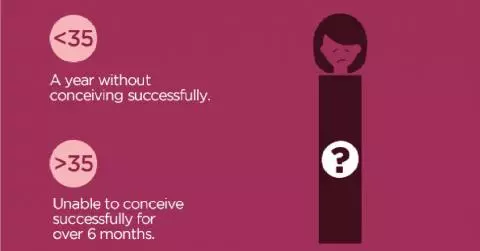
From age 35, fertility problems start to acquire a more medical connotation. Women will find it harder to conceive each month, as well as experience miscarriages and chromosomal abnormalities, more often with advanced age.
Many women manage to conceive even beyond 35 either naturally or via in vitro fertilisation (IVF). However, it's recommended to conduct a fertility workup earlier due to treatment-related considerations.
According to Dr. Ruchi Jain, an IVF specialist in Howrah, this is exactly why getting checked early matters more than waiting. She explains that natural conception chances are considerably higher for a woman in her early 30s compared to a woman in her 40s, largely due to differences in egg count and quality.
She also notes that the number of eggs a woman has is set at birth and cannot be increased by any medicine or treatment. Women often begin their fertility treatment in Kolkata with a detailed evaluation. At Nova IVF Fertility Kolkata, fertility specialists assess each patient’s fertility health and recommend a personalised treatment approach based on their individual needs
Fertility in Your 40s: What IVF Can and Cannot Do
Conceiving after 40 is not impossible, but it is difficult because egg quantity and egg quality decrease with age.
In vitro fertilisation (IVF) may be helpful in allowing women at this age to conceive by using their eggs; however, the rate of success is relatively lower than that of young women. Egg donor IVF is an alternative if the woman has insufficient egg supply or unsuccessful results from multiple IVF treatments.
How to Test Your Fertility by Age: AMH, FSH, and AFC Explained
For most women, fertility testing becomes relevant when conception is delayed or when pregnancy planning is being actively considered. The female fertility age graph of declining ovarian reserve over time is what these tests aim to measure at an individual level.
AMH Test
Checks the estimated number of eggs remaining in the ovaries and helps assess overall ovarian reserve and fertility potential.
FSH Test
Measures how hard the body is working to stimulate the ovaries. Higher levels may suggest declining ovarian reserve.
AFC Scan
An ultrasound scan that counts visible follicles in the ovaries to estimate current egg reserve more directly.
Doctors usually review AMH, FSH, and AFC together because no single test alone provides the complete fertility picture.
FAQs
At what age does female fertility start to decline?
Female fertility begins to drop gradually during the late twenties and will be significantly visible after the early thirties, especially after age 35.
What is a normal AMH level for a woman by age?
With age, AMH levels are known to usually drop. Higher AMH levels can be observed among younger women, while lower AMH levels are found after 35 years old.
Can a woman get pregnant naturally after 40?
Yes, a woman can conceive naturally after 40 years old; however, the possibility becomes smaller with age, and other risks increase, such as miscarriage or abnormal chromosomes.
Does the IVF success rate change with age?
Yes, as with all types of treatments, IVF success rates also vary depending on the age of the woman.
Related Fertility Blogs