 Self-cycleTM IVF


-
-
-
 Infertility Counselling
-
 Female Infertility Treatment
-
 Andrology Treatment
-
 Fertility Enhancing Surgeries - Female
-
 Fertility Enhancing Surgeries - Male
-
 Endoscopy Treatment
-
 IUI Treatment
-
 IVF Treatment
-
 ICSI Treatment
-
 Advance IVF Solutions
-
 Embryology
-
 Vitrification Egg, Embryo, Sperm Freezing
-
 Preimplantation Genetic Testing (PGT)
-
 Donation Program Embryo / Egg / Sperm
-
 Self-cycleTM IVF
-
-
-
-
-
Follicular Study: What It Is, When It Is Done and What Your Results Mean for Fertility
Many women who are trying to concieve, figuring out the right ovulation timing is not always as simple as it seems. Even with regular periods, tracking apps, and ovulation kits, there can still be doubts about whether the egg is growing properly or releasing at the right time.
A follicular study helps remove some of that uncertainty by giving doctors a clearer view of how ovulation is happening throughout the cycle.
Follicular Study Meaning: What Is It and What Does It Track
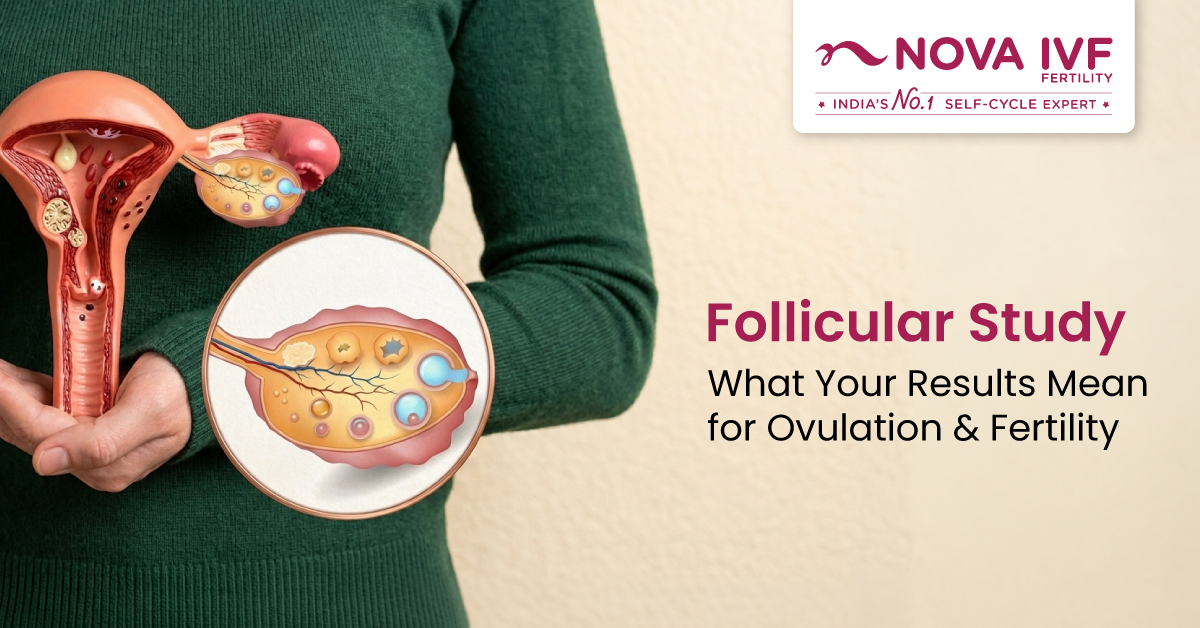
A follicular study, also called follicular monitoring, is a series of ultrasound scans done to track how the eggs are developing inside the ovaries. These eggs grow inside small fluid-filled sacs called follicles, which gradually mature before ovulation happens.
During each scan, the doctor examine the size of the growing follicle and the thickness of the uterine lining to understand when ovulation might happen. Since these scans are done over multiple days in the same cycle, they give a much clearer picture than a regular one-time ultrasound.
Who Needs a Follicular Study
A follicular study scan is recommended across a range of clinical situations. At Nova IVF, the following patient profiles are most commonly referred for this monitoring:
- Couples who are trying natural conception for 12 or more months without success, or 6 months if either partner is over 35
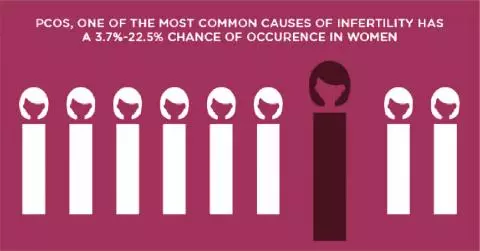
- Women with irregular menstrual cycles or PCOS for whom tracking ovulation is difficult. PCOS is exceptionally prevalent among Indian women, and follicular monitoring serves as a frontline assessment tool for this group
- Women undergoing ovulation induction with medication, where scan timing directly guides treatment decisions
- IUI patients, for whom precise ovulation timing determines insemination scheduling
- IVF patients, where follicular monitoring supports ovarian stimulation and egg retrieval during IVF at every stage of the treatment protocol
How Is a Follicular Study Done
The follicular study scan is performed using transvaginal ultrasound. A small probe is gently inserted to capture detailed images of the ovaries and uterus.
At each visit, the sonographer measures every visible follicle's diameter in millimetres and records the endometrial lining thickness. Endometrial measurements carry clinical significance because an irregular or thin lining can affect implantation, a concern closely linked to thin endometrium and failed embryo transfers in assisted reproduction.
Each scan takes 10 to 15 minutes. No fasting is required before the procedure, though an empty bladder is recommended for transvaginal scans. The procedure involves mild pressure only and is not painful.
Read About a comprehensive female fertility work-up
How Many Times Is a Follicular Study Done in One Cycle
The number of scans per cycle typically ranges from three to five, depending on the progression of follicle development. A standard scan schedule follows this pattern:
- Scan 1:
Baseline Scan (Day 2 to 3): The ovaries are assessed at the start of the cycle to confirm readiness for monitoring - Scans 2 to 3:
Follicle Growth Monitoring (Day 9 to 12): Follicle size and growth rate are tracked across this phase of the cycle - Scan 4:
Pre-Ovulation Scan (Day 12 to 16): The dominant follicle is identified and the ovulation window is estimated with precision - Scan 5:
Post-Ovulation Confirmation Scan: Ovulation is confirmed and the corpus luteum is evaluated
Follicle quality observed across these scans also informs egg quality assessments, which is relevant to understanding what poor egg quality looks like on a scan and how it shapes further treatment planning.
Read About comprehensive fertility testing for men and women
FAQs
What is the normal follicle size for ovulation?
An ideal follicle size for ovulation is between 18 to 22 millimetres. Anything less than that will not ovulate despite any other signs being present.
On which day of the cycle should a follicular study start?
For baseline scanning, Day 2 or Day 3 would be most suitable. Other scans are done according to how the follicles develop from that point onwards.
Can a follicular study detect PCOS?
While the follicular study might detect follicles that are growing erratically and showing signs of PCOS, for example, many smaller follicles developing without a dominating follicle forming, a proper PCOS diagnosis needs a hormone test as well.
Is a follicular study necessary before IVF at Nova IVF?
Follicular studies are an integral part of the IVF treatment plan at Nova IVF clinics. They help determine the right dosage for stimulating the ovaries and also pinpoint the exact time for egg collection.