 Self-cycleTM IVF


-
-
-
 Infertility Counselling
-
 Female Infertility Treatment
-
 Andrology Treatment
-
 Fertility Enhancing Surgeries - Female
-
 Fertility Enhancing Surgeries - Male
-
 Endoscopy Treatment
-
 IUI Treatment
-
 IVF Treatment
-
 ICSI Treatment
-
 Advance IVF Solutions
-
 Embryology
-
 Vitrification Egg, Embryo, Sperm Freezing
-
 Preimplantation Genetic Testing (PGT)
-
 Donation Program Embryo / Egg / Sperm
-
 Self-cycleTM IVF
-
-
-
-
-
High ESR in Women: Symptoms, Causes and Treatment Explained
High ESR in Women: Symptoms, Causes and Treatment Explained
Finding a high ESR result on a blood report can be worrying, especially when the number is outside the reference range and the report does not explain why. You may wonder whether the ESR result means you have an infection, inflammation, or another health problem.
An elevated erythrocyte sedimentation rate (ESR) is not a diagnosis on its own. This guide explains what a high ESR in women means, how the test works, possible symptoms and causes, and when an elevated result may require further evaluation.
What Is ESR (Erythrocyte Sedimentation Rate)?
The Erythrocyte Sedimentation Rate measures how quickly red blood cells sink to the bottom of a tall, thin test tube over exactly one hour. When inflammation is present, your body produces higher concentrations of specific proteins that cause red blood cells to stick together. These stacked cells become heavier and fall faster, producing a higher test reading measured in millimeters per hour (mm/hr).
ESR is a nonspecific marker. This means that a high result can indicate that inflammation or another process is affecting the body, but it cannot identify the specific condition or where it is occurring.
The following table will help you understand the biological process behind your ESR test result:
| Blood Reaction Phase | Biological Mechanism |
|---|---|
| 1. Inflammatory Trigger | Inflammatory proteins neutralize the natural negative charge on red blood cells, causing them to clump into stacks (rouleaux). |
| 2. Protein Attachment | Inflammatory proteins neutralize the natural negative charge on red blood cells, causing them to clump into stacks (rouleaux). |
| 3. Accelerated Gravity | Heavy stacks overcome plasma resistance and sink rapidly toward the bottom of the tube. |
| 4. Measurement | Laboratory technicians measure the clear fluid distance at the top of the tube after 60 minutes. |
What Happens If ESR Is High in Females?
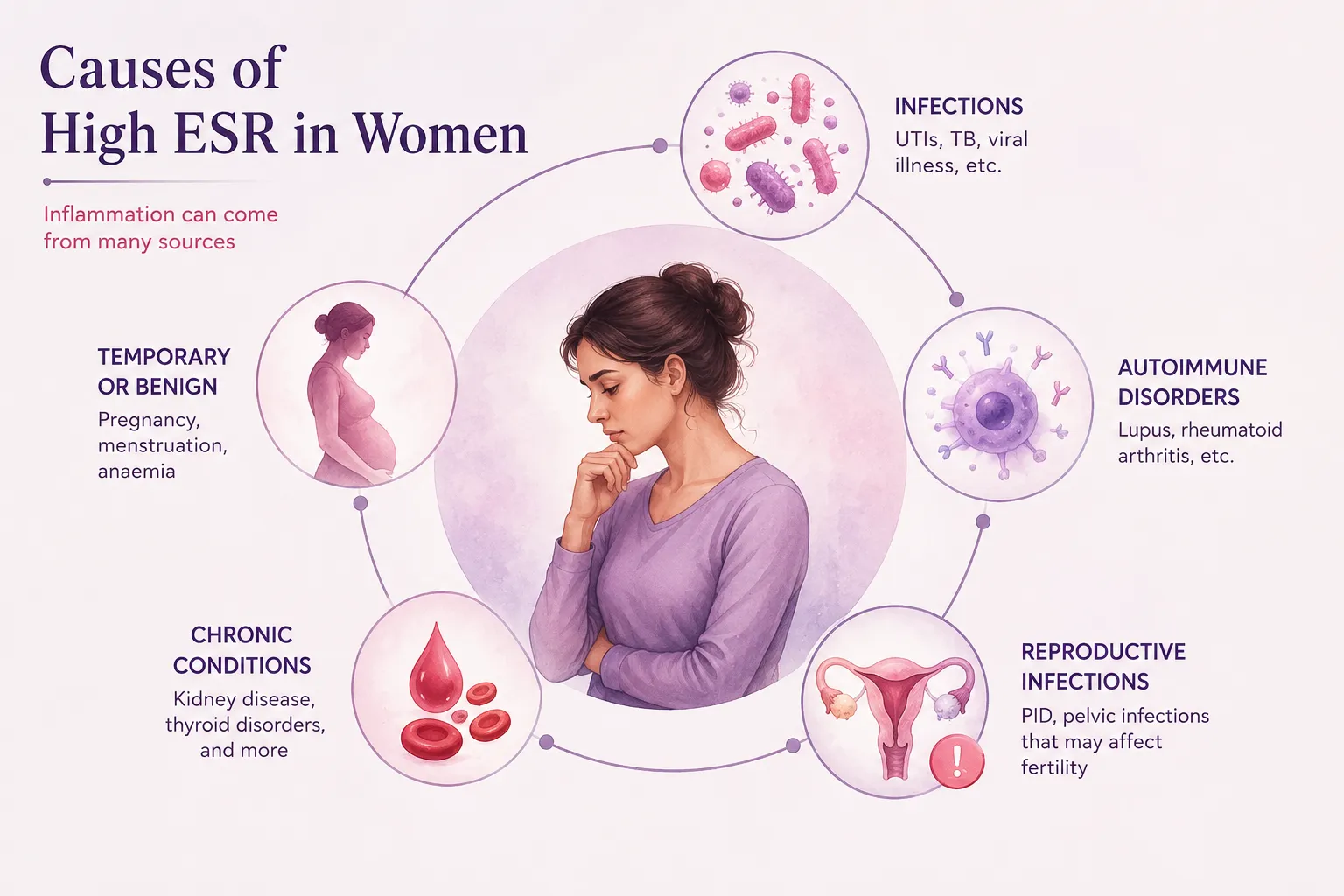
A high ESR means that red blood cells are settling faster than expected according to the reference range used by the laboratory. ESR is normally higher in females compared to males due to physiological and hormonal factors, but high readings can also indicate an underlying medical condition. Natural causes of raised ESR in women, not associated with disease, are:
- Menstruation: Hormonal shifts and mild cyclical inflammation during a period can raise ESR levels temporarily.
- Pregnancy: Increased blood volume, hormonal shifts, and immune changes cause ESR to rise naturally.
- Menopause: Changing hormone levels and aging increase baseline ESR values. Hence, cutoff values of ESR are different in women less than and greater than 50 years in age.
- Contraceptives: Birth control pills and hormone replacement therapy can also increase the rate at which red blood cells settle, resulting in a high ESR.
The common medical conditions associated with raised ESR include:
- Infections: such as urinary tract infections (UTIs), pelvic inflammatory disease (PID),or any other viral, bacterial or fungal infection triggers an immune response that elevates ESR
- Autoimmune Disorders: like rheumatoid arthritis, lupus, and Sjögren's syndrome are more common in women and cause chronic, active inflammation.
- Anemia: Iron-deficiency anemia, which is common in women due to menstrual blood loss.
- Thyroid Issues: Hypothyroidism or hyperthyroidism canresult in higher inflammatory markers
- Chronic Disease or Cancers: Long-term conditions like kidney disease, inflammatory bowel disease (IBD), or certain malignancies are also associated with raised ESR.
Causes of High ESR in Women
| ESR Category for Women | Typical Reference Range (mm/hr) | Clinical Meaning |
|---|---|---|
| Normal (Age under 50) | 0 to 20 mm/hr | Baseline systemic inflammatory state |
| Normal (Age over 50) | 0 to 30 mm/hr | Age-adjusted baseline state |
| Mild to Moderate Elevation | 31 to 60 mm/hr | Minor infections, recent tissue strain, anemia |
| Significant Elevation | Over 100 mm/hr | Severe systemic infections, acute autoimmune flares |
These ESR values are general reference points. The reference range provided by the laboratory that performs the ESR test should be considered when interpreting an individual result.
An extremely high ESR result warrants medical evaluation rather than interpretation based on the ESR value alone. A moderately elevated ESR does not automatically indicate a serious illness. Doctors consider how high the result is, whether it remains elevated over time, and whether other symptoms or abnormal test results are present.
Pregnancy and increasing age can also increase ESR, so an elevated result does not necessarily mean that a disease is present.
Symptoms of High ESR in Women
There are no direct physical symptoms attributable to a high ESR. Instead, women experience symptoms of the underlying condition causing the internal inflammation. Many women with a mildly raised value notice nothing at all. But certain other symptoms may be:
- Unexplained Fatigue: Constant body tiredness that persists despite adequate night rest, caused by continuous cellular strain.
- Joint and Muscle Stiffness: Painful tightness or mild swelling in joints, especially during your first hour after waking up.
- Low-Grade Fever: A continuous, mild temperature spike signaling active immune cell activity.
- Unintended Weight Loss: Shedding body weight without intentional changes to daily meals or exercise habits.
- General Body Aches: Persistent soreness across large muscle groups without prior physical exertion.
Fertility and Reproductive Warning Signs
When chronic inflammation affects your reproductive tract, you might notice localized symptoms like the following:
- Pelvic Pain and Heaviness: Continuous aching across the lower abdomen, which can indicate spreading bacterial strain from pelvic inflammatory disease.
- Severe Menstrual Cramping: Intense pelvic pain during monthly cycles caused by shedding endometrial-like lesions.
- Irregular Bleeding: Unexpected spotting or altered cycle lengths, which frequently link back to underlying causes of irregular period such as PCOS-related metabolic stress.
- Conception Delays: Difficulty in achieving pregnancy despite regular timing, which may prompt infertility diagnostic tests.
When High ESR Signals a Fertility Concern
Persistent inflammation can occasionally overlap with reproductive health. There have been scenarios where it was observed that an infection had spread to the womb, fallopian tubes, or ovaries. And when it is left untreated, it can scar the tubes or other reproductive structures and make it harder for the mother to conceive later on.
According to reproductive medicine literature, fertility specialists sometimes check the levels of ESR within a broader assessment rather than in isolation. When a diagnosed condition does affect conception, a specialist reviews the full range of IVF treatment options alongside simpler measures. The choice is matched to the diagnosis, not to the marker.
Treatment of High ESR: How It Is Managed
Medical treatment of high ESR centers entirely on resolving the underlying medical condition, not on lowering the blood number directly. As the primary health issue resolves, your ESR naturally returns to normal.
Here are some of the primary ways medical teams manage elevated readings based on the root cause:
Direct Medical Care
- For infections, doctors prescribe targeted courses of antibiotics, antivirals, or antifungals to eliminate the disease-causing pathogen
- For autoimmune diseases, physicians utilize disease-modifying antirheumatic drugs (DMARDs) or biological treatments to calm overactive immune attacks on healthy tissue.
- For Anemia, iron supplements and dietary adjustments restore normal red blood cell counts, bringing cell settling rates back into standard ranges.
Supporting Lifestyle Habits
Healthy daily routines complement medical treatment plans, though habits alone cannot cure active internal infections:
- Anti-Inflammatory Nutrition: Focus on foods rich in omega-3 fatty acids, fresh berries, leafy greens, and whole grains while reducing refined sugars.
- Restorative Sleep: Aim for 7 to 8 hours of quality sleep every night to encourage cellular repair and immune balance.
- Stress Management: Practice gentle yoga, structured breathing, or light walking to manage cortisol spikes that increase tissue strain over time.
Infertility diagnostic tests may include this marker when inflammation is suspected alongside menstrual or fertility difficulties. A Nova IVF Fertility specialist can review a raised value in that fuller picture. That is the point of seeking a formal opinion rather than self-interpreting a report.
Frequently Asked Questions
Should I worry if my ESR is high?
A single elevated ESR reading is not an immediate reason for panic. The score simply signals that your body is managing an infection, minor tissue strain, or a normal physiological event like pregnancy or menstruation. Your healthcare provider will compare your result against physical symptoms and order specific follow-up blood panels.
How can I reduce my ESR level?
You can lower your ESR level by treating the underlying health issue which is causing internal inflammation. Taking prescribed medications for identified infections or immune conditions manages the primary source. Supporting your body with nutrient-rich foods, moderate activity, and proper rest helps maintain your long-term recovery.
What is considered a high ESR level for women?
For women under 50 years of age, an ESR score above 20 mm/hr is elevated. For women aged 50 and older, a value over 30 mm/hr is considered high. Scores exceeding 100 mm/hr point to significant active immune activity or acute systemic infections that requires prompt medical checks.
Is high ESR always a sign of a serious condition?
No, a raised ESR reading does not always point to a severe illness. Natural or temporary factors like pregnancy, menstruation, mild iron deficiency anaemia, or recovering from a common seasonal cold routinely cause temporary spikes in blood settling scores.
Take Next Steps for Your Reproductive Health
If your blood work shows a high ESR alongside pelvic discomfort, irregular menstrual cycles, or difficulty conceiving, schedule a professional medical check. The care team at Nova IVF Fertility delivers thorough diagnostic assessments to spot hidden inflammatory factors and guide your path toward healthy reproductive results. Book a consultation with a Nova IVF specialist today to receive personalized medical care built for your personal health goals.