 Self-cycleTM IVF


-
-
-
 Infertility Counselling
-
 Female Infertility Treatment
-
 Andrology Treatment
-
 Fertility Enhancing Surgeries - Female
-
 Fertility Enhancing Surgeries - Male
-
 Endoscopy Treatment
-
 IUI Treatment
-
 IVF Treatment
-
 ICSI Treatment
-
 Advance IVF Solutions
-
 Embryology
-
 Vitrification Egg, Embryo, Sperm Freezing
-
 Preimplantation Genetic Testing (PGT)
-
 Donation Program Embryo / Egg / Sperm
-
 Self-cycleTM IVF
-
-
-
-
-
Hysterosalpingography Test
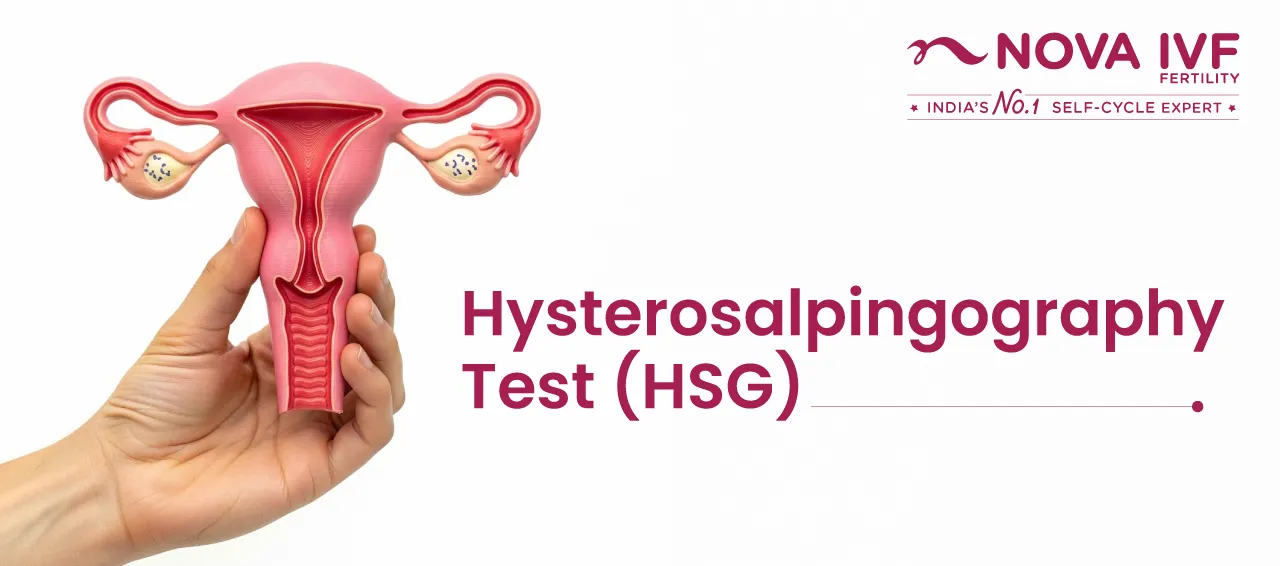
What to Expect during a Hysterosalpingography Test?
Hysterosalpingography is a specialised imaging technique employed in the assessment of the uterus and fallopian tubes in fertility testing. The test is a significant part of the HSG fertility assessment techniques, particularly for the determination of HSG in cases of abnormalities in the womb or blockages that impair conception.
Explore female fertility assessment at Nova IVF
- In the HSG procedure for fertility, patients are guided through the easy procedure preparation, such as timing the test after menstruation and receiving medical advice. In the process, a contrast dye is gently introduced into the uterus, and X-ray images are taken. These steps of HSG procedures assist physicians in assessing tubal patency and raise concerns about structural issues.
- Some women may feel cramping, pressure or discomfort during the HSG diagnostic procedure when the dye is flowing through the fallopian tubes and the uterus. Typically, the sensation is brief and manageable.
- Mild spotting or stomach pain may occur shortly after the surgery. The majority of women resume regular activities in due course.
Understanding “What is HSG test?”, how it is performed, and its role in reproductive assessment highlights the HSG test benefits for fertility and contributes to improved reproductive health planning.
Read About our fertility test package
FAQs
1. What is hysterosalpingography, and why is it done?
Hysterosalpingography is a diagnostic fertility test that gives a visual examination of the fallopian tubes and the uterus with imaging through the Hysterosalpingography test.
2. How accurate is the HSG test for fertility?
The HSG fertility test is thought to be accurate in detecting tubal blockages and uterine abnormalities, while further testing may sometimes be needed.
3. What happens after HSG test completion?
Mild cramps or spotting can be experienced, although the majority of people resume normal functions soon after the HSG fertility procedure steps have been done.
4. Is HSG test preparation necessary?
Yes. IVF Doctors give instructions about the time, medications and hygiene prior to having the HSG test done to determine reproductive health.
5. Can HSG detect all fertility problems?
The HSG diagnostic test primarily observes the uterus and fallopian tubes and might fail to identify issues with the hormones and ovulation.
6. Is the HSG test painful?
The majority of women experience light cramping or pressure during the HSG fertility test, and it resolves within a short time.
7. How long does the HSG procedure take?
The phases of the HSG procedure are typically completed quickly, but the preparation and recovery periods may take longer.
8. What are the HSG test benefits for fertility?
The test assists in determining obstructions, structural defects, and reproductive issues that can have an impact during conception.
9. Should I consult a doctor after the test?
Following up is advised to learn the results and arrange future care based on the HSG fertility screening.
Related Blog: Benefits of the HSG Test: Why This Simple Procedure Can Change Your Fertility Journey
Related Fertility Blogs