 Self-cycleTM IVF


-
-
-
 Infertility Counselling
-
 Female Infertility Treatment
-
 Andrology Treatment
-
 Fertility Enhancing Surgeries - Female
-
 Fertility Enhancing Surgeries - Male
-
 Endoscopy Treatment
-
 IUI Treatment
-
 IVF Treatment
-
 ICSI Treatment
-
 Advance IVF Solutions
-
 Embryology
-
 Vitrification Egg, Embryo, Sperm Freezing
-
 Preimplantation Genetic Testing (PGT)
-
 Donation Program Embryo / Egg / Sperm
-
 Self-cycleTM IVF
-
-
-
-
-
IVF After 35 in Pune: Understanding Success Rates, Expectations & Treatment Options
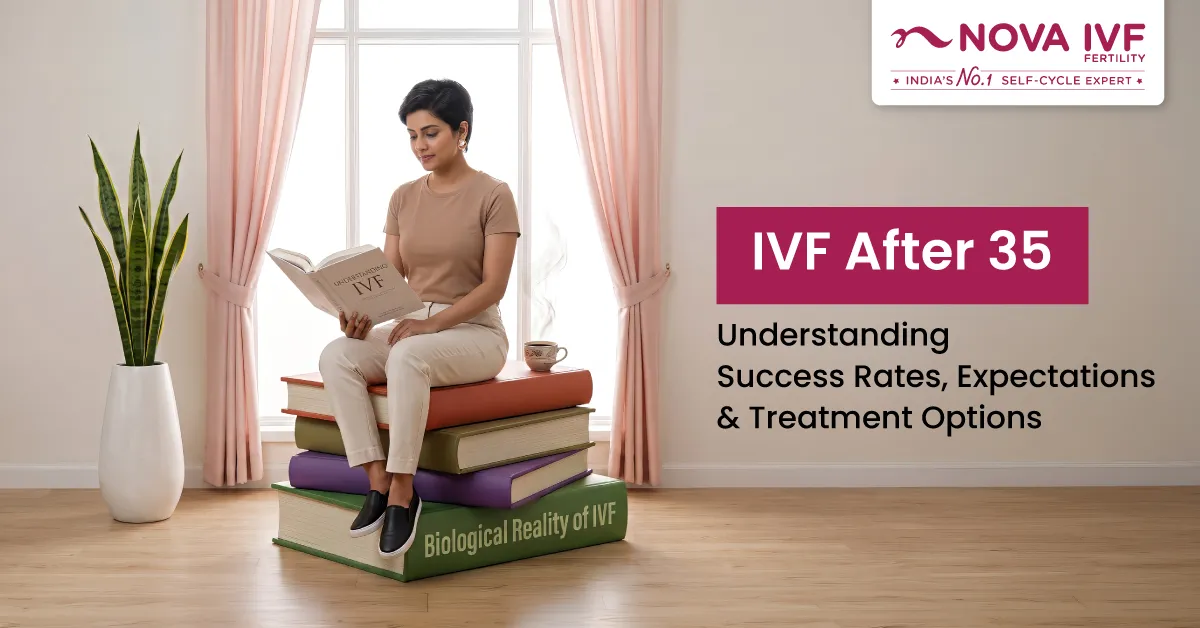
For many women, pregnancy may happen later than originally planned. Career goals, personal circumstances, delayed marriage, or previous health concerns can all play a role. While pregnancy after 35 is still possible, fertility does begin to change with age. That is why many couples start exploring fertility treatment after 35, especially when conception takes longer than expected.
IVF after 35 in Pune is often considered when age-related fertility decline becomes a concern. This may be linked to lower ovarian reserve, reduced egg quality, or a shorter reproductive window. Understanding how fertility changes after 35 can help couples approach treatment with clearer expectations and better planning.
Why Age 35 Matters in Fertility: The Biological Reality
Age 35 is often treated as an important point in fertility care because both egg reserve and egg quality begin to decline more noticeably around this time. While many women in their mid-to-late 30s still conceive naturally or through IVF, fertility specialists usually recommend earlier evaluation once pregnancy is delayed after 35.
Egg Quantity vs. Egg Quality: What’s Actually Declining
A woman is born with a fixed number of eggs, and this reserve naturally reduces over time. As women move into their mid-to-late 30s, the number of eggs available in the ovaries may decline more quickly. This is commonly assessed through tests such as:
- AMH (Anti-Müllerian Hormone)
- Antral Follicle Count (AFC)
- FSH testing, in selected cases
However, egg quantity is only one part of the picture. Egg quality refers to the egg’s ability to fertilise, form a healthy embryo, and support a successful pregnancy. As women move into their late 30s, both lower egg reserve and reduced egg quality can affect IVF outcomes.
The Chromosomal Abnormality Curve After 35
Another important reason age matters after 35 is the rise in chromosomal abnormalities in eggs and embryos. If an embryo has an abnormal number of chromosomes, it may be less likely to implant or in some cases, may even lead to a miscarriage.
This is one of the key reasons age and IVF success in Pune are closely linked. It does not mean IVF cannot work after 35. It means treatment planning may need to be more careful, especially in women with recurrent miscarriage, repeated IVF failure, or poor embryo development.
IVF Success Rates After 35: What the Data Actually Shows
When discussing IVF success rates after 35, there is no single number that applies to everyone. Age matters, but so do ovarian reserve, embryo quality, sperm health, uterine factors, and the treatment plan. In general, IVF success tends to decline gradually after 35 and more noticeably after 40.
Age 35–37: The Transition Period
The age group of 35 to 37 is often seen as a transition period. Many women in this bracket still respond well to IVF, especially when ovarian reserve is reasonable and there are no major additional fertility factors.
However, the effect of age on egg quality begins to matter more. This is why IVF after 35 is often approached with both optimism and realistic planning.
Age 38–40: Steeper Decline Begins
Between 38 and 40, the decline in egg quality usually becomes more noticeable. The proportion of chromosomally normal embryos may also be reduced. IVF can still be successful in this age group, but treatment may become more time-sensitive. For women in their late 30s, fertility specialists may look more closely at ovarian reserve, embryo development, and whether procedures such as ICSI or PGT-A should be considered.
Age 40+: When Conversations Shift
After 40, IVF planning often becomes more detailed because both egg quantity and egg quality tend to decline more sharply. Women above 40 may still conceive with their own eggs, but the chances of retrieving chromosomally normal eggs are generally lower.
In some cases, discussions may include whether repeated IVF with own eggs remains advisable or whether donor egg IVF should be considered as part of IVF options in Pune.
Cumulative Success Rates Across Multiple Cycles
A single IVF cycle does not always tell the full story, especially after 35. Sometimes, the first cycle also helps the fertility specialist understand ovarian response, fertilisation outcomes, and embryo development. For this reason, cumulative success across two or three cycles may be more meaningful than a single-cycle result for women considering IVF over 35.
Treatment Options and Protocol Modifications for Women Over 35 in Pune
Women over 35 are not usually treated with a standard IVF plan. The treatment strategy is often adjusted based on ovarian reserve, age, sperm factors, and previous fertility history. This is why fertility treatment after 35 may involve additional testing and more personalised protocols.
Ovarian Reserve Testing Before Starting (AMH, AFC, FSH)
Before starting IVF, fertility specialists often recommend ovarian reserve testing to estimate how the ovaries may respond to stimulation. The most common tests include:
- AMH
- AFC
- FSH, in selected cases
While these tests cannot predict the chances of pregnancy on their own, they provide valuable information for treatment planning. They help fertility specialists determine the most appropriate stimulation protocol, medication dosage, and expected ovarian response.
Personalised Stimulation Protocols
Women over 35 may need a more individualised stimulation plan. The type of medication, dosage, and duration of treatment can vary depending on age and ovarian reserve. The aim is not simply to retrieve more eggs. The aim is to retrieve an appropriate number of mature eggs while keeping the woman’s fertility profile in mind.
ICSI as a Standard Addition
ICSI is commonly used when there are concerns related to male fertility, such as sperm count, motility, morphology, or previous fertilisation failure. It may also be discussed more often in women over 35, especially when each mature egg becomes more important from a treatment planning perspective.
However, ICSI is not automatically required in every IVF cycle after 35. The decision depends on semen parameters, fertilisation history, and the fertility specialist’s clinical assessment.
PGT-A Considerations
PGT-A is used to assess the chromosomal status of embryos created through IVF. It may be discussed more often after 35 because the risk of chromosomal abnormalities tends to rise with maternal age.
However, PGT-A is not recommended for every woman over 35. The decision depends on maternal age, recurrent miscarriage history, repeated IVF failure, embryo numbers, and the overall treatment plan.
Donor Egg IVF: When and Why It’s Discussed
Donor egg IVF may be discussed when ovarian reserve is very low, when repeated IVF cycles with own eggs have not resulted in good-quality embryos, or when age-related decline in egg quality is significantly affecting outcomes.
However, this is usually not the first recommendation. It is considered only after a careful review of the woman’s fertility profile, previous cycle history, and expected chances of success with her own eggs.
Setting Realistic Expectations for the IVF Journey After 35
One of the most important parts of fertility after 35 is understanding that IVF may not always be a one-cycle process. The number of eggs retrieved, fertilisation rates, embryo development, and uterine factors can all influence the timeline.
Timeline Realities: Why It May Take Multiple Cycles
Some women conceive in the first IVF cycle, while others may need more than one attempt. In women over 35, it is not uncommon for the first cycle to provide important clinical information about ovarian response, egg maturity, and embryo quality.
This is why IVF success rates after 35 should not always be viewed only as a first-cycle number. In many cases, treatment planning becomes more refined after the first cycle.
Emotional Resilience and Support Systems
IVF after 35 can feel emotionally different because time often feels more limited. Patients may also be balancing treatment with work, family expectations, or previous fertility disappointment.
For this reason, emotional support matters. Clear communication with the fertility team, support from a partner or family member, and counselling when needed can make the process easier to navigate.
Lifestyle Modifications That Actually Help
Lifestyle changes cannot reverse age-related fertility decline, but they may still support overall reproductive health and treatment readiness.
Fertility specialists often advise women preparing for IVF to focus on:
- Maintaining a healthy body weight
- Avoiding smoking and excessive alcohol intake
- Managing thyroid or metabolic conditions, if present
- Prioritising sleep and stress management
Cost Considerations for IVF After 35 in Pune
The cost of IVF after 35 in Pune may sometimes be higher than IVF at a younger age because treatment after 35 may involve a more individualised approach. While a standard IVF cycle in Pune may cost approximately ₹1,00,000 to ₹2,50,000, the final cost varies depending on medication requirements, the frequency of monitoring, and whether additional procedures are recommended.
Why Older Patients Often Pay More Per Cycle
Women over 35 may require a more tailored treatment plan. This can influence the overall cycle cost, especially if ovarian reserve is low or additional interventions are recommended.
Medication Dosage and Duration Factors
Medication costs are often one of the most variable parts of IVF treatment. Women with lower ovarian reserve may need higher stimulation doses or a longer duration of medication, which can increase the overall cost.
Add-On Costs (ICSI, PGT-A, Donor Eggs)
Additional procedures can increase the total cost of treatment. These may include:
- ICSI
- PGT-A
- Embryo freezing and storage
- Donor egg IVF, in selected cases
Not every patient requires these add-ons. Their use depends on fertility history, age, embryo development, and the specialist’s treatment approach.
Pune vs. Mumbai Pricing Comparison
Generally, IVF pricing in Pune is somewhat lower than in Mumbai. While a standard IVF cycle in Pune may cost approximately ₹1,00,000 to ₹2,50,000, treatment in Mumbai may range from ₹1,25,000 to ₹3,00,000, depending on the fertility centre, laboratory facilities, doctor's expertise, and the services included in the treatment package.
Rather than comparing prices alone, couples should also understand what is included in the quoted cost, such as medications, laboratory procedures, embryo freezing, or additional fertility treatments.
When to Consider Alternative Paths
For some women, IVF with their own eggs remains the best first option even after 35. For others, repeated poor response, low embryo development, or age-related decline in egg quality may lead to discussions about alternative paths.
The Donor Egg Conversation
Donor egg IVF may be discussed when the woman’s own eggs are unlikely to provide a reasonable chance of success due to very low ovarian reserve, repeated poor embryo development, or advanced reproductive age.
Embryo Adoption Options
Embryo adoption may be considered by some couples when using their own eggs or donor eggs is not the preferred route, or when other treatment options have not been successful.
Knowing When to Pause or Stop
Not every fertility journey follows a predictable path. There may be times when pausing treatment is medically, financially, or emotionally appropriate. In some situations, couples may also need to discuss whether continuing IVF with their own eggs remains the most meaningful path forward.
Conclusion
IVF after 35 can be an effective treatment option for women facing age-related fertility decline, delayed conception, or other reproductive challenges. However, success after 35 depends on much more than age alone. Ovarian reserve, egg quality, embryo development, sperm health, uterine factors, and the treatment plan all play an important role.
At Nova IVF Fertility, women considering fertility treatment after 35 are supported by experienced fertility specialists, advanced embryology services, and personalised treatment planning based on their individual fertility profile. Through evidence-based care and detailed evaluation, the team aims to help couples navigate the IVF journey with clarity and confidence.
Related Fertility Blogs