 Self-cycleTM IVF


-
-
-
 Infertility Counselling
-
 Female Infertility Treatment
-
 Andrology Treatment
-
 Fertility Enhancing Surgeries - Female
-
 Fertility Enhancing Surgeries - Male
-
 Endoscopy Treatment
-
 IUI Treatment
-
 IVF Treatment
-
 ICSI Treatment
-
 Advance IVF Solutions
-
 Embryology
-
 Vitrification Egg, Embryo, Sperm Freezing
-
 Preimplantation Genetic Testing (PGT)
-
 Donation Program Embryo / Egg / Sperm
-
 Self-cycleTM IVF
-
-
-
-
-
Post Embryo Transfer: Day-by-Day Symptoms, Body Changes and What Is Truly Normal

The two-week wait post-embryo transfer is one of the most emotionally intense periods in an IVF journey. Every twinge, cramp, and spot feels significant, and the absence of symptoms can feel equally alarming. Understanding what is biologically happening inside the body during this window replaces uncertainty with genuine clarity.
This guide explains precisely what to expect post-embryo transfer, day by day, and which changes are driven by medication versus implantation.
What Happens Inside Your Body the Day After Embryo Transfer?
The day after embryo transfer is typically symptom-free. The embryo is still floating in the uterine cavity and has not yet begun attaching to the lining.
Any discomfort on Day 1, such as mild pelvic pressure or bladder sensitivity, comes from the transfer procedure itself, the full bladder required during the process, or progesterone supplementation. It does not come from the embryo.
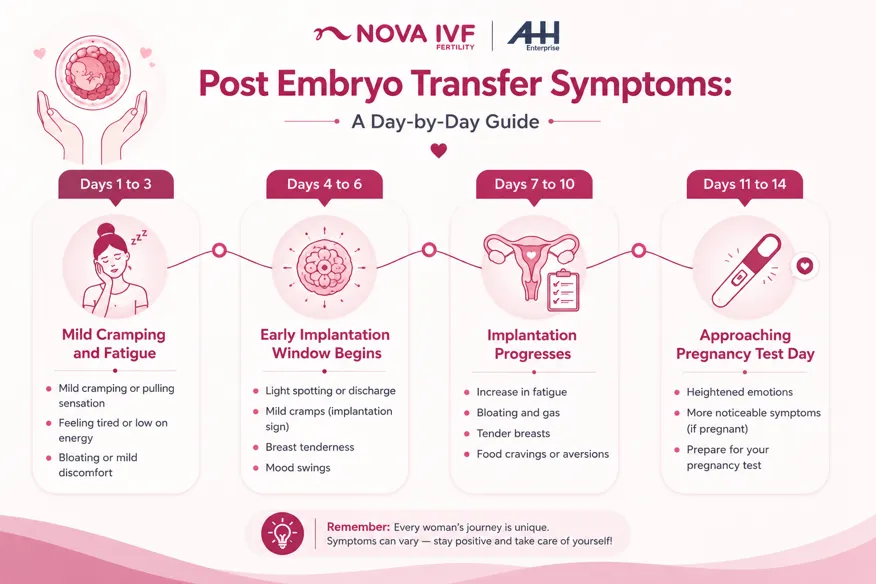
Post Embryo Transfer Symptoms: A Day-by-Day Guide
Symptoms during the two-week wait are shaped by both hormonal medications and, potentially, implantation. The absence of symptoms at any stage does not indicate a failed transfer.
Days 1 to 3: Mild Cramping and Fatigue
The embryo is adjusting itself to its surroundings. The occurrence of mild cramps similar to those during menstruation and fatigue is expected due to progesterone treatment in this stage. The embryo has not yet implanted in the uterus.
This is a reaction to the medications used; hence, an absence of symptoms is not an abnormality either.
Days 4 to 6: Early Implantation Window Begins
During this period, the embryo may begin attaching to the uterine wall. Mild spotting, bloating, cramps, or breast sensitivity are possible. This can also be a reaction to the progesterone medication.
The body undergoes many changes during the conception process, making it appear the same.
Days 7 to 10: Implantation May Be Occurring
The process of producing the hCG hormone starts on these days if implantation is happening. Pink or brownish implantation bleeding post-embryo transfer for two to three days is common. Other symptoms include breast tenderness, mood swings, nausea, frequent urination, and bloating.
About 10 to 15% of women do not have any symptoms during this period but get pregnant successfully.
Days 11 to 14: Approaching Pregnancy Test Day
Days 11 to 14 post-egg transfer may involve symptoms such as fatigue, nausea, and bloating if implantation has happened.
Taking a home pregnancy test during this period is often inaccurate and may lead to extra stress or anxiety. Taking the beta hCG blood test from the clinic is considered the best method of testing whether you are pregnant.
A common fear during this period is that everyday activity might dislodge the embryo. It will not. Walking, cooking, and driving are all fine. What you should avoid is anything that puts physical stress on your body, such as heavy exercise, hot baths, saunas, excessive alcohol consumption, and smoking. Bed rest might feel like the safe choice, but there is no clinical evidence that it improves outcomes and sitting idle all day can quietly make anxiety worse.
Dr. Ruchi Jain, an IVF specialist in Howrah, puts it simply: whether the embryo implants or not is biology, not behaviour. Nothing you do or avoid doing during these two weeks will cause the embryo to fail, and if the cycle does not work, it is not something you brought on yourself.
This is something patients at our IVF treatment clinic in Howrah are counselled on early, because carrying unnecessary guilt through an already difficult experience only adds to the emotional weight of the wait
Bleeding Post Embryo Transfer: When Is It Normal and When Is It Not?
Light pink or brown spotting for one to three days during the second week post-egg transfer is usually considered normal and may happen due to implantation or progesterone medication.
Many patients confuse this with periods, which is why implantation bleeding and how it differs from menstruation is a common concern during the two-week wait. Heavy bleeding, severe cramps, fever, or dizziness, however, should always be discussed with your fertility doctor.
Body Changes After Embryo Transfer That Are Completely Normal
Most body changes after embryo transfer are caused by hormone medications, making normal symptoms feel confusing and emotionally difficult to interpret.
- Bloating and constipation are common because progesterone slows digestion
- Breast heaviness, tenderness, or darker areolas can happen during the two-week wait
- Frequent urination and a stronger sense of smell are also hormone-related changes
- Mood swings, fatigue, and emotional sensitivity are very common after transfer
- Most symptoms closely resemble PMS, and cannot confirm or rule out pregnancy
FAQs
Is cramping normal after embryo transfer?
Mild cramping after embryo transfer is common and usually linked to the procedure or hormone medication. Severe cramps with bleeding should be checked immediately.
What does implantation bleeding look like after IVF?
Implantation bleeding post embryo transfer is usually light pink or brown spotting, not a heavy period-like flow. It may last for a few hours or for up to two days.
Can I have no symptoms after embryo transfer and still be pregnant?
Yes. Many patients experience no noticeable symptoms during the two-week wait and still receive a positive pregnancy result after IVF.
When does post-embryo transfer bleeding become a warning sign?
Heavy bright-red bleeding, especially with severe cramps, fever, dizziness, or weakness, should be reported immediately. Light spotting for a short time is common.
Related Fertility Blogs