 Self-cycleTM IVF


-
-
-
 Infertility Counselling
-
 Female Infertility Treatment
-
 Andrology Treatment
-
 Fertility Enhancing Surgeries - Female
-
 Fertility Enhancing Surgeries - Male
-
 Endoscopy Treatment
-
 IUI Treatment
-
 IVF Treatment
-
 ICSI Treatment
-
 Advance IVF Solutions
-
 Embryology
-
 Vitrification Egg, Embryo, Sperm Freezing
-
 Preimplantation Genetic Testing (PGT)
-
 Donation Program Embryo / Egg / Sperm
-
 Self-cycleTM IVF
-
-
-
-
-
PCOS Symptoms: Recognizing Signs and Managing Fertility
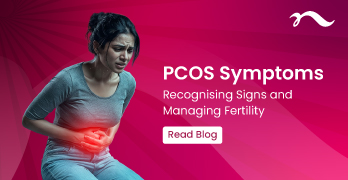
Polycystic Ovarian Syndrome or PCOS is one of the most common causes of female infertility. This typically affects women between the ages of 15 years and 44 years. In many cases, women do not realize that they have PCOS until they are diagnosed with infertility. However, being able to recognize signs of PCOS can help you seek treatment in the early stages so that it is easier for you to conceive. Some of the major symptoms of polycystic ovarian syndrome are:
Irregular Periods
PCOS disrupts the ovulation cycle. If the egg is not released, the uterine lining does not need to be shed. As a result, a woman with PCOS has irregular periods or may miss her periods. Some women with PCOS have less than 8 periods in a year.
Heavy Bleeding
Since the ovaries release eggs irregularly the uterine lining grows thicker than normal. This is noted especially after missed periods. As a result, when a period does occur, the blood flow is heavier than normal. These periods may be associated with painful cramps.
Body Hair Growth
Every woman has hair on her body but a woman with PCOS may have thicker hair and faster hair growth. This may be seen not only in the arms and legs but also on the chest, stomach and back. In many cases, women with PCOS may even develop facial hair. This type of excessive hair growth is known as hirsutism.
Acne
PCOS can cause chronic acne. This type of acne affects not only the T zone but also the lower half of the face. It may also affect the chest and back. PCOS related acne can take the form of pimples, whiteheads and cysts. Some of these cysts do not have a visible head as they develop deep below the skin. Acne caused by PCOS is painful to touch and does not respond to topical ointments.
Weight Gain
PCOS affects the reproductive hormones and the thyroid hormones responsible for metabolism. The reduced thyroid hormone levels slow down metabolism. Hence, many women with PCOS tend to put on weight without any particular reason and become overweight or obese.
Male-pattern Baldness
Though PCOS causes hair growth on the body, hair on the scalp may begin to thin out. This can be noted in the form of excessive hair fall, hair thinning, and a receding hairline.
Darkening of the Skin
PCOS also affects the luster of a woman's skin. It can make the skin appear dark in patches. This is seen particularly in the groin, under the breasts, the neck and other areas where the skin forms creases. These patches may also feel velvety to touch. Darkening of skin due to PCOS is also referred to as acanthosis nigricans.
Explore the different fertility treatment options available
Headaches
Some women with PCOS may experience frequent headaches. This may be because of estrogen dominance or nutritional deficiencies.
These symptoms usually start surfacing after a woman has her first period during puberty. All women with PCOS do not exhibit the same symptoms or the same intensity of symptoms. In many cases, the symptoms may go completely unnoticed.
Explore female fertility assessment at Nova IVF
At What Age Does PCOS Start?
PolyCystic Ovary Syndrome (PCOS) normally starts at adolescence, where its symptoms often appear just after the initial menstrual period (menarche). However, the symptoms of PCOS can be so subtle that many young women may disregard irregular menstruation as a sign of puberty.
Although the symptoms of PCOS often start to appear in the late teens, they often go undiagnosed until their 20s or 30s, when women experience fertility problems because of PCOS. Persistent acne or irregular periods and PCOS are indicators of early diagnosis, indicating that the reproductive system has already begun to exhibit the symptoms of a hormonal imbalance in PCOS.
It is important to identify these PCOS physical symptoms at a young reproductive age to deal with ovulation issues in PCOS before they impact future family planning.
Related Blog: What Are PCOS and PCOD?
Diagnosis and Tests
Diagnosis of PCOS symptoms is the exclusion process, because no particular test can be used to verify the diagnosis. Doctors typically follow the Rotterdam criteria, requiring at least two of three** signs of PCOS: irregular cycles, high androgen levels, or polycystic ovaries. A physical examination may be performed to assess clinical signs such as hirsutism, acne, or hair thinning.
Extensive blood tests are required to assess hormonal imbalance in PCOS and detect insulin resistance by measuring testosterone, LH, FSH, and fasting insulin levels. Also, a pelvic ultrasound is performed to evaluate ovulation in PCOS by detecting small ovarian follicles (cysts). This thorough approach is critical in ensuring that PCOS menstrual deficits are accurately attributed to the condition rather than other thyroid or adrenal issues.
Can I have PCOS but not have any symptoms?
PCOS may also be present without the most prevalent symptoms of PCOS. Some women may have silent PCOS, in which they are of normal weight and do not have acne, but they nonetheless have internal indications of hormonal imbalance related to PCOS. A physical examination may be performed to assess clinical signs such as hirsutism, acne, or hair thinning.
Although PCOS may have no physical symptoms, such as PCOS hair loss or weight gain, the insulin resistance and ovulation issues of PCOS can still disrupt the delicate reproductive cycle. This is why a clinical diagnosis of polycystic ovary syndrome is significant to anyone who feels some PCOS menstrual abnormalities, even minor, since metabolic alterations may take place long before the actual manifestations of PCOS are noticeable.
Read More: Does PCOS Lead to Infertility? Learn the Connection & How to Treat
FAQs
1. What are the most common symptoms of PCOS?
Irregular periods and PCOS, excessive facial or body hair (hirsutism), and recurring acne are the most frequent symptoms of PCOS.
2. Can thin women also have pcos symptoms?
Indeed, "Lean PCOS" refers to a large group of women who have indications of a hormonal imbalance associated with PCOS but do not display the typical weight-related symptoms of the condition.
3. Does PCOS hair loss eventually lead to total baldness?
PCOS-related hair loss may cause thinning at the crown, similar to male-pattern hair loss, but complete baldness is uncommon.
4. How are ovulation problems in PCOS treated?
Ovulation in PCOS can be treated with lifestyle modifications, insulin-sensitising drugs such as Metformin, or fertility medications to induce ovulation.
5. Can regular exercise reduce advanced PCOS symptoms?
Yes, regular exercise enhances insulin sensitivity, which helps balance hormonal imbalances in PCOS and lessens the severity of PCOS symptoms.
6. Is a pelvic ultrasound mandatory for a PCOS symptom diagnosis?
Not always. In case you already have irregular periods and PCOS and a high level of androgen in your blood test, the ultrasound can be dispensed with to verify the diagnosis.
7. Why does PCOS cause menstrual irregularities?
Androgens interfere with the eggs' ability to mature, which leads to irregular menstruation and PCOS.
8. What are the risks of ignoring advanced PCOS symptoms?
Symptoms of advanced PCOS can be treated with the untreated symptoms that are prone to raise the risks of Type 2 diabetes, high blood pressure and even cancer of the endometrium long term.