 Self-cycleTM IVF


-
-
-
 Infertility Counselling
-
 Female Infertility Treatment
-
 Andrology Treatment
-
 Fertility Enhancing Surgeries - Female
-
 Fertility Enhancing Surgeries - Male
-
 Endoscopy Treatment
-
 IUI Treatment
-
 IVF Treatment
-
 ICSI Treatment
-
 Advance IVF Solutions
-
 Embryology
-
 Vitrification Egg, Embryo, Sperm Freezing
-
 Preimplantation Genetic Testing (PGT)
-
 Donation Program Embryo / Egg / Sperm
-
 Self-cycleTM IVF
-
-
-
-
-
Bromocriptine in Fertility Treatment:
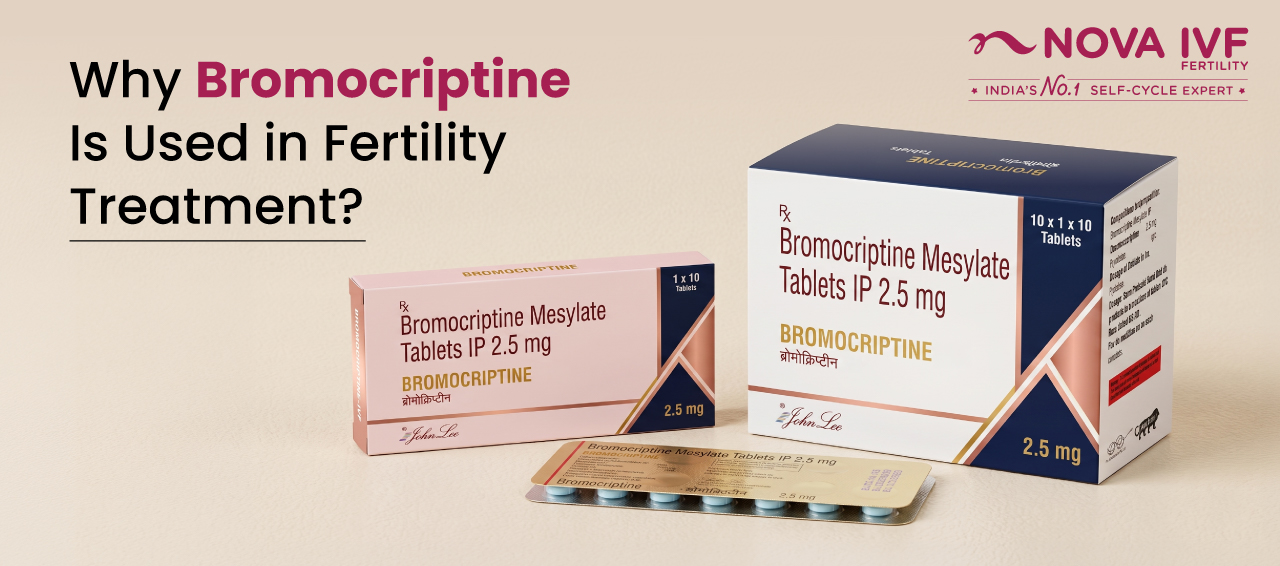
Infertility is a common condition and may be caused by many different factors. Hormone fluctuations are one of the most common causes of infertility. Prolactin is a hormone produced by the pituitary gland and is responsible for stimulating milk production in lactating mothers and inhibiting ovulation for the first few months after childbirth. High levels of prolactin amongst women who are not breastfeeding can cause infertility. This is also known as hyperprolactinemia.
In such cases, Bromocriptine or cabergoline are common medicines used in fertility treatments. They are administered orally and is available in the form of tablets and capsules.
Related Blog: Cetrotide in Fertility Treatment: Uses, Benefits, Side Effects & Dosage
How do Prolactin Levels Affect Fertility?
In cases of severely high prolactin levels, ovulation may stop completely. Without the release of an egg by the ovaries, it is virtually impossible for a woman to conceive naturally. In cases where Prolactin levels are not so severely high, ovulation may be disrupted once in a while. This results in irregular menstrual cycles that make it hard for a couple to approximate when a woman is most fertile.
Mildly high prolactin levels do not affect ovulation but may hinder the production of progesterone hormones after ovulation. This causes a luteal phase defect wherein the uterine lining does not become thick enough. As a result, the embryo may not be able to attach itself to the uterus and the woman may miscarry.
Explore IVF treatment process at Nova IVF Fertility
Nowadays, only cabergoline is used to treatment hyperprolactinemia
How Bromocriptine Works and Its Effects?
If you are trying for a baby, it helps to know “how does prolactin affect fertility”. Simply put, too much prolactin stops your ovaries from releasing eggs. Bromocriptine is a medicine that helps lower these levels by acting like a natural chemical in your brain. Once the prolactin is lower, your hormones can talk to each other properly again, and your body can get back to ovulating.
When people ask, “How does high prolactin affect fertility?”, the answer is usually that it makes your periods irregular or stops them altogether.
Bromocriptine is often the first choice for doctors because it works so well. Many women start ovulating again in just a few weeks. It also helps your body make enough progesterone, the hormone that prepares your womb for a baby and helps keep the pregnancy safe in the early weeks. By correcting hormone balance, this treatment greatly increases your chances of conceiving and having a healthy start to your pregnancy.
Why Bromocriptine Is Used in Fertility Treatment?
If you've been told your prolactin is high, bromocriptine fertility treatment could be the answer you're looking for. High prolactin can stop you from releasing eggs, which makes it hard to get pregnant. Bromocriptine for infertility helps by getting your hormones back in balance so you can conceive naturally. It’s a well-known high-prolactin treatment for women that helps the brain produce less prolactin, fixing the prolactin imbalance that’s causing the problem. Doctors often give bromocriptine for ovulation induction to women with hyperprolactinemia.
This hyperprolactinemia treatment makes your periods more regular and helps your womb get ready for a baby. Bromocriptine is a helpful prolactin-lowering medication for women whose issues are all about hormones. Your doctor will keep a close eye on you to make sure the dose is just right. By checking your prolactin levels regularly and following your doctor's advice, you’ll have a much better chance of getting pregnant. It’s all about giving your body a little help to get those hormones working correctly again. This hyperprolactinemia treatment makes your periods more regular and helps your womb get ready for a baby. Bromocriptine is a helpful prolactin-lowering medication for women whose issues are all about hormones. Your doctor will keep a close eye on you to make sure the dose is just right. By checking your prolactin levels regularly and following your doctor's advice, you’ll have a much better chance of getting pregnant. It’s all about giving your body a little help to get those hormones working correctly again.
FAQs
1. How does prolactin affect fertility?
Prolactin is a hormone that, when elevated, interferes with the production of other reproductive hormones. This results in inhibited ovulation and irregular menstrual cycles.
2. How does high prolactin affect fertility differently from mild elevation?
Severe cases cause total ovulatory failure and amenorrhoea. Mild cases often result in irregular cycles or a shortened luteal phase, both of which interfere with implantation.
3. Can bromocriptine restore ovulation?
Yes, lowering prolactin often allows ovulation to resume and improves fertility potential.
4. How long does bromocriptine take to work?
You’ll see hormonal changes in weeks. Full fertility usually returns within a few months.
5. Is bromocriptine safe during fertility treatment?
Yes. It is a well-studied and common treatment. When you’re under a doctor's care, it’s a safe way to tackle prolactin-related infertility.
6. Will fertility return after prolactin levels normalise?
Generally, yes. Normal periods and egg release return once the hormone is controlled.
7. Are lifestyle changes needed along with treatment?
It helps to look after yourself holistically. Managing stress and checking your thyroid health can really support the work the medication is doing.
8. When should a doctor be consulted?
Seek medical help if your periods are irregular or missing, or if you aren't getting pregnant after trying for a reasonable amount of time.
9. Can prolactin rise again after treatment stops?
Yes. You need regular monitoring to check for a prolactin rebound.
10. Is bromocriptine the only treatment option?
No. Other fertility treatment options, like cabergoline, are also common and effective.
Related Fertility Blogs