 Self-cycleTM IVF


-
-
-
 Infertility Counselling
-
 Female Infertility Treatment
-
 Andrology Treatment
-
 Fertility Enhancing Surgeries - Female
-
 Fertility Enhancing Surgeries - Male
-
 Endoscopy Treatment
-
 IUI Treatment
-
 IVF Treatment
-
 ICSI Treatment
-
 Advance IVF Solutions
-
 Embryology
-
 Vitrification Egg, Embryo, Sperm Freezing
-
 Preimplantation Genetic Testing (PGT)
-
 Donation Program Embryo / Egg / Sperm
-
 Self-cycleTM IVF
-
-
-
-
-
Laparoscopy: Meaning, Benefits, Procedure, and Risks
Laparoscopy Meaning
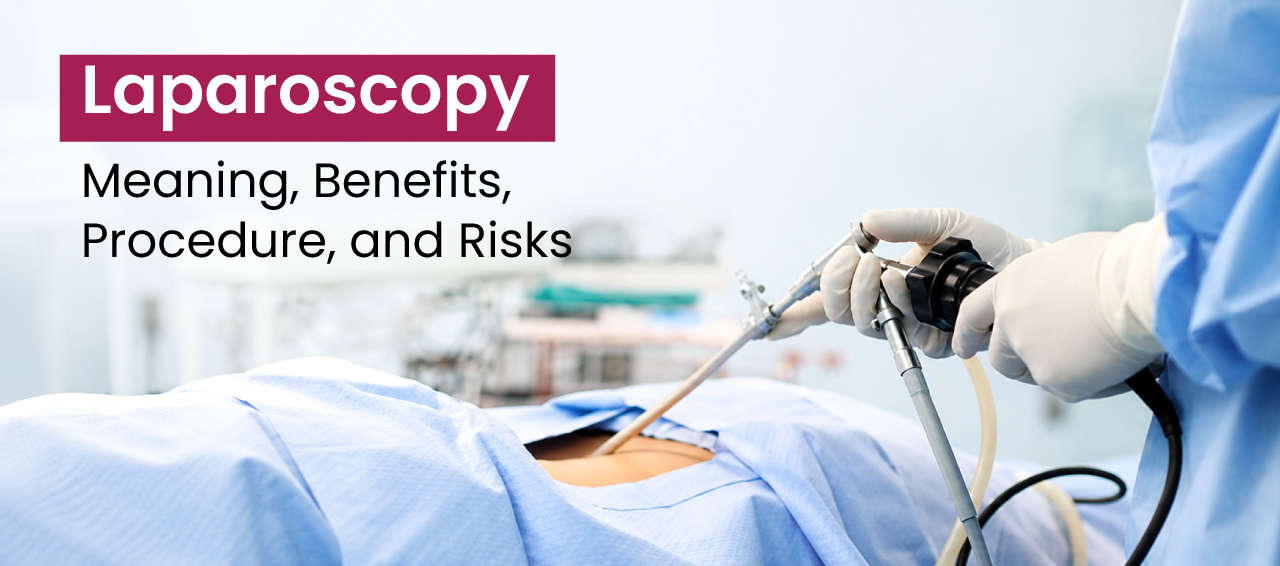
A laparoscopy is a kind of keyhole surgery. This implies that if you undergo laparoscopy, your surgeon will only make small incisions (cuts) into your skin along with other tissues. Keyhole surgery differs from 'open surgery', which often involves a single large cut. This is the reason laparoscopy is referred to as a minimally invasive procedure. If you undergo a keyhole procedure, you typically recover quickly.
A laparoscopy operation is performed to inspect and perform surgery on your organs. Laparoscopy is usually used to diagnose a condition by examining internal organs or doing a biopsy (taking a small tissue sample). It can also be performed to treat the issues surgically concurrently.
During the procedure, a laparoscope, a tool that is a narrow telescopic tube with a video camera at the end, is used. Your surgeon inserts the laparoscope through a small incision (half an inch or less) in your abdomen (belly). Surgeons can also make additional cuts to introduce other surgical equipment, allowing them to see all of the structures in your abdomen and identify any issues.
The laparoscope’s camera provides a view of the internal structure of your abdomen or pelvis on a monitor in real-time. With the help of these pictures, surgeons can see how their hands move during the process and perform the procedure.
What are the benefits of laparoscopy surgery?
The benefits of undergoing laparoscopic surgery include:
- Less damage within the stomach.
- Less loss of blood and less chance of haemorrhaging
- Smaller scars
- less chance of infection
- A shorter hospital stay allows for a comfortable recovery at home
- Faster recuperation and return to normal activities
- Less pain throughout recovery
Related Blog: Recovery Time for Laparoscopic Surgery
Reasons for laparoscopy
Laparoscopy surgery can be used for both diagnostic and treatment purposes. Diagnostic laparoscopy may be performed for the following reasons:
- Unexplained pain in the pelvis
- Unexplained infertility with a prior record of pelvic infection.
Laparoscopy can help diagnose the following conditions:
- Uterine fibroids
- Endometriosis
- Cysts or tumours of the ovary
- Pelvic abscess
- Infertility
- Ectopic pregnancy
- Pelvic adhesions or painful scar tissue.
- Inflammatory disease of the pelvic region
- Reproductive cancers
Some laparoscopic treatments are as follows:
- Hysterectomy (done for uterus removal)
- Ovaries removal
- Ovarian cyst removal
- Fibroids removal
- Obstruction of blood flow to fibroids
- Endometrial tissue ablation
- Adhesion removal
- Reversal of tubal ligation, a contraceptive operation.
- Vault suspension (for a prolapsed uterus)
- Burch procedure (done for incontinence)
Learn More About our female fertility surgery program
How to prepare for laparoscopy
The specific kind of surgery determines what preparation is required. You may require imaging testing, or your doctor may recommend an enema or fasting. Inform your surgeon about any medications you are currently taking. This includes over-the-counter (OTC) medicines and supplements. You may be required to stop taking these medications prior to the surgery.
Wear loose-fitting clothes, since your stomach may be bloated and painful after surgery. You will also probably feel sleepy, so make arrangements to have someone you can go home with.
Laparoscopic Procedure
A laparoscopy can be performed as an outpatient procedure or during an inpatient stay. Laparoscopy is generally conducted under general anaesthesia by the laparoscopic surgeon. This means you will be unconscious during the process; but, you can often return home on the same day.
A laparoscopy typically involves the following steps:
- You will be required to remove any jewellery or other items that could interfere with the surgical procedure.
- Change into a surgical gown.
- You will be instructed to remove your garments and handed a gown to wear.
- An intravenous (IV) line will be put into your hand or arm.
- You will be asked to lie on your back on the operation table.
- Throughout the procedure, the anaesthesiologist will monitor your blood pressure, heart rate, respiration rate, and blood oxygen levels.
- If there is excessive hair at the operation site, it will be removed.
- The skin around the surgery site will be cleansed using a sterile solution.
- A catheter will be placed to gather urine.
- Then a tiny needle will be used to inflate the abdominal cavity with carbon dioxide, so as to keep organs away from the wall of the abdomen, and lower the chance of injury.
- Your surgeon will make a small incision in your navel, insert the laparoscopic instruments, and visualize images of the internal structures on screen. This gives your doctor a good overview of your organs.
- The next steps depend on the reason it is being done. If it is for diagnosis, the surgeon will take a look at the organs to identify whether there are any abnormalities. At this stage, if correction is required, further incisions may be made by the surgeon to perform the surgery with the help of a laparoscope.
- Once the surgery is done, all equipment and gas are removed. Stitches are used to close the incisions, and then the incision site is bandaged. Following this, you will be taken to the recovery room.
Laparoscopic Surgery Recovery
In the recovery room, your vitals will be monitored till the anaesthesia effects subsides. You will not get discharged unless you urinate on yourself, because the use of a catheter may cause difficulty urinating.
Recovery times vary based on the specific procedure that was used. You could potentially go home within a few hours following surgery, but sometimes you may need to remain in the hospital for a day or two.
Following surgery, the area around the abdomen can feel tender. There can be bruising on the abdomen. The gas inside the body may cause pain in the chest and shoulders. You may also experience nausea for the remaining of the day.
Before you leave, your doctor will instruct you with details about how to deal with any possible side effects. Your doctor might recommend pain relievers or antibiotic medications to prevent infection.
Based on the procedure, you may be instructed to rest for some days.
At-Home Care to Follow Post Laparoscopy
After laparoscopic surgery, you will need to rest for a day or two at least. You should take the following steps:
- Do not consume alcohol for a minimum of 24 hours following surgery.
- Keep the surgical site dry and clean.
- Follow your doctor's recommendations on how to shower.
- If you have adhesive on your incisions, wait until it falls off. Wipe dry following a shower.
- Do not panic if your urine appears greenish. Your surgeon may have used a blue dye to check your fallopian tubes.
- It could take a couple of days before you have a normal bowel movement.
What are the possible laparoscopy risks and complications?
Laparoscopy is typically considered a safe surgical procedure. However, as with any surgery, there can be potential laparoscopy complications:
- Incision site bleeding
- Damage to blood vessels and adjacent organs
- Abdominal swelling
- anaesthesia-related issues
- Infection
- Blood clots may enter your bloodstream and cause clots in your pelvis, legs, or lungs. They may travel to the heart or brain and induce a stroke or heart attack, although this is very unlikely.
Conditions that enhance the chance of complications are as follows:
- Prior abdominal surgery
- If you are very thin
- Obesity
- Severe endometriosis
- chronic bowel disease
- pelvic infection
- The gas used for filling the abdominal cavity might also cause problems if it gets into a blood vessel.
How to Prepare for Laparoscopy Surgery?
Pre-surgery consultation
Before performing a laparoscopy, doctors evaluate the patient's medical history, current medications, and previous reports. This helps them design the procedure safely.
Diagnostic evaluation
Before the laparoscopy surgical operation, tests such as blood analysis or imaging can be recommended to assess overall health.
Medication guidance
Certain medicines might need discontinuation or re-evaluation before laparoscopy surgery, and precautions may be required.
Fasting instructions
It is typically necessary for patients to fast for a few hours before the laparoscopic procedure.
Lifestyle preparation
Patients are advised to avoid smoking and alcohol before surgery to support better recovery outcomes.
Hospital readiness
Dressing comfortably and arranging post-procedure care are recommended to facilitate an easier recovery from laparoscopy surgery.
Understanding the procedure
To ensure that patients are prepared and aware, surgeons explain how laparoscopic surgery works, what happens after the procedure, and post-surgical care.
Post-surgery planning
Regular rest, follow-up visits, and recovery care are scheduled to ensure a safe laparoscopic surgery recovery and improved treatment outcomes.
When to See a Doctor
If you experience any of the following symptoms, contact your doctor right away.
- Fever
- chills
- swelling or redness over your incision site
- Abnormal bleeding or discharge
- Urinary problems
Takeaway
One of the most beneficial parts of laparoscopy is the fact that it lets your doctor examine what is going on within your body without making large incisions. Although, they can do plenty through those tiny incisions (keyholes), they cannot do everything. Sometimes they find something that necessitates more extensive surgery. However, in most cases, your surgeon can address the problems with this minimally invasive treatment-laparoscopy.
Learn More About our endoscopy services
FAQs
1. What is laparoscopy, and why is it performed?
Laparoscopy is the term used to refer to a minimally invasive laparoscopic surgery operation that is utilised to address abdominal or reproductive health issues and diagnose them.
2. What are the advantages of laparoscopy?
Laparoscopy offers several advantages, including smaller incisions, faster healing, reduced discomfort, and quicker recovery.
3. How long does laparoscopy surgery recovery take?
Laparoscopy surgery recovery varies, and most people can return to normalcy within a short time under a medical practitioner's guidance.
4. Are the laparoscopy surgery steps painful?
The laparoscopic surgery is done under anaesthesia, and the post-operative pain is mostly mild and can be treated.
5. Is a hospital stay required after laparoscopy?
The majority of laparoscopic surgical procedure cases require day-care, while recovery monitoring may be necessary depending on the situation.
6. When should follow-up be scheduled after surgery?
Postoperative check-ups are required following laparoscopic surgery to monitor the patient's recovery and ensure that everything is progressing as planned.
7. What should I avoid during my laparoscopy surgery recovery?
Patients must refrain from heavy lifting or vigorous activities until the incisions from their surgery have healed, even when performing intense fertility yoga poses.
8. Does laparoscopy surgery leave permanent scars?
Because laparoscopic surgery utilises small-incision techniques, the resulting scars are typically small and become lighter over time.
Related Fertility Blogs