 Self-cycleTM IVF


-
-
-
 Infertility Counselling
-
 Female Infertility Treatment
-
 Andrology Treatment
-
 Fertility Enhancing Surgeries - Female
-
 Fertility Enhancing Surgeries - Male
-
 Endoscopy Treatment
-
 IUI Treatment
-
 IVF Treatment
-
 ICSI Treatment
-
 Advance IVF Solutions
-
 Embryology
-
 Vitrification Egg, Embryo, Sperm Freezing
-
 Preimplantation Genetic Testing (PGT)
-
 Donation Program Embryo / Egg / Sperm
-
 Self-cycleTM IVF
-
-
-
-
-
Basal Body Temperature Meaning: How BBT Helps You Track Ovulation
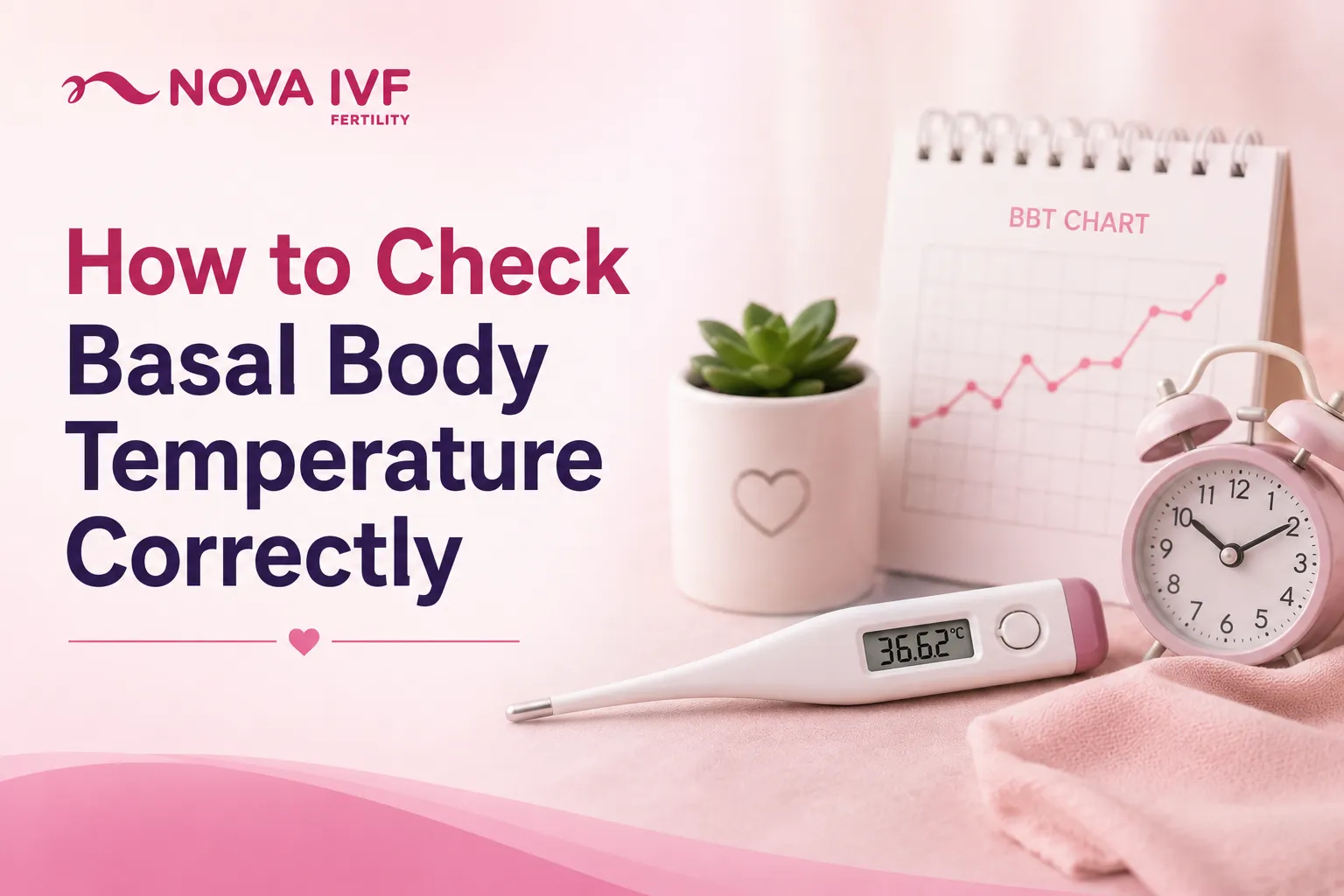
When you are trying to conceive, knowing when ovulation happens can help you understand your most fertile days. However, it is not always easy to know when ovulation has occurred by tracking your period alone. Basal body temperature (BBT) can help by showing a small change in body temperature after ovulation.
The basal body temperature meaning refers to your body's temperature at complete rest, usually measured when you first wake up. By recording your temperature each morning, you can track changes across your menstrual cycle and identify a pattern linked to ovulation.
This guide explains how to check basal body temperature, understand BBT changes, and use the information to better understand your fertility.
What Is Basal Body Temperature?
Basal body temperature is your body's temperature at complete rest, measured immediately upon waking before any physical movement or speech.
Basal body temperature changes throughout the menstrual cycle because of hormonal fluctuations. During the first phase of the cycle, estrogen keeps the resting temperature lower. After ovulation, the ruptured follicle develops into the corpus luteum and produces progesterone. Progesterone affects the brain's temperature-regulating center, causing basal body temperature to rise slightly by about 0.3°C to 0.7°C (0.5°F to 1.3°F). This higher temperature usually remains until the next period begins.
How to Check Basal Body Temperature Correctly
Knowing how to check basal body temperature correctly involves following strict morning habits to ensure your temperature readings reflect true resting states rather than external activity.
To get reliable data, follow these essential guidelines every day:
- Measure immediately upon waking: Take your reading before sitting up, stepping out of bed, talking, or drinking water. Even mild physical movement increases your blood circulation and alters your baseline temp.
- Keep a consistent schedule: Set an alarm to take your temperature at the exact same time every morning. Variations of even 30 to 60 minutes can skew your numbers.
- Ensure continuous sleep: Rest for at least three consecutive hours before taking a measurement. Interrupted sleep disrupts your metabolic baseline.
- Maintain one measurement site: Use the exact same site (orally, vaginally, or rectally) throughout your entire cycle. Oral temperature measurement is common, but vaginal temperature measurement often offers fewer fluctuations from mouth-breathing.
Choosing the Right Ovulation Thermometer
A standard household fever thermometer is not sensitive enough for tracking fertility because it only measures to one decimal place, whereas an ovulation thermometer measures to two decimal places (0.01°C or 0.01°F) to detect tiny hormonal changes.
Because the post-ovulatory temperature rise is small, precise devices are necessary. A dedicated basal thermometer shows precise shifts, such as reading 36.52°C one morning and 36.88°C two days later.
If manual waking measurement feels difficult to sustain, FDA-cleared wearable continuous monitors (such as smart rings or sensor armbands) are also available. Wearable devices measure skin or core thermal readings automatically while you sleep, making tracking easier for shift workers or people with irregular schedules.
The Basal Body Temperature Method Explained
The basal body temperature method involves recording your temperature every morning on a chart or digital app to track changes throughout the menstrual cycle.
Here is how to apply the tracking routine step-by-step across your cycle:
- Start on Day 1: Begin recording on the first day of full menstrual bleeding.
- Record daily: Plot your readings on a paper grid or dedicated mobile app every morning.
- Look for the shift: Look for a sustained rise in basal body temperature of at least 0.2°C that remains elevated for three consecutive days.
- Identify the three-day rule: Look for three consecutive days of elevated temperatures compared with the pre-ovulation baseline.
Over several menstrual cycles, the BBT routine helps you predict when ovulation will occur in future months so you can plan intercourse ahead of time.
BBT and Ovulation: Reading Your Temperature Pattern
Understanding BBT and ovulation requires looking for a biphasic pattern, meaning two distinct temperature phases, on your chart: a lower-temperature phase before ovulation and a higher-temperature phase after ovulation.
A healthy cycle chart shows a clear contrast between the two phases:
- Follicular Phase: Temperatures stay lower, generally hovering between 36.1°C and 36.4°C (97.0°F to 97.7°F).
- Ovulation Dip: Some individuals notice a brief, single-day dip right before the hormone shift occurs.
- Luteal Phase: Progesterone raises your readings to 36.5°C to 36.9°C (97.7°F to 98.4°F). This higher range stays steady for 12 to 14 days.
A 2024 study found that traditional oral BBT had a sensitivity of 68.33% and specificity of 78.57% for detecting ovulatory cycles when compared with urinary LH testing. The study also noted that BBT cannot reliably forecast ovulation in advance because the temperature rise generally occurs after ovulation. Therefore, BBT is more useful for identifying an ovulatory pattern than for pinpointing the exact timing of ovulation.
Limitations of BBT Tracking and When to See a Specialist
While daily temperature charts are useful, they have clear limitations because many non-hormonal factors can alter your body's baseline reading.
Common factors that artificially raise or lower your readings include:
- Fever, cold, or underlying illness
- Alcohol consumption the previous evening
- Psychological stress or anxiety
- Travel across time zones
- Sleeping under extra blankets or in a room with extreme temperature changes
If your BBT charts remain erratic, show no clear temperature rise, or vary widely from cycle to cycle for three consecutive months, consider combining BBT tracking with cervical mucus observations or ovulation predictor kits (OPKs). Understanding what constitutes a normal menstrual cycle can also help you identify changes in cycle length that may need further evaluation.
If you have tried BBT tracking for several months without seeing a biphasic pattern, or if your menstrual cycle is shorter than 21 days or longer than 35 days, consult a specialist. Diagnostic evaluations like confirming ovulation with a scan offer precise real-time views of follicle growth. You can also explore options like fertility assessment or check your general reproductive timeline using a fertility calculator.
A consultation with a fertility specialist at Nova IVF Fertility can help assess an inconsistent ovulation pattern and determine whether further evaluation is appropriate.
Frequently Asked Questions
What does basal body temperature tell you?
Basal body temperature shows whether your ovaries have released an egg during a given cycle. A sustained rise in temperature confirms that progesterone is present, indicating that ovulation has already taken place.
What is a normal basal body temperature?
Before ovulation, a normal resting temperature typically ranges between 36.1°C and 36.4°C (97.0°F to 97.7°F). After ovulation, progesterone increases the baseline to approximately 36.5°C to 36.9°C (97.7°F to 98.4°F).
How accurate is the basal body temperature method for conceiving?
The BBT method is highly accurate for confirming that ovulation occurred, but it is less effective for predicting when to have intercourse in the current cycle. Because the temperature rise occurs after egg release, it works best when used over several months to estimate future fertile windows.
What is basal body temperature in early pregnancy?
If pregnancy occurs, progesterone remains elevated, so basal body temperature may stay higher than the usual luteal-phase baseline beyond the expected period. Sustained elevated BBT can be an early sign of pregnancy, but a pregnancy test is needed for confirmation.