 Self-cycleTM IVF


-
-
-
 Infertility Counselling
-
 Female Infertility Treatment
-
 Andrology Treatment
-
 Fertility Enhancing Surgeries - Female
-
 Fertility Enhancing Surgeries - Male
-
 Endoscopy Treatment
-
 IUI Treatment
-
 IVF Treatment
-
 ICSI Treatment
-
 Advance IVF Solutions
-
 Embryology
-
 Vitrification Egg, Embryo, Sperm Freezing
-
 Preimplantation Genetic Testing (PGT)
-
 Donation Program Embryo / Egg / Sperm
-
 Self-cycleTM IVF
-
-
-
-
-
Ovulation Meaning Explained: Types, Signs & Symptoms Every Woman Should Know
Trying to make sense of your menstrual cycle can often feel overwhelming, especially when you are actively trying to conceive. You might find yourself constantly checking your calendar or wondering when the best time for intercourse really is. Understanding your body does not have to be confusing or stressful.
Knowing your ovulation timing makes all the difference when planning for pregnancy. Ovulation is the process where an ovary releases a mature egg, usually occurring once during every monthly cycle. It marks your peak fertile period because pregnancy can begin only when a released egg meets live sperm.
In this guide, you will learn how to pinpoint your ovulation day, recognize key physical body signs, and understand how cycle variations affect your natural fertility.
What Does Ovulation Actually Mean?
Ovulation is the biological process in a woman's menstrual cycle where a mature egg is released from an ovary into the fallopian tube. It marks the peak fertile window of the monthly cycle, as pregnancy can only occur when this released egg is fertilized by sperm.
To understand where ovulation fits into your reproductive health, it helps to look at the three main phases of your monthly cycle:
Follicular Phase (Egg Maturation & Hormone Surge):
Early in your cycle, hormones signal the ovaries to grow fluid-filled sacs called follicles, with one dominant follicle maturing a single egg. As this egg reaches full maturity, your body produces a rapid spike in luteinizing hormone (LH) to prepare it for release.
Ovulation (Egg Release & Journey):
Within 24 to 36 hours of the LH increase, the dominant follicle breaks and releases the mature egg from the ovary. The egg is then swept into the fallopian tube, where it survives for about 12 to 24 hours awaiting potential fertilization by sperm.
Luteal Phase (Post-Ovulation Transition):
The emptied follicle transforms into the corpus luteum, releasing progesterone to prepare the uterine lining for a potential pregnancy. If fertilization does not occur, hormone levels drop, leading to your period.
Together, these three phases regulate your entire reproductive cycle, ensuring your body produces a mature egg and prepares the womb for potential pregnancy month after month. Understanding how this sequence works makes it much easier to pinpoint the exact days when conception is possible.
Understanding the Fertile Window
Women are born with a lifelong store of immature eggs in their ovaries, and only a small fraction of eggs fully mature until a woman hits menopause. While a released egg survives for only 12 to 24 hours inside the fallopian tube, your chance to conceive actually extends across a broader period of 6 days.
Healthy sperm can survive for up to five days in fertile cervical fluid. This creates a fertile window of roughly six days: the five days leading up to ovulation plus the ovulation day itself. Because the egg's lifespan is so short, conception depends on having viable sperm already present in the fallopian tube when the egg is released.
Having intercourse during these peak days gives you the highest chance of conceiving naturally. Whether ovulation occurs consistently can be verified clinically through fertility testing methods like a follicular ultrasound scan, though observing physical symptoms at home is an effective starting point.
Signs and Symptoms of Ovulation: What Every Woman Should Know
Ovulation does not always come with clear signals. Some women feel nothing at all during the fertile days. Others notice small changes in the body that can help point to when ovulation is close, or when it has just happened.
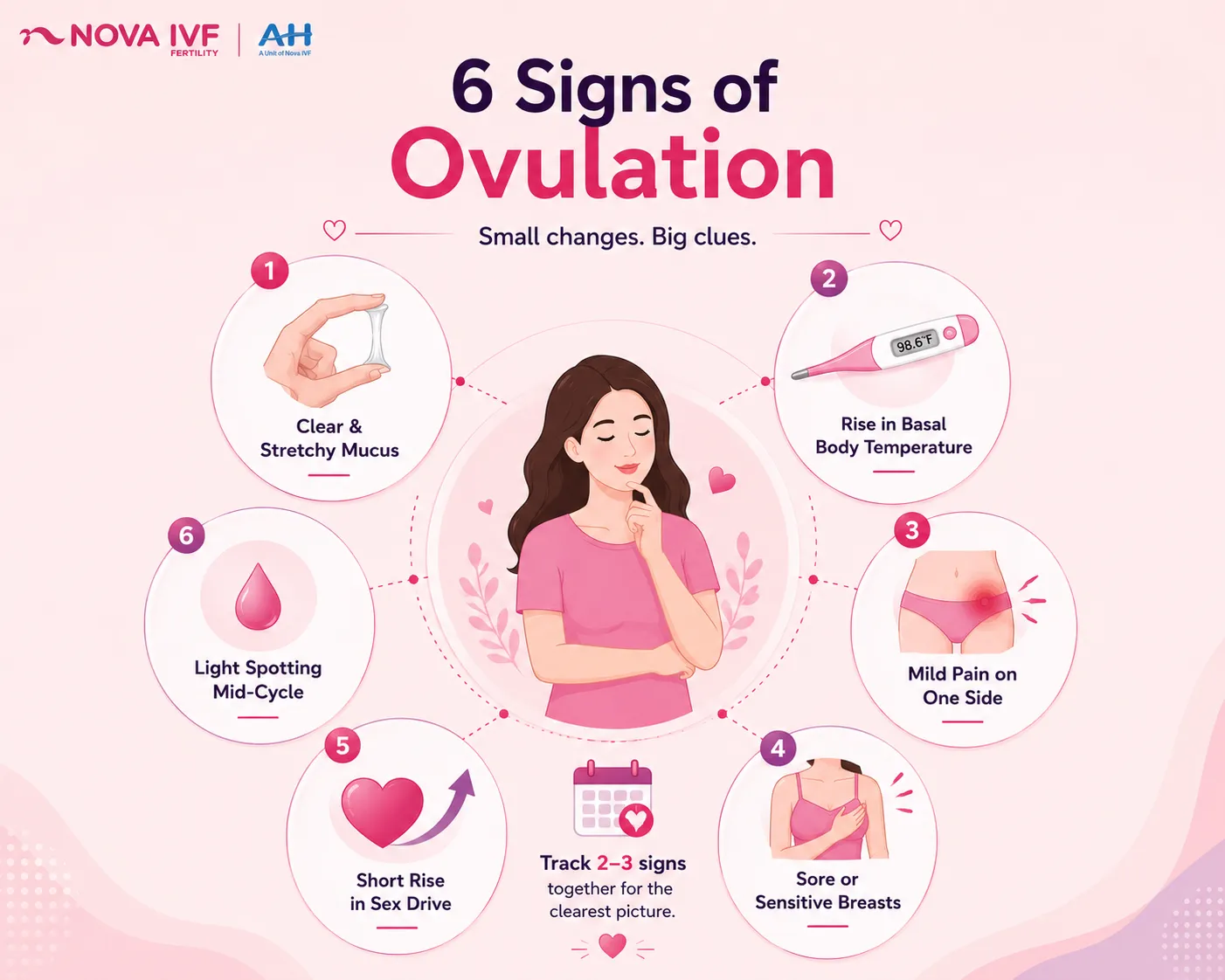
Most of these signs are physical. A few are easier to spot than others. Looking for two or three of them together works better than relying on just one. The signs of ovulation most women can look out for at home:
- Cervical mucus turns clear, wet and stretchy, like raw egg white. This is one of the earliest and most useful signs.
- Basal body temperature (BBT), the body's temperature at full rest, rises by about 0.5 degrees Fahrenheit after the egg is released. The shift is small, so a sensitive BBT thermometer is usually needed to see it.
- A brief, mild ache on one side of the lower abdomen, called mittelschmerz, or "middle pain." It does not last long and is not felt by everyone.
Mucus changes build before ovulation, while the temperature rise confirms it only afterwards. No single sign is proof on its own. Ovulation testing at home tracks the hormone surge in urine, a clearer signal than symptoms alone.
Cervical Mucus Changes During Ovulation
Ovulation mucus is arguably the most self-checkable fertility sign, yet most guides bury it inside a longer symptom list. Watching how your discharge changes across the month tells you when the fertile window is opening, with no device required.
The progression is predictable:
- Just after your period: dry, or little to no mucus.
- Early-to-mid cycle: sticky, then creamy and cloudy as oestrogen rises.
- Near ovulation: clear, wet, slippery, and stretchy, like raw egg white. This is the peak-fertility signal that helps sperm survive and travel.
- After ovulation: it dries up and becomes thick or sticky again.
You can read it by the sensation when you wipe, or by checking the discharge itself between two fingers to see how far it stretches.
Reports from Indian fertility centres note that this egg-white ovulation mucus usually appears for about one to five days, most often two to three days before ovulation, which is precisely when intercourse is most likely to lead to conception. Dehydration, antihistamines, and infections can alter it, so read mucus alongside other signs.
Types of Ovulation: How Each Pattern Affects Fertility
Ovulation does not follow the same rhythm for everyone. Reading your own pattern matters more than any fixed calendar date. Most cycles fall into one of four recognisable patterns.
Regular ovulation
An egg is released near the middle of the cycle, on roughly the same day each month. This is typical of cycles lasting 21 to 35 days. Most general fertility advice assumes this steady pattern.
Irregular or delayed ovulation
An egg is still released each month, but the day it happens shifts from one cycle to the next. Some months it comes early, others late, with no fixed rhythm to plan around. This makes the fertile days harder to predict in advance.
Anovulation
In an anovulatory cycle, no egg is released at all. A period-like bleed can still occur, so the cycle may look normal from the outside. An occasional anovulatory cycle is common, but repeated month after month it usually has a treatable medical cause.
Early ovulation
Here, the egg is released sooner than usual, sometimes before day 11. This is more common when cycles run short. The fertile window can then open soon after a period ends, which often catches women by surprise.
Recurring irregular or absent ovulation usually points to an underlying cause rather than chance.Anovulation symptoms, such as missed periods with no mid-cycle signs, are worth recognising early. Thyroid imbalance and stress are other common, treatable contributors.
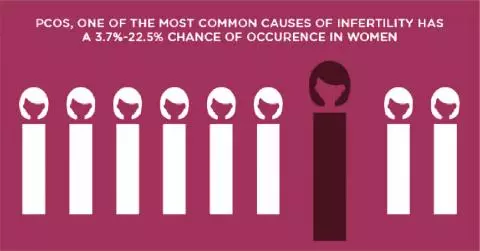
PCOS is a leading cause of irregular or absent ovulation. A 2022 systematic review and meta-analysis in Cureus placed its pooled prevalence among Indian women near 11 percent, though estimates vary by criteria. One PCOS and ovulation induction case study follows how treatment can help restore a cycle.
Ovulation Calculator for Irregular Periods: How to Find Your Fertile Days
The textbook "Day 14" rule assumes every woman has a predictable 28-day cycle, where ovulation happens precisely at the midpoint. However, for women with irregular cycles, ovulation shifts from month to month, making a single fixed date unreliable.
The key is to calculate an estimated fertile range rather than guessing one exact day, then confirm egg release using your body's physical signals.
Log at least three cycles
Note the first day of each period. Then count the number of days until the next period begins. Repeating this for three cycles gives a basic sense of how long the cycle usually runs, and how much it varies from month to month.
Find the shortest and longest cycle
From the three cycles logged, pick the shortest one and the longest one. Subtract 18 from the length of the shortest cycle. This gives the first likely fertile day. Subtract 11 from the length of the longest cycle. This gives the last likely fertile day. The span between these two days is the estimated fertile window.
Check cervical mucus
The calendar range gives a rough guide. Cervical mucus makes it more accurate. When the discharge becomes clear and stretchy, similar to raw egg white, ovulation is close. This works even when the calendar prediction is off by a few days.
Add basal body temperature tracking
Basal body temperature, or BBT, is the body's temperature at complete rest, taken first thing in the morning before getting out of bed. This does not help predict the next fertile window on its own, but over a few cycles it builds a clearer picture of when ovulation usually occurs.
For regular cycles, an ovulation calculator can give a quick starting estimate, but on irregular cycles treat any app prediction as a rough guide, not an answer.
Ovulation predictor kits, which detect the LH surge in urine 24 to 36 hours before the egg releases, are a useful supplement, though on very irregular cycles you may need to test across a wider range of days.
Combining the calendar range with mucus and LH results is far more reliable than any single method. Consistency is what makes it work: a few cycles of honest notes reveal a pattern no calculator can guess.
When to See a Fertility Specialist
Tracking answers a lot, but some patterns are worth having assessed rather than watched. This article is for general education and is not a substitute for individual medical advice. Consider a consultation if any of the following apply:
- Cycles consistently shorter than 21 days or longer than 35 days.
- Periods that are absent or highly unpredictable.
- No ovulation signs for three or more months despite tracking.
- Trying to conceive for 12 months without success, or 6 months if you are over 35.
Irregular ovulation does not mean you cannot conceive. They mean the cause is worth identifying early. A fertility specialist can confirm whether ovulation is occurring with a follicular scan and simple hormone tests, then explain your options plainly, from ovulation induction through to IVF treatment where it is needed.
Frequently Asked Questions
How do you tell when you are ovulating?
Watch for clear, stretchy egg-white cervical mucus, a mild one-sided pelvic twinge, and a slight rise in basal body temperature. Combining these signs with LH testing confirms it best.
How many days after a period does ovulation happen?
There is no single answer that fits everyone. Around day 14 is common in a 28-day cycle, but plenty of women ovulate a few days on either side of that, and both are normal.
Can you get pregnant right after your period ends?
Yes, though it is less common. On short cycles ovulation can arrive early, and because sperm survive up to five days, sex soon after your period can still cause pregnancy.
What does it mean when a woman is ovulating?
Her ovary has released an egg that is ready to be fertilised. The egg only lives for a day or so, which is why the chance of pregnancy is highest in this short stretch of the cycle.