 Self-cycleTM IVF



-
-
-
 Infertility Counselling
-
 Female Infertility Treatment
-
 Andrology Treatment
-
 Fertility Enhancing Surgeries - Female
-
 Fertility Enhancing Surgeries - Male
-
 Endoscopy Treatment
-
 IUI Treatment
-
 IVF Treatment
-
 ICSI Treatment
-
 Advance IVF Solutions
-
 Embryology
-
 Vitrification Egg, Embryo, Sperm Freezing
-
 Preimplantation Genetic Testing (PGT)
-
 Donation Program Embryo / Egg / Sperm
-
 Self-cycleTM IVF
-
-
-
-
-
Average Size of Uterus in Centimeters: Normal Range Explained
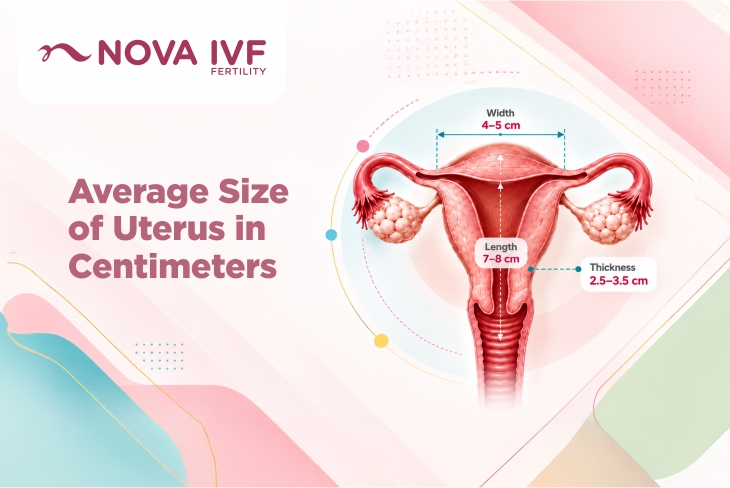
If you have recently had a pelvic ultrasound, you may have seen measurements of the uterus recorded in centimeters and wondered whether the numbers fall within the normal range. Uterus size can vary naturally with age, hormonal changes, pregnancy, and previous childbirth, so a measurement that differs from the average does not necessarily indicate a health problem. Doctors consider uterine length, width, and thickness along with other ultrasound findings to assess uterine health and identify structural changes.
This guide explains the average size of a uterus in centimeters, how uterine dimensions change throughout different life stages, and when uterus size may become relevant to fertility and pregnancy.
What Is the Average Size of a Healthy Uterus?
The average size of a uterus in centimeters for a healthy, non-pregnant adult is 7 to 8 cm in length, 4 to 5 cm in width, and 2.5 to 3.5 cm in thickness. Healthcare providers commonly compare a healthy adult uterus to the size and shape of a small inverted pear.
A healthy uterus size is not a single fixed number because normal dimensions vary naturally from person to person. For instance, in nulliparous women (women who have never carried a pregnancy to term), uterine length averages around 7.5 cm. In multiparous women (women who have given birth multiple times), normal uterine length typically measures between 8.5 cm and 9 cm. These minor structural variations reflect natural muscle adaptation and represent completely healthy anatomical patterns.
How Is Uterus Size Measured?
A clinician measures uterine dimensions using a pelvic ultrasound, which can be performed transvaginally or transabdominally. During a transvaginal scan, a narrow, lubricated probe is inserted gently into the vagina, giving the specialist a clear view of the pelvic cavity. During a transabdominal scan, gel is applied to the lower abdomen, and a smooth transducer glides across the skin.
Digital calipers on the ultrasound monitor allow the specialist to mark exact boundaries and compute the organ's length, width, and thickness. Ultrasound imaging provides a quick, non-invasive, and painless assessment. Doctors usually perform this evaluation alongside routine checks of ovarian follicle counts and endometrial lining thickness to complete your pelvic health evaluation.
Does Uterus Size Increase With Age?
Yes, uterus size increases significantly during puberty and shifts continuously across different life stages in response to fluctuating levels of estrogen and progesterone.
The organ undergoes predictable structural changes as hormone levels shift over time:
- Pre-puberty: Low estrogen levels keep the organ small and narrow in young girls, typically measuring under 3.5 cm in total length.
- Puberty and Reproductive Years: Estrogen production increases during puberty, causing the muscular walls (myometrium) to grow. The organ reaches its mature length of 7 to 8 cm and maintains this stable baseline throughout the childbearing years.
- Postmenopause: Estrogen production drops permanently after menopause. Reduced hormonal support causes the muscular tissue to shrink gradually (atrophy), often bringing postmenopausal uterine length below 6 cm and thickness under 2 cm.
Uterus Size in cm During Pregnancy (Week-by-Week Chart)
During pregnancy, the uterine walls stretch continuously to accommodate a growing baby and supporting fluid. Obstetricians track this growth using ultrasound measurements alongside fundal height checks, where a flexible tape measure records the distance from the pubic bone to the top of the expanded organ.
The following uterus size in cm during pregnancy chart provides a general overview of uterine growth and fundal height at different stages of pregnancy.
| Pregnancy Stage | Visual Size Comparison | Average Fundal Height (cm) |
|---|---|---|
| 5 to 6 Weeks | Size of a Plum | Not measurable externally |
| 10 to 12 Weeks | Size of a Grapefruit or Large Orange | 10 to 12 cm (remains in the pelvis) |
| 20 Weeks | Size of a Banana | 18 to 22 cm (reaches the navel) |
| 30 Weeks | Size of a Papaya | 28 to 32 cm |
| 36 to 40 Weeks | Size of a Watermelon | 36 to 40 cm (reaches lower rib cage) |
Size of Uterus After Giving Birth
The size of the uterus after giving birth shrinks through a biological recovery process known as uterine involution. Immediately following delivery, the uterus weighs close to 1 kilogram and reaches up toward the navel. Rhythmic muscular contractions, often stimulated by breastfeeding hormones, rapidly reduce its volume over the first few weeks postpartum.
The uterus takes approximately 6 weeks to complete the majority of its recovery. While the muscular walls contract significantly, the organ rarely returns to its exact pre-pregnancy measurements. A healthy average size of a uterus in centimeters after childbirth usually settles at a baseline measurement of 8 cm to 10 cm in length. This slight, permanent increase in size is a normal result of muscle expansion during pregnancy.
When Uterus Size Signals a Health Concern
A uterus that measures substantially larger or smaller than standard clinical ranges can point to underlying structural conditions or hormonal imbalances.
An enlarged uterine size is commonly caused by non-cancerous muscular growth or tissue accumulation within the walls, such as:
- Uterine Fibroids: A uterine fibroid is a non-cancerous muscular tumors that forms inside or along the uterine wall, altering its shape and volume
- Adenomyosis: A painful condition where tissue similar to the inner lining starts growing deep into the outer muscular wall, leading to inflammation and generalized swelling.
- Uterine Polyps: Polyps are soft tissue growths along the inner wall that alter internal dimensions.
Uterine Hypoplasia: This refers to an unusually small or underdeveloped uterus, which can result from congenital factors or insufficient hormonal stimulation during pubertal development.
If you experience chronic pelvic pressure, unusually heavy bleeding, or irregular cycles, a specialist can run targeted diagnostic scans to determine whether an underlying uterine abnormality is contributing to the symptoms.
Why Uterus Size Matters for Fertility and IVF
Anatomical dimensions and the average size of a uterus in centimeters directly influence reproductive success because the uterine cavity must offer sufficient space, structural support, and healthy blood circulation for a developing embryo. Before starting assisted reproductive technology (ART), fertility specialists evaluate cavity shape and tissue volume to confirm that the environment is suited for successful implantation.
Research published in Reproductive BioMedicine Online, as featured in Science Direct, demonstrates that measuring uterine cavity length before embryo transfer allows specialists to calculate the exact depth needed for optimal placement. Releasing the embryo roughly 1.5 cm below the uterine fundus helps maximize implantation potential while avoiding uterine wall touch, which can trigger unwanted muscular contractions.
For individuals experiencing secondary infertility (difficulty conceiving after a previous pregnancy), uterine imaging can help identify structural factors that may interfere with conception or implantation. At Nova IVF Fertility, precise ultrasound measurements of the uterus help fertility specialists assess the uterine cavity and determine the appropriate location for embryo placement during IVF treatment. Individuals seeking further evaluation of ultrasound findings or other reproductive health concerns can visit a Nova IVF Fertility clinic for a detailed consultation with a fertility specialist.
Frequently Asked Questions
What is a large uterus size in cm?
A uterus length greater than 9 to 10 cm, or an overall thickness over 4 to 5 cm in a non-pregnant adult is generally considered large, bulky, or enlarged.
How do I know my uterus is healthy?
Regular gynaecological examinations and routine pelvic ultrasounds provide the clearest confirmation of uterine health. Normal menstrual flow, predictable cycles, and an absence of deep pelvic pain also signal good reproductive wellness.
How does uterus size change with age?
The uterus expands during puberty under the influence of rising estrogen, stabilizes during the childbearing years, and naturally shrinks after menopause as hormonal support wanes.
Can a small uterus affect fertility or pregnancy?
A significantly small organ (uterine hypoplasia) can increase the risk of miscarriage or premature labor. However, many women with mild size variations conceive and carry healthy pregnancies with proper medical supervision.
Can uterus size be increased with treatment?
When the uterus is underdeveloped due to hormone deficiencies during early adulthood, targeted hormone therapy administered under medical supervision can encourage muscle growth and increase internal cavity capacity.
Related Fertility Blogs