 Self-cycleTM IVF


-
-
-
 Infertility Counselling
-
 Female Infertility Treatment
-
 Andrology Treatment
-
 Fertility Enhancing Surgeries - Female
-
 Fertility Enhancing Surgeries - Male
-
 Endoscopy Treatment
-
 IUI Treatment
-
 IVF Treatment
-
 ICSI Treatment
-
 Advance IVF Solutions
-
 Embryology
-
 Vitrification Egg, Embryo, Sperm Freezing
-
 Preimplantation Genetic Testing (PGT)
-
 Donation Program Embryo / Egg / Sperm
-
 Self-cycleTM IVF
-
-
-
-
-
Egg Follicle Size at Ovulation: What's Normal, Ideal & When to See a Doctor
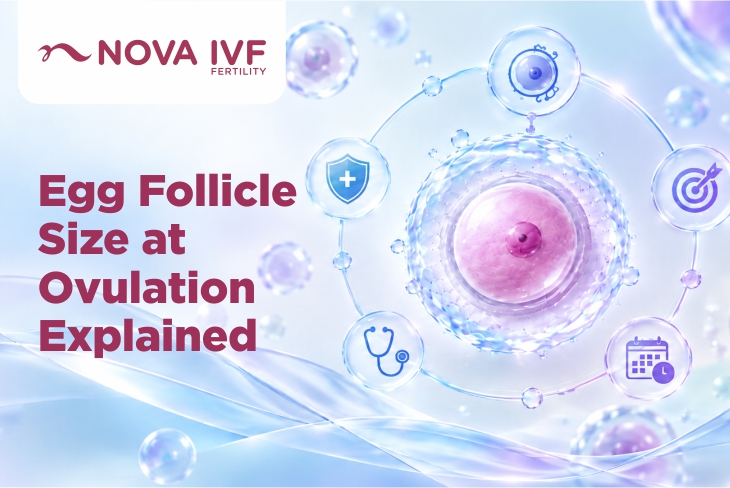
You've probably heard your fertility specialist mention follicle size and wondered what it means for your chances of conceiving. Trying to conceive already comes with enough to think about, and it's easy to feel lost when a new term gets added to the mix at every appointment.
Follicles grow and change throughout the menstrual cycle, and their size can provide useful information about follicular development and the timing of ovulation. This guide explains what follicle size typically looks like at ovulation, how it's different from egg size, and when it's worth checking in with your doctor.
What Is the Ideal Egg Follicle Size at Ovulation for Pregnancy?
Each menstrual cycle, your ovaries grow a mature egg inside a fluid-filled sac called a follicle. Doctors watch this follicle because its size shows how close you are to ovulating. It also gives them a picture of your reproductive health, whether you're tracking your cycle naturally or getting ready for a fertility procedure.
A follicle measuring 18 to 24 millimeters (mm) in diameter before ovulation is considered mature and ready to release its egg.
In a typical natural cycle, several small follicles start developing in the ovaries. Usually, only one becomes dominant while the others disappear. As it grows, the dominant follicle makes more estrogen. Once estrogen builds up enough, it gives a feedback to the pituitary gland to release a surge of luteinizing hormone (LH). This LH surge not only finishes maturing the egg but also triggers the dominant follicle to rupture, usually 24 to 36 hours later and release the mature egg. This released egg is then picked up by the fallopian tube, where it can be fertilised by the sperm.
Follicle vs Egg Size: Why They're Not the Same
A follicle and an egg are two different biological structures. People often mix up the terms during fertility discussions.
- The Follicle is a fluid-filled sac located in the ovary. It can be seen and measured easily using transvaginal ultrasound. It usually contains the egg, but not all follicles contain an egg.
- The Egg (Oocyte) is the actual reproductive cell inside the follicle. Human eggs are tiny, measuring only about 0.1 mm (100 microns), so a standard ultrasound can't pick them up.
Doctors measure the follicle size through ultrasound and thus indirectly assess the maturity of the egg inside the follicle. Follicles under 18mm are likely to contain an immature egg while follicles more than 24mm in size have either an over-mature egg or its a cyst. Follicles of 18-24 mm size are likely to contain mature egg. However, a growing follicle does not necessarily mean that it contains an egg, it may be an empty follicle. Also, it doesn't confirm egg quality or guarantee fertilization on its own.
IVF Follicle Size by Day: Growth Chart
During IVF, doctors track how well the ovaries are responding to stimulation medicine by watching the follicles grow. Repeated ultrasounds, via a follicular study, help them find the exact day to give the trigger shot.
| Phase of Cycle / Stimulation | Typical Days | Average Follicle Diameter | Clinical Expectation |
|---|---|---|---|
| Baseline / Early Follicular | Day 2 – Day 5 | 2 – 9 mm | Antral follicles visible; baseline check |
| Early Stimulation | Day 6 – Day 8 | 10 – 12 mm | Selection of growing cohort; stimulation active |
| Mid Stimulation | Day 9 – Day 11 | 13 – 16 mm | Steady progression; adjustments to medication |
| Late Stimulation / Pre-Trigger | Day 12 – Day 14 | 17 – 22+ mm | Lead follicles reach maturity; trigger planned |
Growth rates vary with individual ovarian reserve, protocol type, and medication dosage.
Follicle Growth Rate During Stimulation
Once fertility stimulation medications are started, follicles grow at a predictable rate of 1 to 2 millimeters per day, although growth rates vary between individuals and treatment cycles.
Growth speed often picks up slightly as follicles approach maturity, around 15 mm. Clinics track this by repeating transvaginal ultrasounds and pairing them with blood tests that measure estradiol levels. Estradiol is a form of estrogen that developing follicles produce. A healthy, mature follicle typically corresponds to an estradiol level of roughly 150 to 300 pg/mL. That confirms the fluid sac contains a developing, healthy egg.
Best Follicle Size for Pregnancy: Natural, IUI & IVF Compared
The best follicle size target for pregnancy depends on whether you're trying to conceive naturally or going through a specific fertility procedure.
During IVF, doctors weigh follicle size along with how the ovaries have responded overall when deciding when to give the trigger. A study published in Frontiers in Endocrinology and available through PubMed Central found that follicles measuring 12–19 mm on the day of trigger contributed most to the number of mature eggs retrieved. Follicles measuring 16–22 mm were more likely to contain a mature egg than smaller ones.
| Treatment Type | Target Follicle Size | Procedure Timing |
|---|---|---|
| Natural Conception | 18 – 24 mm | Spontaneous ovulation following natural LH surge |
| IUI (Intrauterine Insemination) | 18 – 22 mm | IUI treatment uses an hCG trigger shot when the lead follicle hits target; insemination follows 36 hours later |
| IVF (In Vitro Fertilization) | 16 – 22 mm | trigger shot is given when majority of lead follicles hit target; retrieval follows 34–36 hours later |
These follicle size ranges are general guides used in the clinic. They can vary with individual response, treatment protocol, hormone levels, and the number of developing follicles.
Doctors monitor the dominant follicle during IUI treatment to decide when to give the trigger and schedule the insemination. Understanding how IUI works explains why timing matters this much.
Maximum Egg Follicle Size to Get Pregnant
The maximum size of a follicle which contains a fertilisable egg capable of giving a pregnancy is around 24 to 26 mm, depending on the situation.
Follicles that grow beyond 26 mm may become post-mature or over-ripe, again depending on the situation. Egg quality and the chances of fertilization can both drop. Some follicles fail to rupture at all, turning into luteinized unruptured follicles (LUF) or benign follicular cysts instead. Egg degeneration, or atresia, becomes more likely once a follicle grows past its ideal window. Correct timing of ovulation or retrieval often matters more for egg quality than size alone.
What Happens If Follicle Size Is Smaller or Larger Than Ideal?
Conception chances drop when follicles fall outside the target 18 to 24 mm range at the expected time of ovulation.
- Follicles Under 18 mm
These often hold immature eggs. They lack the chromosomal maturity needed for successful fertilization..
- Follicles Over 26 mm
Oversized follicles may point to a delayed LH surge, cyst formation, or post-maturity, where the egg inside has already started to degrade.
If ultrasound monitoring shows irregular or slow follicle growth, talk to a fertility doctor rather than trying to read the scan images yourself.
Factors That Affect Follicle Size and Growth
Several biological and lifestyle factors influence how your follicles respond and grow during a cycle:
- Age and Ovarian Reserve
Advanced maternal age can affect the response to hormonal signals and slow follicle growth.
- Polycystic Ovary Syndrome (PCOS)
Women with PCOS often have numerous small, underdeveloped follicles that struggle to reach dominant size without medical support. Targeted PCOS treatment options can help restore normal ovulation patterns.
- Hormonal Imbalances
Levels of Follicle-Stimulating Hormone (FSH), Luteinizing Hormone (LH), thyroid hormones, or prolactin, when disrupted, directly affect how follicles mature.
- Body Mass Index (BMI) & Lifestyle
Extremes of body weight, high stress, and poor nutrition can disrupt the normal pituitary signals sent to the ovaries.
- Response to Stimulation
Individual response to fertility medications varies with receptor sensitivity and medication dosage.
How Nova IVF Monitors Follicle Size for Better Outcomes
Nova IVF Fertility builds every treatment plan around close follicle monitoring. Our specialists combine transvaginal ultrasound imaging with real-time hormone monitoring (estradiol, progesterone, and LH) to track follicle maturation step by step.
Our team looks at both follicle diameter and hormone production together. This combination of follicle size measurement and hormone levels shows the ideal window for the trigger shot, natural intercourse timing, IUI insemination, or IVF egg retrieval. By measuring the exact follicle size at ovulation, our team can support fertilization rates while avoiding risks like Ovarian Hyperstimulation Syndrome (OHSS). The next step is knowing when to see a fertility specialist.
Frequently Asked Questions
How to increase follicle size?
Hormones drive follicle growth. Under medical supervision, doctors may prescribe fertility medications such as Clomiphene Citrate, Letrozole, or injectable Gonadotropins (FSH) to stimulate growth. Balanced nutrition, stress management, and a healthy weight also support hormonal balance.
Can you get pregnant with a follicle size of 15mm?
It is unlikely to get pregnant with a follicle size of 15mm. A 15 mm follicle is considered immature for natural ovulation or a trigger shot. Follicles grow 1 to 2 mm per day though, so a 15 mm follicle may reach maturity (18+ mm) within two to three days.
What follicle size is used for the trigger shot in IVF?
In IVF cycles, doctors usually give the trigger shot once at least two to three lead follicles reach 18 to 22 mm in diameter, while secondary follicles (14 to 16 mm) grow alongside them.
Related Fertility Blogs