 Self-cycleTM IVF





-
-
-
 Infertility Counselling
-
 Female Infertility Treatment
-
 Andrology Treatment
-
 Fertility Enhancing Surgeries - Female
-
 Fertility Enhancing Surgeries - Male
-
 Endoscopy Treatment
-
 IUI Treatment
-
 IVF Treatment
-
 ICSI Treatment
-
 Advance IVF Solutions
-
 Embryology
-
 Vitrification Egg, Embryo, Sperm Freezing
-
 Preimplantation Genetic Testing (PGT)
-
 Donation Program Embryo / Egg / Sperm
-
 Self-cycleTM IVF
-
-
-
-
-
Step-by-Step Guide to the Egg Freezing Process
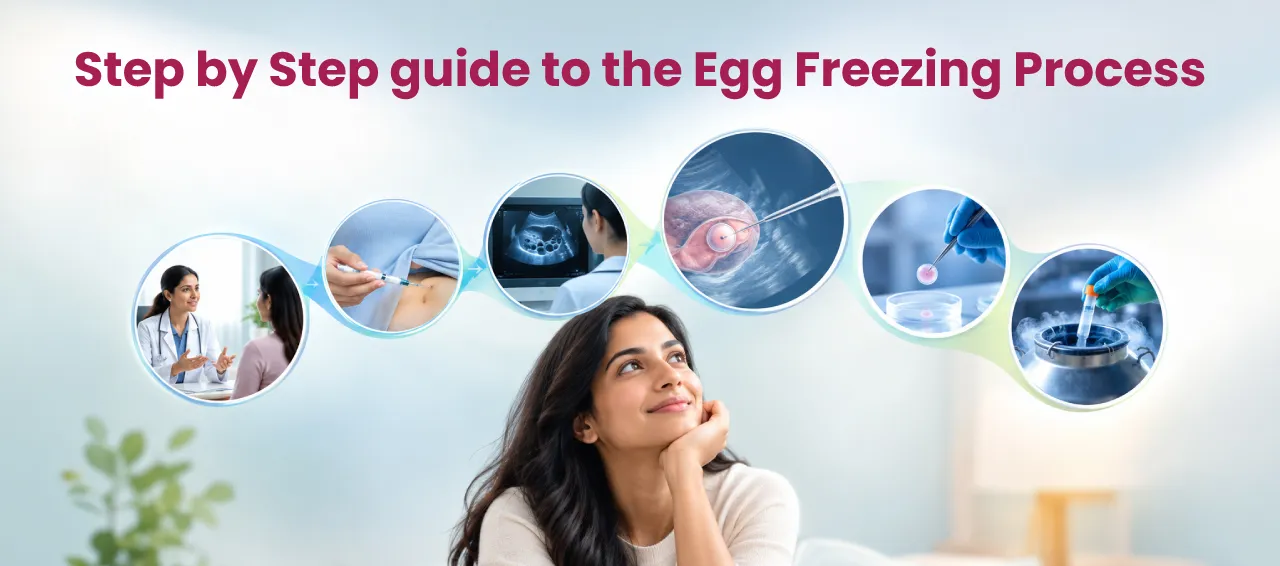
Egg freezing, which is medically known as oocyte cryopreservation, is a process that is used to preserve a woman's reproductive potential. It is an option for those women who are not ready to start a family as yet but want to ensure their ability to get pregnant at a future time. For this, eggs are harvested from the woman's ovaries, preserved in a frozen unfertilized state, and stored for future use. When the woman decides to have a child, the frozen egg is thawed, fertilized with sperm in a lab, and then implanted in her uterus. This process is known as In-Vitro Fertilization (IVF).
Learn More About egg and sperm freezing services
The Egg Freezing Procedure
Egg freezing is a complex medical process created to ensure that the reproductive abilities of a woman are maintained in the future. Patients will be able to prepare both physically and mentally for treatment if they are aware of the timeline of egg freezing step-by-step. The procedure typically takes two to three weeks to complete and consists of the following crucial steps:
- Ovulation Induction: This is the initial active stage of the egg freezing treatment. For approximately 10–12 days, you will self-administer hormonal injections to stimulate the ovaries. Unlike in a normal cycle, where only one egg is produced, this stimulation causes numerous follicles to grow simultaneously. This egg-freezing schedule will require you to come to the clinic every few days for ultrasounds and blood tests to monitor your follicle development. After the follicles have reached optimal size, they are prepared for the trigger shot, which completes egg maturation.
- Egg Retrieval: Scheduled exactly 34–36 hours after the trigger shot, this is the actual egg freezing procedure for women. To ensure a painless process, it is a simple, mildly sedative outpatient surgical procedure that lasts 20 minutes. A tiny needle is inserted through the vaginal wall using ultrasound to aspirate the follicles' mature eggs. Within a day, most women may return to their regular lives.
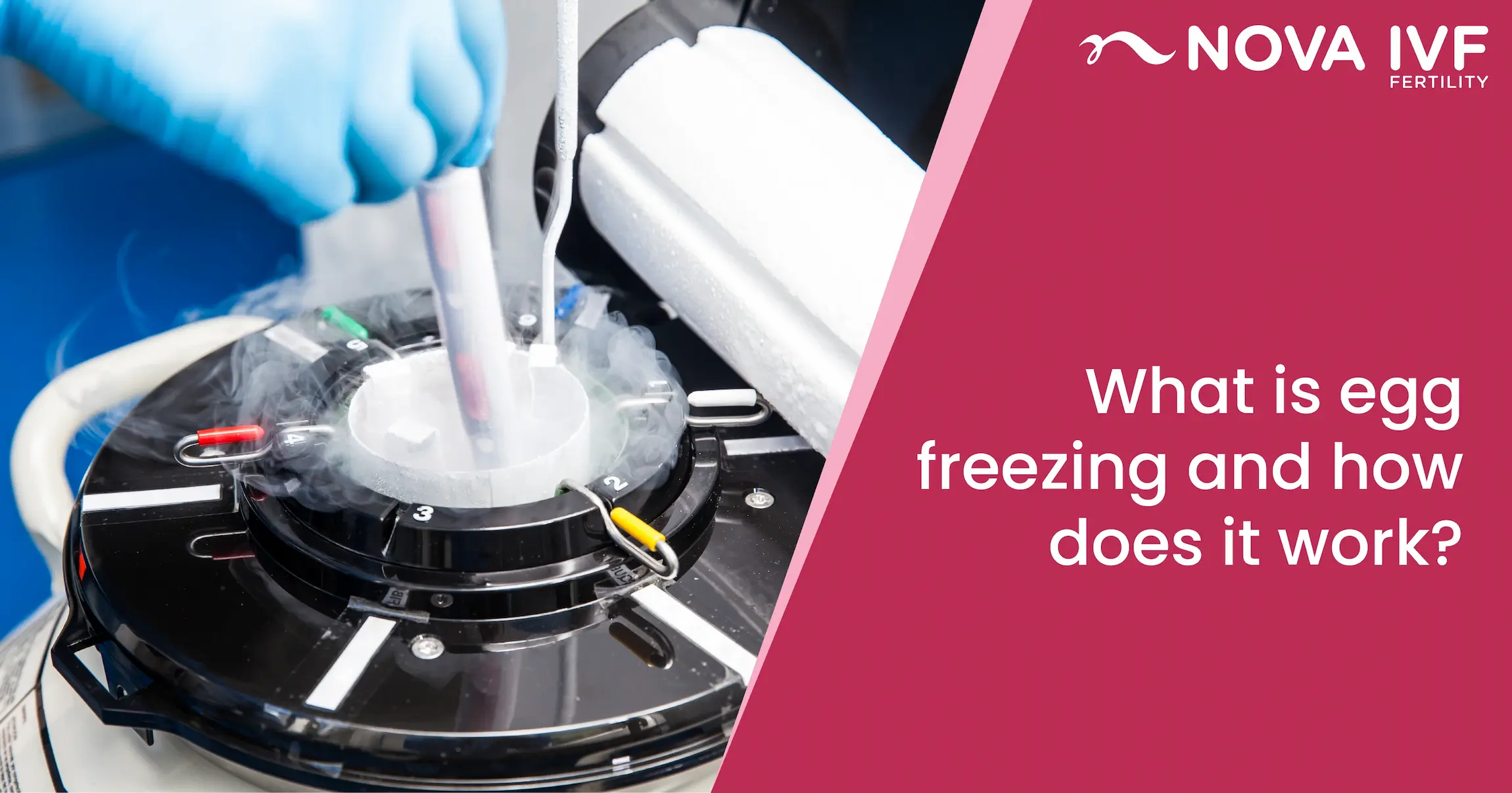
- Egg Freezing: After retrieval, the eggs are sent directly to the embryology lab. They use a specialised freezing technique called vitrification. In this IVF egg freezing process, eggs are quickly frozen to such low temperatures that the water molecules have no time to form harmful ice crystals. After that, these frozen oocytes are stored in liquid nitrogen containers for several years.
Who should consider egg freezing?
The egg freezing process is an empowering choice for those who wish to safeguard their fertility against the natural biological clock or medical challenges. This is an ideal approach for :
- Career & Personal Planning: Women who would prefer to invest in higher education or career security, or those who are waiting on the right man, may opt step by step freezing of their eggs before they have to feel the stress of age-related infertility.
- Medical Indications: This egg freezing treatment should be prioritised by women who have cancer (who must undergo chemotherapy or radiation) or other conditions like endometriosis or PCOS, which may reduce ovarian reserve over time.
- Family History: Women with a family history of early menopause can use egg freezing as an insurance policy to ensure they have healthy eggs in case their natural supply is lost earlier than expected.
Cost of freezing eggs
The egg freezing treatment processes need a significant amount of laboratory technology and medicine; therefore, it should be viewed as an investment in your future. In India, the average price of egg freezing is between 120,000 and 180,000 per cycle. This is typically the first consultation, hormonal stimulation drugs, the surgery to retrieve, and the first year of storage.
It should be noted that annual storage costs (typically ₹10,000-25,000) are charged after the first year. Some patients may need several cycles to achieve the optimal number of frozen eggs, which can increase overall egg-freezing costs for women.
Risks involved in the egg-freezing process
Although the process of egg freezing is considered to be safe, one should also remember the possible side effects:
- Ovarian Hyperstimulation Syndrome (OHSS): This is an uncommon response to fertility medications in which the ovaries are painfully enlarged.
- Procedure-Related Risks: The retrieval phase has a low risk of bleeding and infection, as well as sedation-related response problems.
- No Guarantee of Pregnancy: The eggs frozen through the IVF process do not guarantee successful pregnancy achievements because other reproductive factors determine pregnancy outcomes.
- Physical Discomfort: The stimulation phase causes temporary effects, which include breast tenderness and mood fluctuations, together with abdominal bloating.
Related Fertility Blogs