 Self-cycleTM IVF


-
-
-
 Infertility Counselling
-
 Female Infertility Treatment
-
 Andrology Treatment
-
 Fertility Enhancing Surgeries - Female
-
 Fertility Enhancing Surgeries - Male
-
 Endoscopy Treatment
-
 IUI Treatment
-
 IVF Treatment
-
 ICSI Treatment
-
 Advance IVF Solutions
-
 Embryology
-
 Vitrification Egg, Embryo, Sperm Freezing
-
 Preimplantation Genetic Testing (PGT)
-
 Donation Program Embryo / Egg / Sperm
-
 Self-cycleTM IVF
-
-
-
-
-
How to Use an Ovulation Kit: Step-by-Step Guide to Reading Your Results
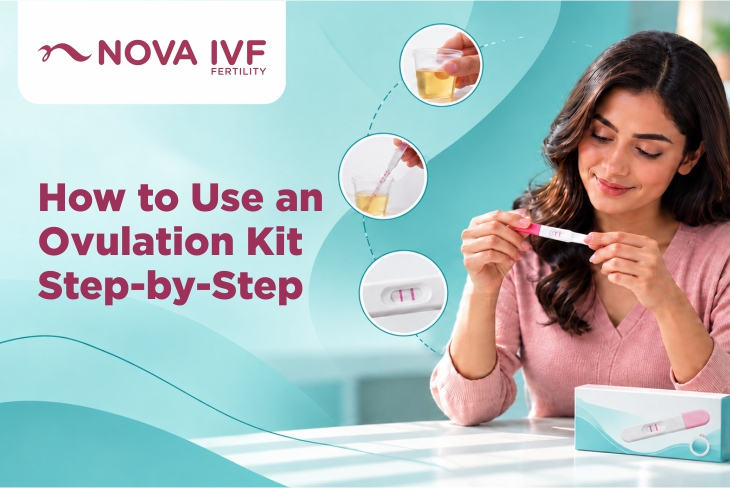
When you're trying to conceive, timing intercourse to your most fertile days improves your chances, but ovulation doesn't always occur on the same date every month. Relying on calendar days alone can leave you feeling uncertain about when you are most fertile.
An ovulation kit can help remove some of the uncertainty. It picks up the hormonal shift that happens just before ovulation, so you can time your intercourse better.
This guide explains when to start testing based on your cycle length, how to read a positive or faint result, common mistakes that can affect accuracy, and what to do once you get a positive result.
What Is an Ovulation Kit and How Does It Work?
An ovulation predictor kit (OPK) is a home urine test. It picks up the increase in luteinising hormone (LH), your body's LH surge. That surge leads to the ovary releasing a mature egg, usually about 24 to 36 hours later.
Ovulation kits come in three common formats:
- Test strips, which are small paper strips dipped into a collected urine sample.
- Midstream tests are handheld devices held directly in your urine stream.
- Digital tests, which are devices that read hormone levels electronically and display a clear digital symbol.
An OPK helps you find your most fertile days by tracking this hormone shift. However, it won't tell you for certain that an egg was released, and it's not a pregnancy test.
How to Use an Ovulation Kit: Step-by-Step
Using an ovulation kit correctly takes consistency and precise timing. Always follow the instructions that come with your specific kit, and follow your doctor's guidance instead if it differs. The steps below cover the general process.
1. Determine your testing start date
Calculate the length of your average menstrual cycle, counting Day 1 as the first day of full menstrual bleeding. Subtract 17 days from your total cycle length to find your starting day. For a standard 28-day cycle, testing usually begins on Day 11. If your cycle lasts 30 days, testing typically begins on Day 13.
2. Collect your urine sample
Collect your sample between 10:00 AM and 8:00 PM rather than using first-morning urine, since LH is made earlier in the day but appears in urine later. Reduce fluid intake for two hours before testing, so the sample doesn't become diluted.
Dip the test strip into the urine for the recommended time, usually 5 to 10 seconds, or hold the midstream stick directly in your urine stream. Place it flat on a clean, non-absorbent surface and let the liquid flow fully across the window, usually for 3 to 5 minutes, before you read it.
While reading the result, compare the colour intensity of the test line against the control line before the maximum time window expires, usually within 10 minutes.
When to Start Testing Based on Your Cycle
The figure below highlights the key points related to use of the Ovulation Kit
Collecting and Testing Your Urine Sample Correctly
Using the kit correctly is only half the job. How you collect and handle your urine sample matters just as much.
- Let refrigerated samples reach room temperature before you dip the strip. Cold liquid slows the chemical reaction.
- Wash and dry reusable collection cups thoroughly. Soap, oil, or residue can change the urine's chemistry.
- Heavy exercise before testing can dehydrate you, and that can concentrate your baseline LH and skew the reading.
- Keep test strips sealed in their foil pouches until you're ready to use them. Moisture degrades them, so check the expiration date too.
Reading Ovulation Test Results Correctly
Reading an ovulation test is different from reading a pregnancy test. On a pregnancy test, any faint line means a positive result. On an ovulation test, a line almost always appears, because your body produces baseline LH throughout your entire cycle. What matters is how the test line compares to the control line.
| Result Type | Line Appearance | Meaning |
|---|---|---|
| Negative Result | Test line is lighter than control line, or no line appears. | LH levels are at baseline. The fertile window has not opened. |
| Faint Line Result | Test line is visible but noticeably lighter than control line. | Low LH levels detected. Continue daily testing. |
| Positive Result | Test line is equal to or darker than control line. | An LH surge has been detected. |
| Invalid Result | Control line does not appear at all. | The test is invalid and should be repeated with a new kit. |
What Does a Positive Ovulation Kit Result Look Like?
A positive result means the test line is equal to, or darker than, the control line. The LH surge has started. On a digital ovulation kit, a positive result shows up as a distinct symbol, such as a smiley face, so there's no guesswork around comparing line shades.
What Does a Faint Line in an Ovulation Test Mean?
A faint line in an ovulation test means the test has detected low baseline levels of luteinising hormone. It counts as a negative result. This pattern typically shows up in three situations. First, your body is preparing for ovulation but hasn't reached peak hormone levels yet. Second, if your LH surge has already ended and is returning to baseline, or third, your body is simply producing its normal small amount of LH for that point in the cycle.
Continue testing daily at your scheduled time until the test line darkens to match or exceed the control line.
Common Mistakes That Affect Ovulation Kit Accuracy
Small errors in timing or handling can turn an accurate LH surge into a false reading, and miss your fertile window entirely.
- Letting a strip sit longer than 10 minutes can cause evaporation lines that look like a false positive.
- Dipping a strip past the MAX line damages the reaction strip and invalidates the control line.
- Fertility treatments containing human chorionic gonadotropin (hCG) or synthetic LH can cause a false positive on a standard strip.
- Stopping tests too early on a long or unpredictable cycle can mean you miss a late LH surge entirely. And thus detect rise and fall of LH hormone
- Take the test roughly at same time every day so that you can compare the line darkness
How to Increase Chances of Pregnancy After a Positive Result
A positive result on the ovulation kit marks the start of your most fertile window. To make the most of this fertile window, have intercourse on the day of the positive result and over the following one to two days.
An unfertilised egg survives for about 12 to 24 hours after release, while healthy sperm can survive inside the female reproductive tract for up to five days. Having intercourse before the egg is released helps ensure sperms are already present in the fallopian tubes when ovulation occurs. Understanding your fertile window can help you time intercourse around conception and may increase your chances of pregnancy.
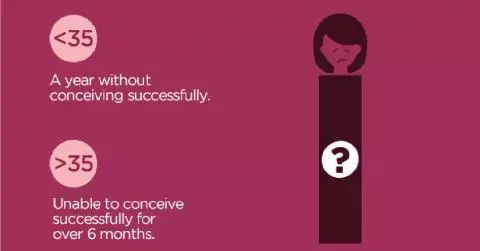
A 2023 Cochrane review, published in PMC, looked at couples using urine ovulation tests to help time intercourse. It found this probably increases the chances of pregnancy and live birth in women under 40 who've been trying for less than 12 months. The review estimated that pregnancy rates could rise from about 18% without it to between 20% and 28% with it. However after age 35 years, it is advisable to try for only 6 months using this kit and if unsuccessful, visit a fertility specialist for evaluation.
Timing intercourse is one part of preparing for pregnancy. A few other things help too:
- Eat a diet rich in leafy greens, whole grains, and healthy fats.
- Take a daily folic acid supplement, as your physician recommends.
- Cut out tobacco, limit alcohol, and manage daily stress where you can.
When Ovulation Kits Aren't Enough: Signs You Need Expert Guidance
Ovulation predictor kits work well for many people, but not everyone. Some hormonal conditions cause frequent false positives or faint lines in your ovulation test that never darken across an entire cycle.
You may benefit from a professional medical evaluation if you experience any of the following.
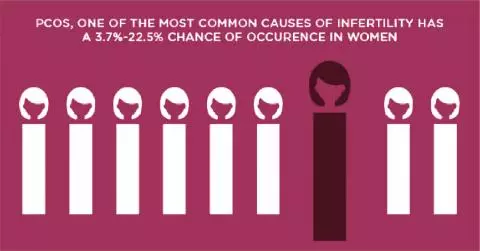
- Polycystic Ovary Syndrome (PCOS)
Elevated baseline LH can cause persistent positive results on your ovulation kit without egg release actually occurring. Checking for common signs of PCOS affecting ovulation can offer clarity.
An irregular or absent cycle that varies too much to know when to start testing is another reason to get checked. So is perimenopause, where fluctuating hormone levels cause erratic LH patterns.
- Repeated negative results
If you never detect an LH surge over several cycles in a row, that may indicate anovulation, a cycle where an egg isn't released.
If you've been actively trying to conceive without success for 12 months, or 6 months if you're over 35, scheduling an evaluation with a specialist is a good next step. At Nova IVF Fertility, clinical assessments, ultrasound monitoring, and customised procedures such as IUI treatment or the broader IVF treatment can help when tracking your cycle at home isn't giving you clear answers.
Frequently Asked Questions
How do you take an ovulation kit?
Collect a urine sample in a clean container during late morning or early afternoon. Dip the test strip in for the time your kit's instructions say, usually a few seconds, then lay it flat. Read the result within 3 to 5 minutes by comparing the test line to the control line.
When to start testing for ovulation using the kit?
Start testing about 17 days before your next expected period, and test daily at the same time. Cut back on fluids for two hours beforehand, and collect your sample between 10:00 AM and 8:00 PM. Read the result within the time your kit's instructions give you.
Is it better to test with morning or evening urine for ovulation kits?
Late morning or evening urine is generally better than first-morning urine for ovulation testing. It is advisable to test between 10 am and 8 pm, as LH may take some time to appear in urine after it is released into the bloodstream. Testing during this window can make it easier to detect the LH surge.
How soon after a positive ovulation test should you have intercourse?
Have intercourse on the day of your positive result and over the following two days. Ovulation usually follows an LH surge by 24 to 36 hours, so this window is when sperm may already be present
Related Fertility Blogs