 Self-cycleTM IVF



-
-
-
 Infertility Counselling
-
 Female Infertility Treatment
-
 Andrology Treatment
-
 Fertility Enhancing Surgeries - Female
-
 Fertility Enhancing Surgeries - Male
-
 Endoscopy Treatment
-
 IUI Treatment
-
 IVF Treatment
-
 ICSI Treatment
-
 Advance IVF Solutions
-
 Embryology
-
 Vitrification Egg, Embryo, Sperm Freezing
-
 Preimplantation Genetic Testing (PGT)
-
 Donation Program Embryo / Egg / Sperm
-
 Self-cycleTM IVF
-
-
-
-
-
Why IVF Fails: Exploring Causes of Multiple IVF Failures
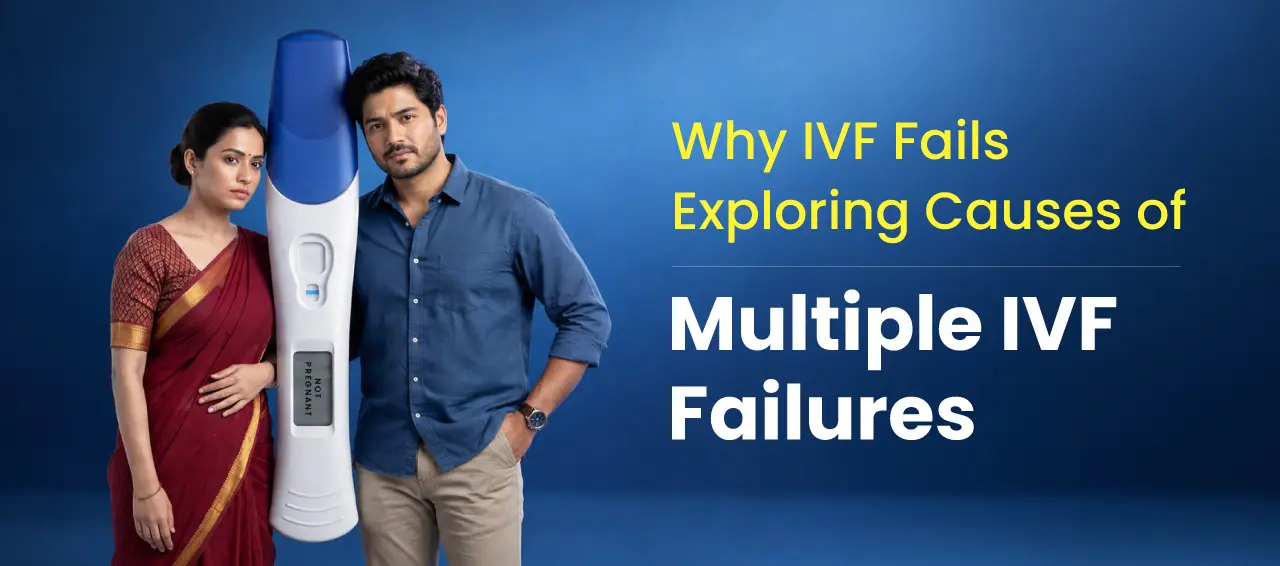
Multiple IVF Failures
An IVF specialist stimulates the growth of multiple eggs and then harvests these eggs for fertilization. In a controlled and precise process, the partner’s (or donor) sperm is used to fertilize viable eggs. Next, the quality of the developing embryos is evaluated. The healthiest embryo is selected, and it is transferred to the uterus. If the procedure is successful, the embryo develops into a healthy baby. Not every IVF cycle is a success, but this is an ideal process. Some patients have a chance of multiple IVF failures. Failures are expensive and take an emotional toll on the couple.
It is critical to comprehend what constitutes multiple IVF failure before talking about the cause. The term "repeated IVF failure" refers to situations where there have been three or more unsuccessful attempts to conceive after using healthy embryos. It is a term that is used to describe both situations in which a woman is unable to become pregnant and those in which a pregnancy ends in an early miscarriage.
Multiple IVF failures can have a variety of causes, and not all of them are solely the mother's fault.
Embryo Quality
Most IVF failures occur when embryos stop developing. When embryos don't implant after transfer, it is frequently because of an error that preimplantation genetic screening missed. Embryos cannot implant if they are not healthy enough to grow.
Age of Eggs
The quality of the embryo varies depending on the age of the egg. This can lead to repeated failures for women over the age of 35. In the early stages of a woman's life, all her eggs are present, however as she grows older, the quality of her eggs degrades. It is more difficult to harvest viable eggs near menopause. Women under the age of 35 have a 45% implantation rate, but women over the age of 40 typically have a 15% rate.
Autoimmune Disorders
Around 10% of the population is affected by autoimmune diseases, and 80% of those with autoimmune disorders are women. When your immune system attacks healthy tissue, it can cause inflammation and cell death. This is known as an autoimmune disease. Hashimoto's thyroiditis, Addison's disease, celiac disease, type 1 diabetes, and lupus are a few of the more prevalent immune disorders.
The antibodies found in women with specific autoimmune diseases prevent embryo implantation and multiple IVF failures. Some people discover they have an autoimmune disease only when they start looking for reasons why they can't get pregnant.
Chromosomal Issues
Similar to natural conception, the main causes of IVF failure are chromosomal abnormalities in embryos. A woman's eggs start to have more chromosome abnormalities starting in her mid-30s. She will have a whopping 75% more abnormalities by the time she is in her mid-40s. As men age, chromosomal abnormalities in their sperm also rise.
Prior to implantation of the embryos in the uterus, preimplantation genetic screening or testing finds chromosomal abnormalities.
Lifestyle
Your IVF success is impacted by factors like smoking, drinking, poor nutrition, and being significantly underweight or overweight. In fact, smoking increases the risk of miscarriage and necessitates twice as many IVF cycles for conception in women.
Common IVF Failure Symptoms
Many women try to read their body after embryo transfer, but possible IVF failure symptoms are often hard to judge because they can feel very similar to regular premenstrual symptoms. These symptoms do not always mean the cycle has failed, but many women notice them during the waiting period, especially if IVF failure after embryo transfer occurs.
Mild cramping or abdominal discomfort
Some women feel mild cramps after embryo transfer. This can be related to progesterone support or the body’s usual premenstrual changes.
Spotting or light bleeding
Some women notice light spotting after embryo transfer. This can happen due to progesterone support, mild cervical irritation, or the beginning of menstrual bleeding.
Menstrual-like bleeding
Heavier bleeding, similar to a period, may indicate that implantation has not occurred.
Lower back pain
Some women experience dull back pain due to hormonal shifts, similar to PMS symptoms.
Breast tenderness reducing suddenly
Breast soreness can ease if pregnancy hormones are not rising, although this varies widely.
Absence of pregnancy-related symptoms
Some women notice no nausea or fatigue, but this is not always a reliable sign.
Mood changes and irritability
Many women feel emotionally sensitive during IVF because of hormone support medicines, and anxiety during the two-week wait can make irritability more noticeable.
Negative pregnancy test at the recommended time
IVF results are confirmed only through the beta human chorionic gonadotropin blood test. If the result is negative on the advised testing day, it usually means pregnancy has not happened in that cycle.
These symptoms can sometimes be linked to IVF implantation failure reasons, but the final confirmation always comes only through the pregnancy test. ‘
Causes of Repeated IVF Failures
Poor Oocyte Quality:
The quality of oocytes is likely to decline with age.
Poor Sperm Quality:
If the sperm is of poor quality, it might not be able to penetrate the egg's shell, which would result in ineffective fertilization.
Wrong Embryo Selection:
If an abnormal embryo is chosen, it is likely to be rejected by the uterus. It is important to choose a normal embryo for a successful cycle.
Issues in the Uterus:
There are high chances that an IVF cycle will fail if there are problems in the uterus, particularly the endometrial lining. The likelihood that an IVF cycle will fail also increases if the woman has fibroids, polyps, a difficult cervix, intrauterine adhesions, or an abnormally shaped uterus.
Issues with Embryo Transfer:
Embryo transfer is a delicate, non-surgical procedure that must be done in the proper setting and at the appropriate time. To minimise risk, it is advisable to carry out a trial transfer to make sure the embryo is positioned correctly inside the uterus.
Improving IVF Success Rates
When a cycle fails, couples often want to know the next steps and what they can do differently. Many reasons for IVF failure involve factors that can be corrected or improved through proper evaluation. A careful review can reduce the risk of recurrent failure and identify potential causes of IVF failure.
Improve embryo selection with genetic testing
Preimplantation genetic testing can identify chromosomal abnormalities, which are among the most common IVF failure reasons.
Treat uterine cavity problems before the next transfer
Fibroids, polyps, adhesions, or a thin endometrium can affect implantation and are important factors affecting IVF success.
Consider endometrial receptivity testing
Sometimes the uterus may not be at its most receptive stage on the usual transfer date. Testing can help guide the timing.
Manage thyroid disorders, diabetes, and hormonal imbalance
Thyroid problems, diabetes, and hormone imbalance can affect how well implantation happens and may increase the chance of early loss.
Address infections or chronic inflammation
A mild uterine infection or inflammation may not cause symptoms, but it can still reduce the likelihood that an embryo will attach properly.
Improve sperm quality and consider ICSI when required
Poor sperm DNA quality is a known contributor to repeated IVF failure.
Maintain a healthy weight and nutrition
Both obesity and being underweight can reduce implantation chances and hormone balance.
Stop smoking and reduce alcohol intake
Smoking can harm egg quality and is also linked with a higher chance of miscarriage. Alcohol intake may also negatively affect fertility outcomes.
Follow medication timing strictly
IVF medicines must be taken exactly as prescribed. Delays or missed doses, especially progesterone support, can affect the chances of implantation.
These changes can reduce avoidable risks and improve outcomes in the next IVF attempt, especially after a prior failure.
When IVF fails, what’s next?
Infertility Counselling
The safe environment provided by infertility counselling allows you to express your feelings and emotions. You don't need to be concerned about offending your partner or anyone else in this situation. Instead of repressing your feelings and allowing them to worsen later, it can help you let them out. You can decide on coping mechanisms and techniques with the help of your counsellor throughout this process.
Endometrial Receptivity Assay (ERA)
An endometrial biopsy is carried out to determine if the uterus is receptive to implantation based on gene expression investigations. It assists the specialist choose the best day to implant the embryo.
Uterine Evaluation/Hysterosalpingogram (HSG)
The uterus and fallopian tubes will be examined during an in-depth uterine evaluation. For a successful IVF cycle, this knowledge helps to determine the exact tubal status, reducing failure risk by nearly 50%.
IVF Support groups
Connecting with these groups of people can help you feel a little less alone as you continue to pursue your dreams of having a family. It is a good idea to research IVF support groups within your local community. In addition to providing inspiration, hearing others' stories can help you cope.
Additional IVF Cycles
A failed IVF cycle can lead to further attempts at IVF by individuals and couples. A successful IVF cycle requires multiple cycles.
How many IVF cycles does the average person need?
Dr Scindiya M, fertility specialist at Nova IVF fertility Madurai says that it is estimated that three IVF cycles are needed to conceive using own eggs on average. It depends on a woman's age, ovarian reserves, fallopian tubes, and lifestyle as to whether the procedure will be successful and how many cycles she will need. When it comes to IVF, women under 35 have the highest success rate. The ovarian reserve refers to the number of eggs of good quality. Fallopian tubes are also important, if there is a blockage, becoming pregnant will be difficult. Finally, lifestyle has a considerable impact on success, smoking or being overweight can affect the likelihood of success of IVF.
FAQs
Q1. Why does IVF cost increase after repeated failure?
IVF costs often rise after repeated attempts, as additional investigations and advanced procedures may be required. After one IVF failure, doctors may recommend hysteroscopy, genetic screening, sperm DNA testing, or endometrial evaluation, adding to the overall cost.
Q2. Does changing the IVF protocol increase the total cost?
HYes. A revised IVF plan may involve different medicines or additional injections, which can increase the total cost.
Q3. Is embryo freezing an added expense after IVF failure?
Yes. Freezing and storing embryos usually have separate charges, but a frozen embryo transfer is often cheaper than starting IVF again.
Q4. Does genetic testing increase IVF cost?
Yes. Genetic testing adds an extra cost to IVF treatment. It is often suggested that when repeated cycles fail, chromosomal issues are a common cause of implantation failure and IVF failure.
Q5. Can male infertility increase IVF expenses?
Yes. Severe sperm issues may require ICSI or sperm retrieval procedures. Male factor infertility is one of the common reasons for unsuccessful IVF.
Q6. How many IVF cycles are usually needed, and how does it affect cost?
Many couples require more than one cycle. If repeated cycles are needed due to implantation or embryo issues, the total cost increases.
Q7. What are the most common causes of IVF failure?
Common causes of IVF failure include poor embryo quality, chromosomal abnormalities, uterine problems, and sperm DNA damage.
Q8. What should couples do after IVF failure?
After an IVF failure, the doctor may review embryo quality, uterine lining, hormone levels, and sperm parameters before planning the next step.
Related Fertility Blogs