 Infertility Counselling
 Female Infertility Treatment
 Andrology Treatment
 Fertility Enhancing Surgeries - Female
 Fertility Enhancing Surgeries - Male
 Endoscopy Treatment
 IUI Treatment
 IVF Treatment
 ICSI Treatment
 Advanced IVF Solutions
 Embryology
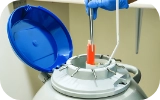 Vitrification Egg, Embryo, Sperm Freezing
 Preimplantation Genetic Testing (PGT)
 Donation Program Embryo / Egg / Sperm
 Self-cycleTM IVF


 Self-cycleTM IVF

All About Embryo / Egg / Sperm Donation Services
Embryo Adoption or Donor Embryo Transfer
Some couples have a severe egg and sperm factor. If they have been unsuccessful with self-gametes or wish to opt for a donor egg and donor sperm for medical reasons, this can be offered to the couple and is rightly called embryo adoption or more commonly embryo donation (the latter term is actually a misnomer).
In this procedure, a healthy anonymous donor’s eggs are fertilised with anonymous donor sperm from a sperm bank and one or two of resultant embryos are placed in the intending mother’s womb at an opportune time. This leads to a high pregnancy rate. However, it is essential for the couple to understand, grasp and accept the fact that resultant offspring will not be their genetic child but will be their biological child. It is a pre-requisite that the couples undergo thorough counselling and are mentally ready for this form of treatment.
Book your Appointment

Egg donation
Ovum (egg) donation is a process where the eggs of a healthy young woman (the egg donor) are fertilised with the sperms from the patient's husband and the resulting embryos are then transferred into the patient's uterus. This process not only gives the couple the gift of parenthood but also gives the woman the opportunity to experience the joys of being pregnant.
The Procedure of Egg Donation
The process of egg donation starts with the selection of a donor. The candidate will be an anonymous donor who has been approved after a series of medical and genetic screenings. The donor's ovaries are stimulated by a stimulation regimen to produce multiple eggs. The eggs are then retrieved, fertilised and the embryos cultured. The embryos with the highest quality are transferred into the recipient's uterus.
Who is it for?
- Older women who have reduced quality and quantity of eggs
- Women with reproductive problems such as ovarian failure
- Poor response to previous IVF treatment
- Women with genetic diseases that they do not want to pass on to the child
Sperm donation
Donated sperm is offered to couples where there is no possibility of retrieving sperms naturally or by a surgical procedure for a man. The donor sperm is used to either inseminate the woman (IUI) or to fertilise her eggs in an IVF process. As is obvious, the couple is counselled together about the implications and process involved in such a treatment.
All donor sperm samples are to be availed from established and registered sperm banks. These sperm samples are from fertile donors that have been screened for viral infections and common genetic disorders. No fresh donors or known donors should ever be used.
The samples are identified by a number code provided by the sperm bank.
Donor screening & selection:
Donor screening and selection is a highly regulated and carefully monitored process that prioritises the health and safety of both recipients and future children. Donors are selected within a medically recommended age range to ensure optimal reproductive potential and minimise health risks.
Every donor undergoes an extensive health evaluation, including a detailed personal and family medical history, physical examination, and screening for infectious diseases in accordance with national guidelines. These checks are essential for maintaining safety in assisted reproductive treatments such as sperm donation.
Genetic screening is also conducted to identify inherited conditions and chromosomal abnormalities, reducing the risk of genetic disorders. In addition to medical assessments, donors receive psychological counselling and provide informed consent to ensure they are emotionally prepared and fully understand the ethical responsibilities involved in donation.
This comprehensive approach helps maintain transparency, safety, and trust throughout the treatment process.
Embryo donation process:
The embryo donation process follows a structured and personalised approach to support successful treatment outcomes. It begins with careful matching, where medical compatibility factors such as blood group, physical traits, and clinical requirements are considered, while ensuring strict donor anonymity. This step is particularly important for patients who have previously undergone treatments involving egg donation or other assisted reproductive methods.
Once matching is completed, the recipient’s uterus is prepared using hormone therapy to support a receptive uterine lining. This preparation is closely monitored through scans and blood tests to determine the ideal timing for embryo transfer.
The embryo transfer itself is a simple, minimally invasive procedure performed under expert medical supervision. One or two embryos are gently placed into the uterus using a fine catheter.
Following transfer, implantation typically occurs within a few days as the embryo attaches to the uterine lining. A pregnancy test is scheduled after the advised waiting period to confirm treatment success and early pregnancy progression.
Short-term effects and recovery after embryo donation
- Mild abdominal cramping: Some individuals may experience light cramping after embryo transfer, like period discomfort. This is temporary and usually settles within a day or two.
- Spotting or light vaginal discharge: Minimal spotting can occur due to catheter placement during the procedure and is generally not a cause for concern.
- Hormonal side effects: Medications used to support implantation may cause symptoms such as breast tenderness, bloating, mood changes, or fatigue, commonly seen in egg donor IVF cycles.
- Emotional sensitivity: The waiting period after transfer can bring emotional fluctuations, including anxiety or heightened anticipation, which is completely normal.
- Activity restrictions: Most patients can resume routine activities the same day, though heavy exercise and strenuous work are usually avoided for a short period.
- Recovery and follow-up: Recovery is typically quick, with no downtime required. A follow-up pregnancy test is scheduled as advised to assess implantation and early pregnancy development.
Frequently Asked Questions
IVF was initially developed for women who had obstructed or missing fallopian tubes, and it remains the preferred method in these cases. It is also utilised when other conditions exist, such as male factor infertility, endometriosis, and unexplained infertility, where no underlying cause of infertility can be identified. Our professionals will analyse your medical history and direct you to the most appropriate therapy and diagnostic tests for you.
Yes, definitely, vitrification of eggs and embryos has proven to be beneficial because it increases the survival rates of eggs and embryos and improves overall pregnancy rates through IVF.
Yes, several successful pregnancies have been achieved using vitrified embryos or eggs. The rate of success is comparable to those obtained with fresh eggs or embryos.
Women are born with roughly two million eggs within their ovaries. Every month, approximately 11,000 eggs die prior to a girl's adolescence. Thus, during her adolescence, a woman has only roughly 300,000 to 400,000 eggs left. From this point forward, around 1000 eggs are used each month. This is unrelated to any method of pregnancy, hormone production, birth control, lifestyle, health, or nutritional supplements. Menopause occurs when a woman no longer has viable eggs.